


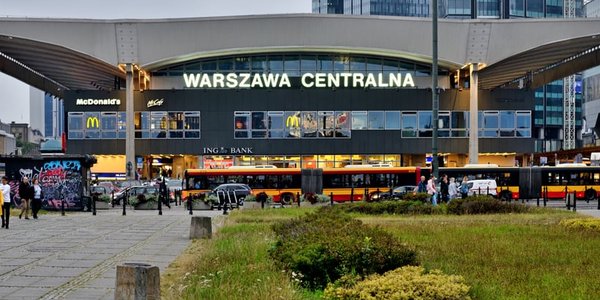
Trains packed to capacity as Polish railways struggle with record demand
Translated from Polish, summarized and contextualized by DistantNews.
At a glance
News
Sources not specified
Context piece
- Polish railways are struggling to meet record passenger demand, leading to overcrowded trains and a shortage of seats, reminiscent of the PRL era.
- In June, over 39.1 million passengers traveled by train, an 8% increase from the previous year, marking the highest June ridership since at least 2012.
- Experts warn that if the capacity issues are not addressed, a significant number of passengers may abandon rail travel for cars.
Polish railways are experiencing an unprecedented surge in passenger numbers, straining capacity and leading to conditions that evoke memories of the communist era. In June alone, over 39.1 million passengers traveled by train, an increase of nearly 3 million compared to the previous year, representing an 8% rise and the highest June ridership recorded since at least 2012.
The first half of the year has also been record-breaking, with nearly 229.6 million people boarding trains, an increase of over 18.3 million from the same period last year. PKP Intercity, a major operator, reported nearly 9.5 million passengers in July, a 9% increase from the previous year and a 34% jump from 2023. To cope with demand during a mid-August long weekend, the company deployed all available resources, adding 427 extra carriages to 212 trains, with some express services to coastal destinations running with 14-15 carriages.
This is about 9% more than in the same period last year, 20% more than two years ago, and as much as 34% more than in 2023.
However, this booming demand is exposing the railway system's limitations. While most modern trains are equipped with air conditioning, overcrowded carriages in high temperatures have become unbearable, failing to provide the promised temperature reduction. More critically, there is a shortage of trains and carriages. PKP Intercity's fleet is not expected to significantly improve until around 2030, when new wagons and hybrid trains are delivered and new double-decker trains begin service.
Michał Beim, an expert from the Sobieski Institute, warns that the growing popularity of rail travel, coupled with limited seating capacity, poses a real risk of passengers becoming permanently discouraged and returning to car travel. He suggests that the only quick way to increase capacity is to open the Polish market to other operators.
There is no other way to quickly increase the supply of seats than to actually open the Polish market.
DistantNews Editorial
Originally published by Rzeczpospolita in Polish. Translated, summarized, and contextualized by our editorial team with added local perspective. Read our editorial standards.
More Stories


From Our Blog

What Gets Lost (and Found) When News Is Translated

The Critical Role of Diaspora Media in Global News

What Travellers Should Know About Countries with Restricted Press

A Digital Nomad's Guide to Following Local News

How the Same Story Looks Different in Different Countries
