


Transportation Workers Slam 'Empty Echo' of Heatwave Measures, Demand Action
Translated from Korean, summarized and contextualized by DistantNews.
At a glance
News
Sources not specified
Ongoing story
- Transportation workers are demanding effective measures against extreme heat, citing dangerous working conditions on surfaces reaching 60 degrees Celsius.
- The Public Transport, Logistics, and Transport Workers' Union criticizes current government guidelines as mere recommendations lacking enforcement.
- Workers report inadequate rest facilities and chronic understaffing, forcing them to work in hazardous conditions despite heatstroke risks.
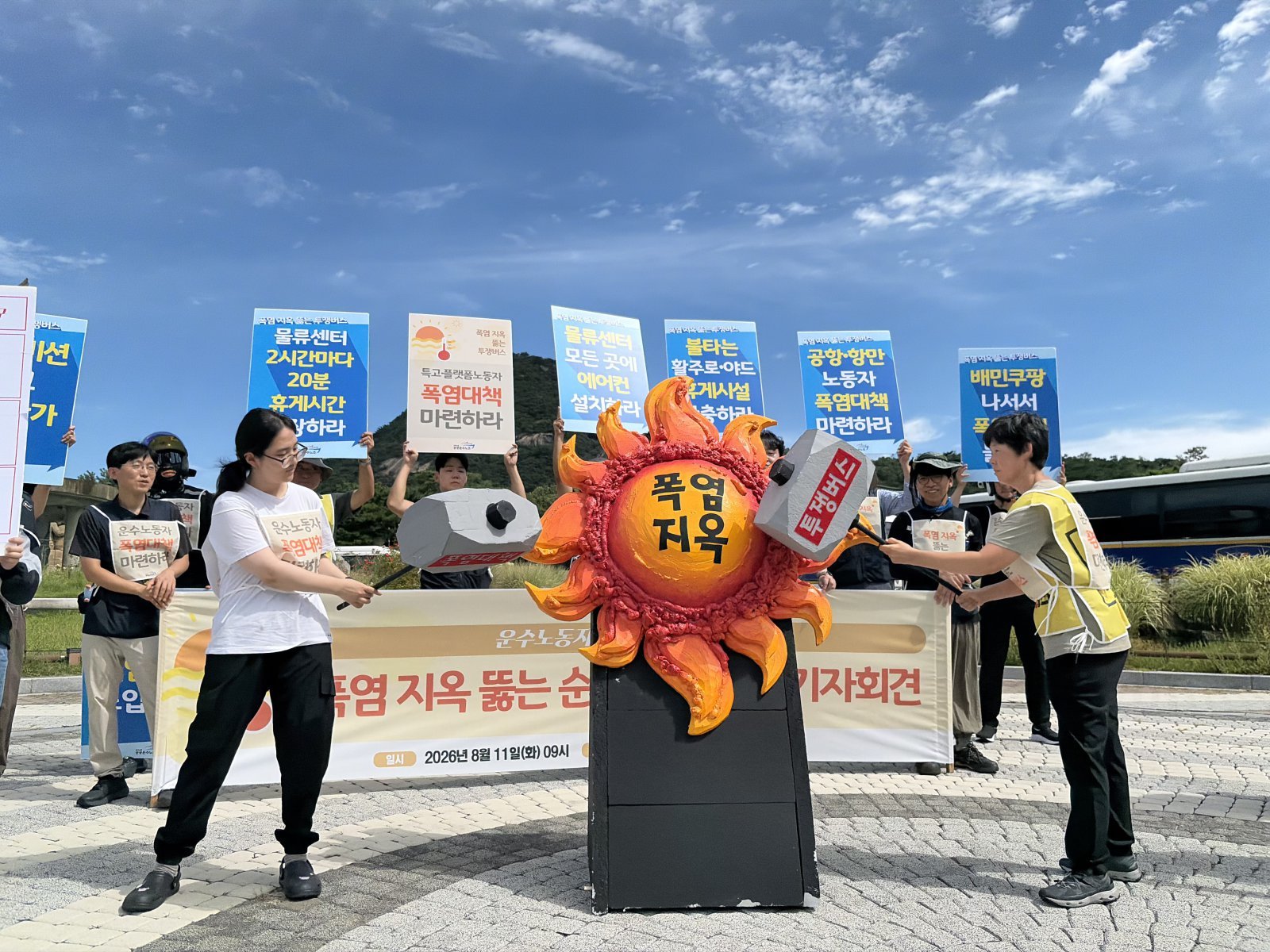
Transportation workers are calling for robust safety measures to combat extreme heat, highlighting the perilous conditions they face daily. The Public Transport, Logistics, and Transport Workers' Union staged a protest on August 11, criticizing the government's current heatwave response as ineffective and merely advisory.
The government talks about the 5 heatwave safety rules and '20 minutes of rest after 2 hours of work,' but in reality, it's just an empty echo on the ground. This is because the guidelines are merely recommendations without enforceability, and the companies' words are also exhibitionist policies that do not consider the lack of field personnel and rest facilities.
Union officials point out that while government guidelines suggest breaks every two hours for workers in temperatures exceeding 33 degrees Celsius, these are often not followed. Workers lack nearby rest facilities, often resorting to resting in the shade of aircraft or containers. Chronic understaffing exacerbates the issue, compelling individuals to handle multiple roles, making adherence to rest periods nearly impossible.
"The government talks about the 5 heatwave safety rules and '20 minutes of rest after 2 hours of work,' but in reality, it's just an empty echo on the ground," said Choi Jae-hwan, senior deputy head of the Airport and Port Transport Division. He added that guidelines lack enforceability, and company policies are often superficial, failing to consider the realities of insufficient staff and inadequate facilities.
There are no rest facilities near the workplace, so the reality is that we have to lie down under the shade of an airplane or under a container to rest. Due to chronic understaffing, one person has to handle the work of several people, so we can't even dare to think about rest time.
The union also highlighted that official government measures, such as recommending a halt to outdoor work between 2 PM and 5 PM when temperatures exceed 35 degrees Celsius, are not legally binding. This lack of mandatory action comes as heat-related illnesses among workers are on the rise, with industrial accidents due to heatstroke increasing sixfold between 2020 and 2025. The union is demanding better rest facilities, guaranteed rest times, improved working conditions during extreme weather, and the elimination of safety gaps, including the right to halt work during dangerous conditions.
In the sweltering heat that kills people, workers are collapsing from heatstroke in boiling logistics centers. The installation of air conditioning should be mandatory, not optional, and the right to stop work must also be guaranteed so that workers do not collapse in the deadly heat.
DistantNews Editorial
Originally published by Dong-A Ilbo in Korean. Translated, summarized, and contextualized by our editorial team with added local perspective. Read our editorial standards.
More Stories


From Our Blog

What Gets Lost (and Found) When News Is Translated

The Critical Role of Diaspora Media in Global News

What Travellers Should Know About Countries with Restricted Press

A Digital Nomad's Guide to Following Local News

How the Same Story Looks Different in Different Countries
