


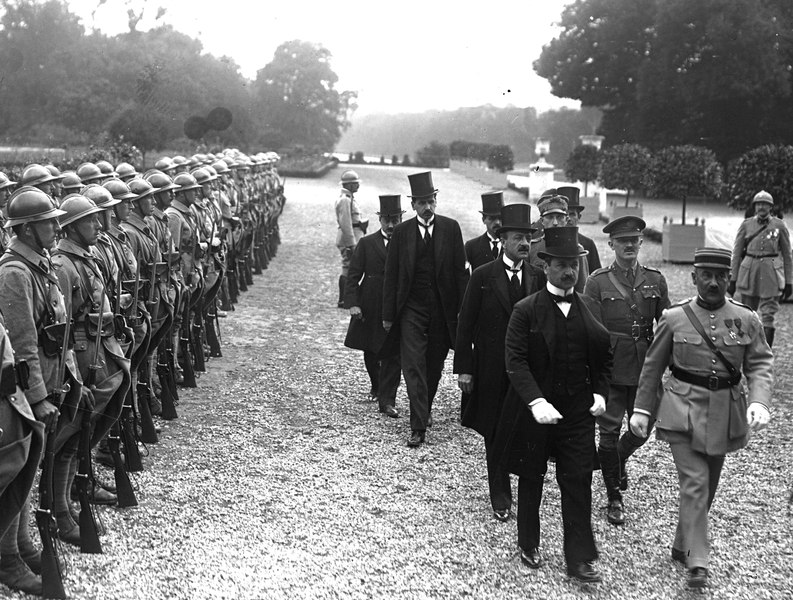
Treaty of Trianon: Hungary's deep national trauma and Romanian-Hungarian discord
Translated from Romanian, summarized and contextualized by DistantNews.
At a glance
News
Sources not specified
Context piece
- The Treaty of Trianon, which came into effect on July 26, 1921, resulted in Hungary losing approximately 70% of its territory to neighboring states, with Romania receiving the largest portion.
- For Hungarians, the treaty is considered a profound national trauma, marking the end of the historical Greater Hungary.
- The treaty's terms, particularly the transfer of Transylvania to Romania, deepened conflicts between Romanians and Hungarians, despite Transylvania having significant Hungarian and German minorities alongside a Romanian majority.
The Treaty of Trianon, which took effect on July 26, 1921, remains a deeply scarring event in Hungarian national history. The treaty, signed after World War I, stripped Hungary of approximately 70% of its territory and over 60% of its population, redistributing these lands primarily to neighboring states, with Romania receiving the largest share.
Historically, the Kingdom of Hungary was a significant medieval power, controlling the entire Carpathian Basin and surrounding regions. This territory included modern-day Hungary, Slovakia, Transylvania (part of Romania), parts of Croatia, northern Serbia, and western Ukraine. Following the Battle of Mohács in 1526, Hungary was divided between the Habsburg and Ottoman empires. Although the Hungarian Kingdom formally continued to exist under Habsburg rule, it was not until 1918 that Hungary regained its independence, only to face the harsh terms of the Trianon treaty.
For Hungarians, Trianon represents a profound national trauma, signifying the dissolution of Greater Hungary. While it is acknowledged that a significant portion of the lost territories was inhabited by non-Hungarian populations such as Slovaks, Ukrainians, Romanians, Serbs, and Croats, who had aspirations for self-determination, the treaty's impact on Hungarian national identity was immense.
The treaty significantly exacerbated tensions between Romanians and Hungarians. Romania was granted Transylvania, a territory historically central to Hungary, despite being a multi-ethnic region with substantial Hungarian and German communities alongside a Romanian majority. The conflicting ambitions of both Hungary and Romania after the dissolution of the Austro-Hungarian Empire contributed to this deep-seated conflict.
DistantNews Editorial
Originally published by Adevărul in Romanian. Translated, summarized, and contextualized by our editorial team with added local perspective. Read our editorial standards.
More Stories

From Our Blog

What Gets Lost (and Found) When News Is Translated

The Critical Role of Diaspora Media in Global News

What Travellers Should Know About Countries with Restricted Press

A Digital Nomad's Guide to Following Local News

How the Same Story Looks Different in Different Countries
