


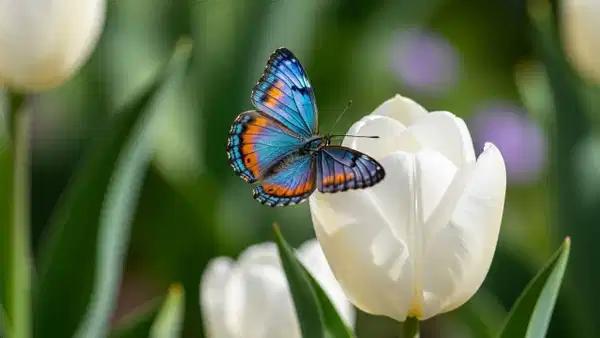
Tropical butterflies' secret to living months, not weeks, revealed: Pollen diet slows aging
Translated from Turkish, summarized and contextualized by DistantNews.
At a glance
News
Sources not specified
Context piece
- New research has deciphered the secret behind the unusually long lifespans of certain tropical butterfly species, which can live up to 25 times longer than their relatives.
- Unlike most butterflies that feed solely on nectar, these species consume pollen, which their specialized saliva helps them digest, providing essential amino acids and proteins.
- This dietary adaptation slows cellular aging and may offer insights for developing anti-aging strategies in humans.
In the lush depths of South and Central American rainforests, a remarkable secret has been unlocked: the extended lifespan of certain tropical butterflies. While many species flit through life for only a few weeks, some Heliconius butterflies can live for months, a mystery that has long captivated scientists. A recent international study has now revealed the key to their extraordinary longevity.
The secret lies in their diet. Most butterflies subsist on flower nectar, a sugary liquid that provides quick energy but lacks the proteins vital for cell repair and regeneration. The Heliconius butterflies, however, have evolved a radical dietary shift: they eat pollen. Using specialized saliva, they can externally digest the tough pollen grains, breaking them down into a nutrient-rich liquid. This pollen provides abundant amino acids and proteins, acting as a potent elixir for their bodies.
The ability of an organism to extend its lifespan by an incredible 25-fold by altering its diet and genetic expression proves how flexible biological limits are.
This unique diet allows these butterflies to maintain their cellular integrity against wear and tear, sustain egg production for months, and keep their immune systems robust against parasites. Researchers analyzing the genetic makeup of these species discovered specific gene groups activated by pollen consumption that slow down cellular aging. The butterflies' mechanisms for processing amino acids and repairing cellular damage show striking similarities to human aging processes, such as oxidative stress and the accumulation of cellular waste.
"The ability of an organism to extend its lifespan by an incredible 25-fold by altering its diet and genetic expression proves how flexible biological limits are," said a researcher. "Understanding how these butterflies synthesize amino acids could be a critical step in developing next-generation supplements or therapies to prevent age-related tissue loss and cellular aging in humans." These long-lived insects offer a compelling testament to the direct link between dietary quality and lifespan, potentially guiding future research in longevity studies.
Understanding how these butterflies synthesize amino acids could be a critical step in developing next-generation supplements or therapies to prevent age-related tissue loss and cellular aging in humans.
DistantNews Editorial
Originally published by Cumhuriyet in Turkish. Translated, summarized, and contextualized by our editorial team with added local perspective. Read our editorial standards.
More Stories



From Our Blog

What Gets Lost (and Found) When News Is Translated

The Critical Role of Diaspora Media in Global News

What Travellers Should Know About Countries with Restricted Press

A Digital Nomad's Guide to Following Local News

How the Same Story Looks Different in Different Countries
