


Trump Again Pressures Japan and South Korea to Join Alaska LNG Pipeline Project
Translated from Korean and summarized by DistantNews. Read the original for the full story.
At a glance
News
Named sources
Ongoing story
- President Donald Trump again linked Japan and South Korea to a proposed Alaska LNG project during remarks at the White House.
- The project would require a roughly 1,300-kilometer pipeline and about $44 billion in investment to move and liquefy North Slope gas for export to Asia.
- The project has long faced doubts over cost and profitability, while South Korea has not committed to direct investment and the presidential office declined to discuss negotiations.
Donald Trump has again put Japan and South Korea alongside his plans for Alaska’s long-delayed natural-gas project, describing the two countries as participants in a pipeline venture that remains financially difficult.
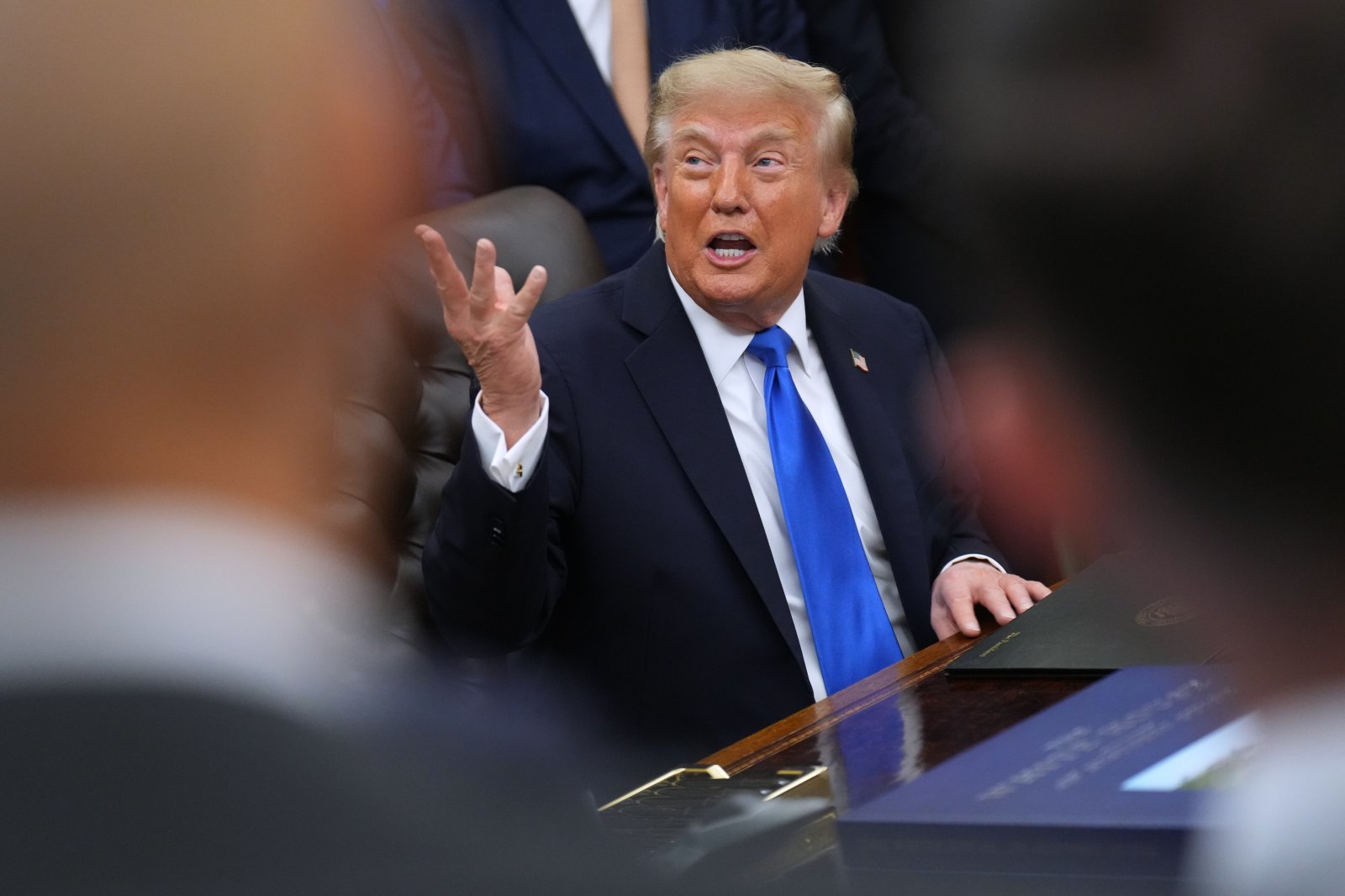
Speaking to reporters at the White House on Sept. 2, Trump said, “Japan is there, and South Korea is there,” adding that “all of these people are now going to Alaska to load fuel, load oil, build a pipeline, and do everything else.” He made the remarks while saying he planned to visit Alaska to support Republican Senator Dan Sullivan’s bid for a third term in the Senate during the November midterm elections.
Japan is there, and South Korea is there.
Trump appeared to be referring to the Alaska LNG project, which would carry gas from deposits on the North Slope to Nikiski in the south, where it would be liquefied and exported to Asia. The project would require a new pipeline of about 1,300 kilometers and cost roughly $44 billion. U.S. officials estimate it could produce about 20 million tons of LNG annually after completion.
Since returning to office, Trump has signed an executive order supporting development of the Alaska pipeline and repeatedly urged Japan and South Korea to participate. His administration has also suggested that part of the investment promised under new trade agreements could be used for the project. Under those agreements, the United States reduced reciprocal tariffs from 25 percent to 15 percent, while South Korea pledged $350 billion in U.S. investment and Japan pledged $550 billion.
All of these people are now going to Alaska to load fuel, load oil, build a pipeline, and do everything else.
The project has long been considered high risk because of its construction costs and uncertain commercial prospects. Building a long pipeline in Alaska’s severe climate would add to the burden. ExxonMobil and BP examined its feasibility in 2014 but withdrew after failing to become convinced of its profitability. Korea Gas Corporation signed a memorandum of understanding with the Alaska Gasline Development Corporation in 2017, during Trump’s first term, but made no actual investment.
South Korea’s industry minister, Kim Jeong-kwan, said last November that direct investment was difficult while the U.S. feasibility study continued, though he indicated that importing gas produced by the project could be considered positively. South Korea’s presidential office said it could not confirm the details of discussions on investment projects in the United States.
We want South Korea and Japan, among others, to be partners in the world’s largest natural-gas pipeline construction project.
About this summary
Originally published by Hankyoreh in Korean. Translated, summarized, and contextualized automatically by DistantNews, with a note on how the source frames the story. Not individually reviewed before publishing. How this works.
More Stories

From Our Blog

What Gets Lost (and Found) When News Is Translated

The Critical Role of Diaspora Media in Global News

What Travellers Should Know About Countries with Restricted Press

A Digital Nomad's Guide to Following Local News

How the Same Story Looks Different in Different Countries
