

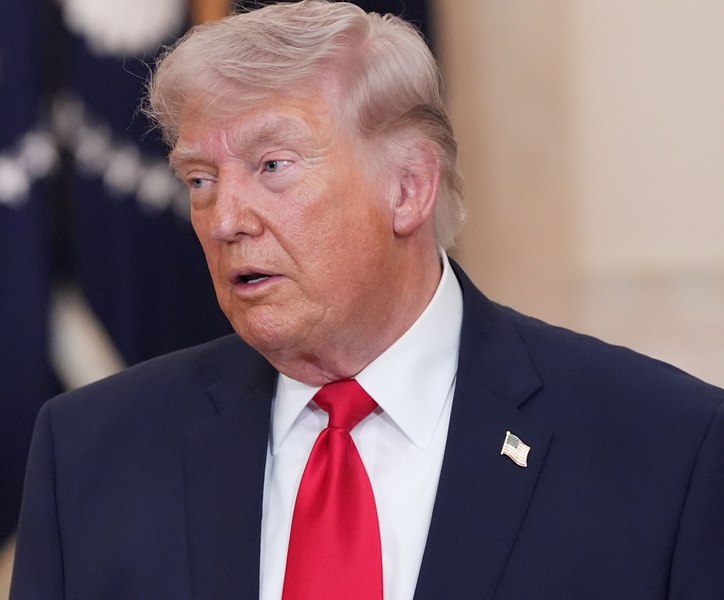
Trump announces Iran's unconditional surrender: On what real basis?
Translated from Romanian, summarized and contextualized by DistantNews.
At a glance
Analysis
Sources not specified
Context piece
- U.S. President Donald Trump claimed a memorandum with Iran signifies "unconditional surrender."
- The article questions the basis of Trump's claim, noting the memorandum is a transitional document awaiting further negotiation.
- The author suggests Trump's statement is high-level political rhetoric, contrasting it with historical unconditional surrenders.
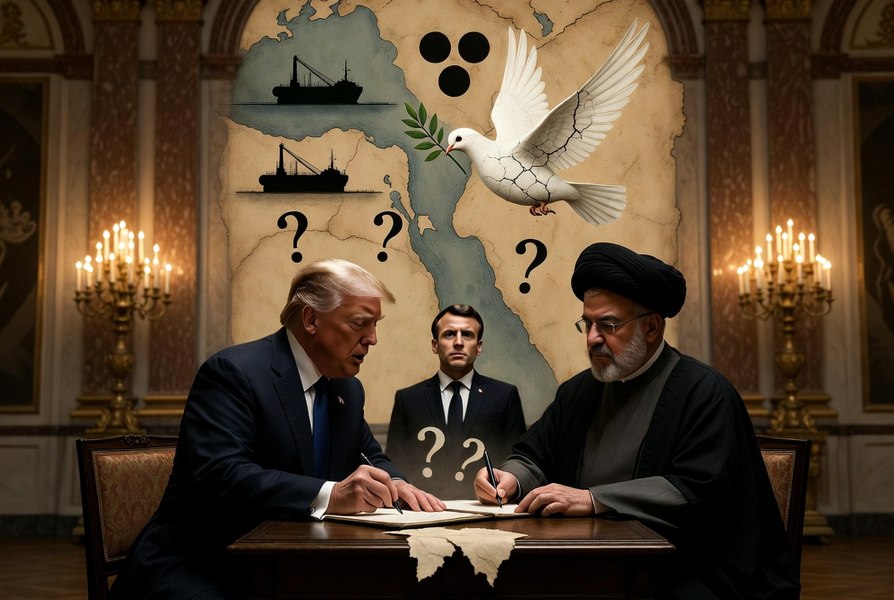
Donald Trump's assertion that a signed memorandum with Iran equates to "unconditional surrender" is presented as a bold claim, drawing parallels to historical instances like the end of World War II. The article, however, critically examines the foundation of this statement. It notes that while Trump declared the memorandum a significant historical document, its actual value is seen as transitional, pending further negotiations after a two-month consultation period.
The author suggests that Trump's rhetoric, amplified on Truth Social with the declaration "There will never be a deal with Iran without total surrender!", is primarily political posturing. This contrasts with the historical examples of unconditional surrenders, which involved formal, signed documents by military commanders representing their nations after total defeat. The current memorandum, by contrast, was signed remotely and remains a compromise text whose ultimate significance is uncertain.
There will never be a deal with Iran without total surrender!
The article points out that the agreement, as stated, requires "permanent confirmation of the war on all fronts," which would be a solid step toward a peace agreement. However, it remains to be seen if this will lead to a formal peace treaty. The current understanding is that the agreement is subject to bilateral negotiation and does not yet involve other countries, notably Israel.
probably that is, in fact, an unconditional surrender
DistantNews Editorial
Originally published by Adevărul in Romanian. Translated, summarized, and contextualized by our editorial team with added local perspective. Read our editorial standards.
More Stories
From Our Blog

What Gets Lost (and Found) When News Is Translated

The Critical Role of Diaspora Media in Global News

What Travellers Should Know About Countries with Restricted Press

A Digital Nomad's Guide to Following Local News

How the Same Story Looks Different in Different Countries
