


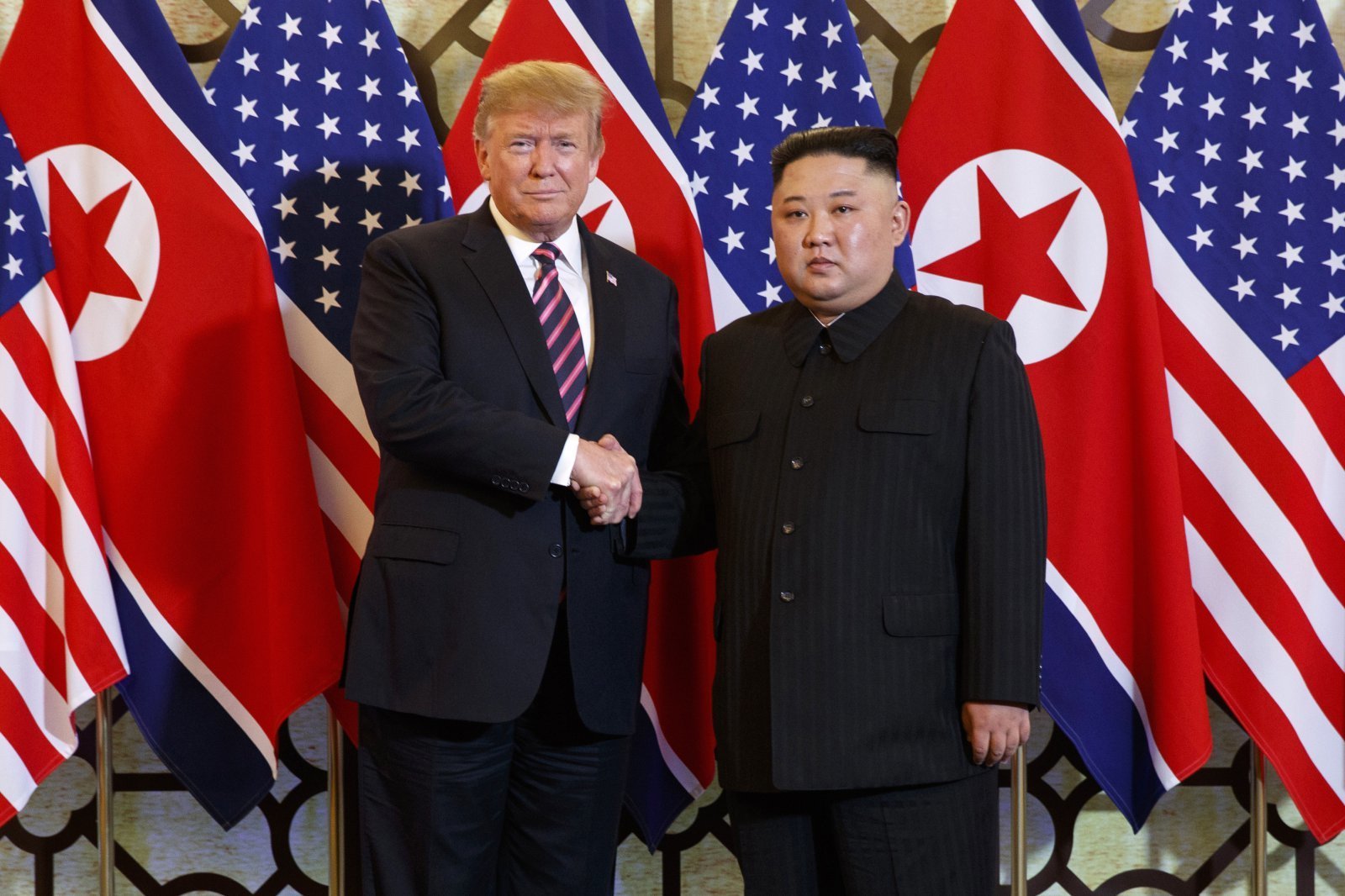
Trump could meet Kim first, then hold a second summit after the midterm elections
Translated from Korean and summarized by DistantNews. Read the original for the full story.
At a glance
Analysis
Named sources
Context piece
- Former Trump National Security Council official Anthony Ruggiero says Donald Trump may meet Kim Jong Un to restart talks with North Korea.
- Ruggiero said a second leaders’ summit could follow after the November midterm elections or next year, with lower-level negotiations also possible.
- He argued that Washington may need to acknowledge North Korea’s established nuclear capability implicitly and focus talks on issues including North Korean troops in Ukraine.
Donald Trump could meet Kim Jong Un to reopen dialogue with North Korea and then pursue a second summit after the November midterm elections, according to Anthony Ruggiero, a former Trump administration official.
I would predict that President Trump will meet Kim Jong Un first, in some form, to start a dialogue.
Ruggiero, who served as the National Security Council’s director for North Korea during Trump’s first term, made the assessment in an interview released by PBS. He said Trump would likely meet Kim in some form to begin talks, followed by negotiations and possibly another leaders’ meeting after the midterms or next year.
Ruggiero also said diplomacy need not remain focused exclusively on leader-level meetings. Talks involving deputy secretary or secretary of state officials could resume, he said, as they did alongside the summit-focused diplomacy of Trump’s first term.
You could imagine a situation in which a conversation between Kim Jong Un and the president restarts those negotiations, followed by a second summit after the midterm elections or next year.
On the nuclear issue, Ruggiero said the United States should recognize that North Korea has possessed nuclear weapons for a long time. He suggested that Washington could implicitly accept this reality without formally calling North Korea a nuclear-weapon state, then shift negotiations toward issues it considers more important, including the withdrawal of North Korean troops from Ukraine.
We do not need to tell North Korea, ‘We recognize you as a nuclear-weapon state.’ We have no reason to give away all the leverage we have.
Rachel Minyoung Lee, a senior fellow at the Stimson Center who appeared on the same program, said even a return to working-level contacts through the North Korean mission to the United Nations in New York would be meaningful. She called for strategic ambiguity, arguing that the United States need not tell North Korea it recognizes it as a nuclear state or surrender all of its leverage. Lee also said Kim may believe he holds a particularly strong position because North Korea has improved ties with Russia and China while Trump is extending an offer to engage.
Kim Jong Un probably believes he has a lot of leverage and is in an extremely favorable position.
About this summary
Originally published by Dong-A Ilbo in Korean. Translated, summarized, and contextualized automatically by DistantNews, with a note on how the source frames the story. Not individually reviewed before publishing. How this works.
More Stories


From Our Blog

What Gets Lost (and Found) When News Is Translated

The Critical Role of Diaspora Media in Global News

What Travellers Should Know About Countries with Restricted Press

A Digital Nomad's Guide to Following Local News

How the Same Story Looks Different in Different Countries
