


Trump Expands Pledge to Shield Consumers from Data Center Energy Cost Hikes
Translated from English, summarized and contextualized by DistantNews.
At a glance
News
Named sources
New plan
- Donald Trump expanded a voluntary pledge aimed at shielding consumers from higher utility bills caused by data centers.
- The pledge, initially announced with tech companies in March, now includes governors and electricity providers.
- Concerns remain about whether the nonbinding pledge will lead to genuine savings for consumers amid rising electricity demand and the potential threat of job displacement due to AI.
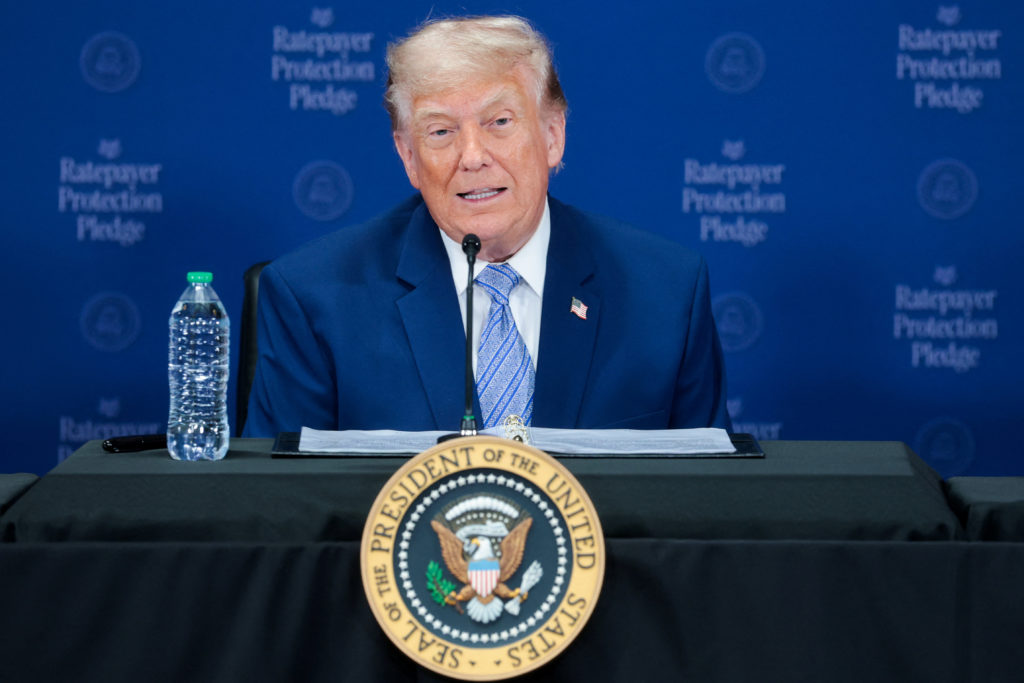
President Donald Trump has expanded a voluntary pledge designed to protect U.S. consumers from increased utility costs driven by the burgeoning demand from data centers. The initiative, initially launched in March with leading AI and tech companies, now includes commitments from governors and electricity providers.
This move comes as the rapid build-out of artificial intelligence infrastructure has become a contentious issue, particularly with midterm elections approaching. While Trump promised that the nonbinding pledge would lead to lower electricity prices and a surplus of power, questions linger about its actual impact. Consumers are already grappling with affordability issues and are concerned about competing for resources with tech giants.
Trump asserted that electricity bills for American families would decrease, with a projected surplus of power to be fed into the grid. The White House stated that nearly 200 additional stakeholders, including utilities and data center developers, have joined the pledge, which could cover 80% of all power delivered to U.S. households and businesses.
AI is probably the biggest thing anybody's ever seen, and whoever wins that race is probably going to win, period.
However, the pledge faces skepticism. It is unclear if data centers generating their own electricity will be sufficient to offset the growing demand. A recent analysis by ICF suggests that increased electricity demand could raise monthly utility bills by 15% to 40% by 2030. Furthermore, a slowdown in data center construction could hinder U.S. economic growth and potentially cede the nation's technological edge to China, posing national security risks.
Beyond energy concerns, AI's increasing capabilities in tasks like driving, data analysis, and software writing threaten millions of jobs. This potential displacement, coupled with the concentration of wealth in the hands of a few tech tycoons, has fueled public resistance. The pledge's effectiveness in addressing these multifaceted challenges remains uncertain.
Electricity bills for American families will actually come down. They're going to have a lot of electricity left over, and they'll put that into the grid.
DistantNews Editorial
Originally published by PBS NewsHour in English. Translated, summarized, and contextualized by our editorial team with added local perspective. Read our editorial standards.
More Stories

From Our Blog

How the Same Story Looks Different in Different Countries

What Gets Lost (and Found) When News Is Translated

The Critical Role of Diaspora Media in Global News

What Travellers Should Know About Countries with Restricted Press

A Digital Nomad's Guide to Following Local News
