


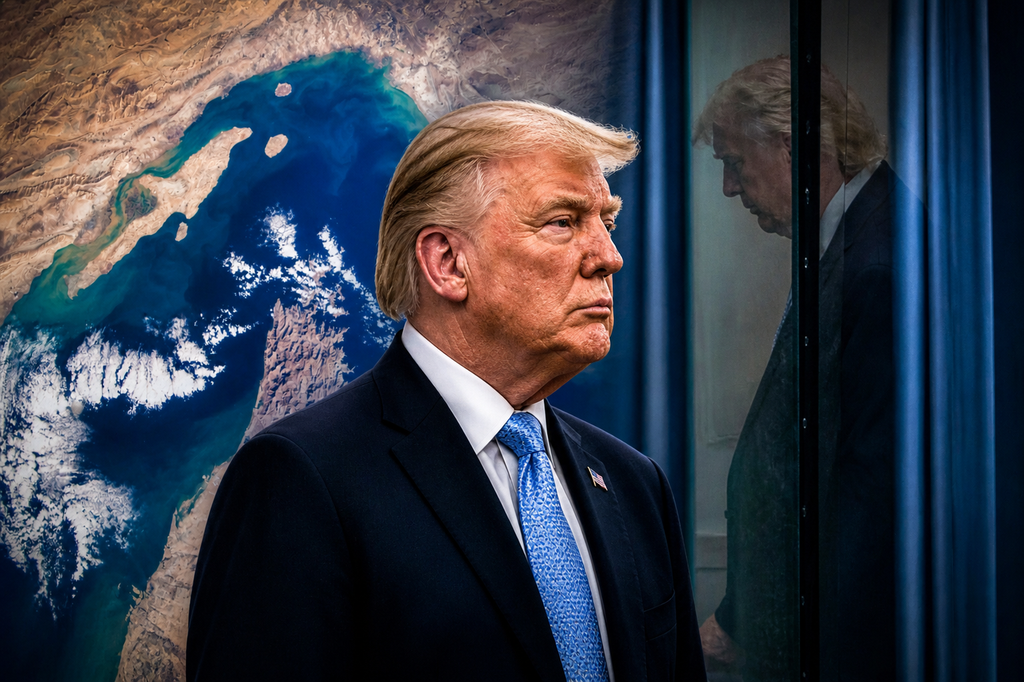
Trump: Iran deal signing expected Sunday, Strait of Hormuz to reopen
Translated from Greek, summarized and contextualized by DistantNews.
At a glance
News
Named sources
New plan
- U.S. President Donald Trump announced that a deal with Iran is expected to be signed Sunday.
- He stated that the Strait of Hormuz would be "open for everyone" immediately after the signing.
- The interim agreement reportedly includes commitments on issues like ending Iran's closure of the Strait of Hormuz and lifting U.S. sanctions.
U.S. President Donald Trump announced via social media that a deal with Iran is slated for signing on Sunday, adding that the Strait of Hormuz would be "open for everyone" immediately afterward. Trump also indicated a broader intention to stabilize the region, stating, "At the appropriate time, when everything is calm, we will proceed and eliminate the nuclear dust."
At the appropriate time, when everything is calm, we will proceed and eliminate the nuclear dust
This announcement follows remarks from Iran's Foreign Minister, who expressed that a deal was "never closer," fueling optimism. However, reports suggest that while the interim agreement may offer grounds for cautious hope, it represents only the first step in a protracted process. The deal reportedly involves mutual commitments on less complex issues, such as Iran ceasing to block the Strait of Hormuz and the U.S. lifting sanctions. A 60-day timeline and agenda are expected for addressing more intricate matters.
a deal was never closer
The Trump administration claims Tehran has made significant concessions, though Iranian media presents a different narrative. Tensions flared Friday after reports of a deal favoring Iran prompted Trump to label Tehran's leaders as "very dishonest people" with whom "there is no good faith."
very dishonest people
Key sticking points remain, particularly concerning Iran's nuclear program. Washington demands Tehran permanently abandon all nuclear activities and commit indefinitely to not developing nuclear weapons. The specifics of implementation and verification for this commitment are critical and remain unclear. A senior U.S. official alluded to a "new inspection regime" without providing details, leaving open questions about whether Iran will fully abandon its program or merely limit uranium enrichment to low levels for peaceful purposes. The ability to verify compliance is paramount, especially as Trump, who previously criticized the Obama-era deal as "weak," seeks to present a new agreement as stronger, despite the previous deal already including international inspections by the UN's nuclear agency.
there is no good faith
DistantNews Editorial
Originally published by Ta Nea in Greek. Translated, summarized, and contextualized by our editorial team with added local perspective. Read our editorial standards.
More Stories

From Our Blog

What Gets Lost (and Found) When News Is Translated

The Critical Role of Diaspora Media in Global News

What Travellers Should Know About Countries with Restricted Press

A Digital Nomad's Guide to Following Local News

How the Same Story Looks Different in Different Countries
