

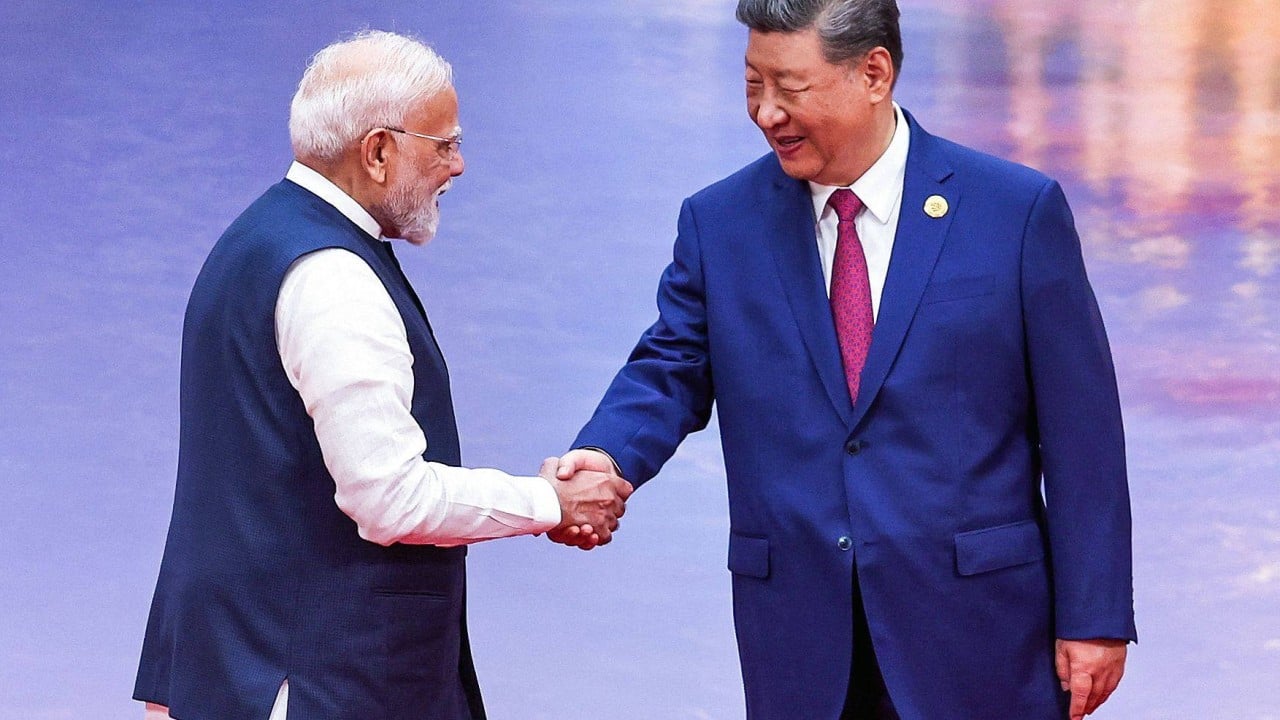

Trump, Putin summits show an Eastward power shift
Summarized by DistantNews. Read the original for the full story.
At a glance
Analysis
Sources not specified
Context piece
- Russian President Vladimir Putin's visit to China followed a trip by US President Donald Trump, highlighting a triangle of influence between China, the US, and Russia.
- China aims to manage its relationships with both the US and Russia on its own terms, positioning itself as a central power in Eurasian politics.
- The US views the China-Russia relationship as a strategic challenge, while Russia's options are narrowed by sanctions and the Ukraine war, making China a crucial partner.
Russian President Vladimir Putin's recent visit to China, marked by the signing of approximately 40 documents and a joint statement on strengthening their partnership, underscores a shifting global order. Occurring shortly after US President Donald Trump's visit to Beijing, the timing suggests a deliberate strategy by China to manage its relationships with both superpowers on its own terms.
This diplomatic sequence positions China at the center of a fluid geopolitical triangle involving itself, the United States, and Russia. Beijing is signaling its intent to engage with Washington on trade, technology, and crisis management while sustaining a strategic partnership with Moscow in energy, diplomacy, and geopolitical coordination. China views this not as a binary struggle but as a competitive environment where major powers bargain and recalibrate.
From Washington's perspective, the deepening China-Russia relationship presents a significant strategic challenge. Despite years of efforts to prevent closer alignment between Beijing and Moscow, these visits indicate that American policy has not yielded the desired effect. Trump's visit, regardless of its political interpretation, demonstrated the US's continued interest in direct engagement with Beijing.
For Russia, Putin's visit to China carries a different weight, driven by necessity rather than strength. Facing sanctions, Western isolation, and the costs of the ongoing Ukraine war, Russia's options have become limited. Beijing now represents a partner Moscow cannot afford to lose, while Russia remains important to China as a strategic neighbor, energy supplier, and geopolitical counterweight to the West.
About this summary
Originally published by South China Morning Post. Summarized and contextualized automatically by DistantNews, with a note on how the source frames the story. Not individually reviewed before publishing. How this works.
More Stories


From Our Blog

Countries Without a Free Press: The 2026 List and What It Means for Readers

What Press Freedom Means for the News You Read

News in Translation: What Gets Lost, and How We Keep the Framing

Diaspora Media: How Communities Abroad Follow Home

Traveling Where the Press Is Not Free: How to Read the News There
