


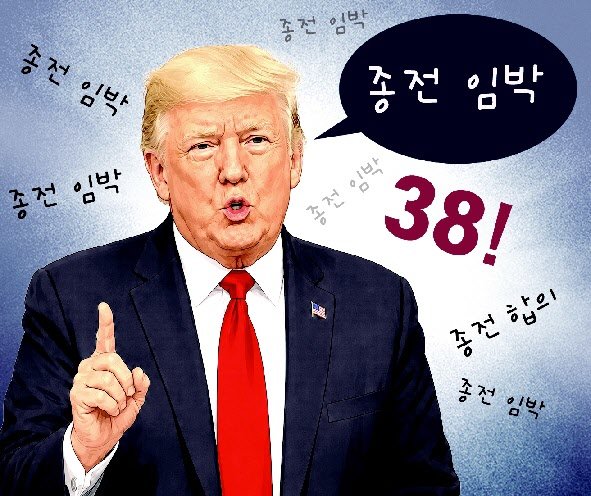
Trump's 38th 'Imminent Peace' Claim Falters as Iran Conflict Grinds On
Translated from Korean, summarized and contextualized by DistantNews.
At a glance
Analysis
Sources not specified
Context piece
- U.S. President Donald Trump has repeatedly claimed an imminent end to the conflict with Iran, making 38 such declarations since the war began.
- Despite Trump's optimistic pronouncements, the war has continued for four months, and market reactions to his statements have diminished.
- The war's consequences include significant casualties, increased oil prices, and rising shipping costs, with a majority of Americans reportedly viewing the Iran conflict as a mistake.
Donald Trump's repeated assertions of an impending end to the conflict with Iran have become a recurring theme, with the U.S. president making 38 declarations of an "imminent peace deal" since the war's commencement. Initially, these statements, such as predicting a resolution within five days, caused significant market fluctuations, including stock market gains and a sharp drop in international oil prices. However, these optimistic forecasts have consistently failed to materialize, with the conflict now entering its fourth month.
The diminishing impact of Trump's pronouncements is evident in the market's muted reaction to his most recent claim of a potential agreement within two to three days. Meanwhile, Israel and Iran continue their military exchanges. The situation has led to comparisons with the "boy who cried wolf" narrative, suggesting Trump's words are losing their influence. His demeanor has also reportedly shifted, with increased irritability noted in recent interviews, and reports of him verbally abusing Israeli Prime Minister Benjamin Netanyahu.
Even within the Trump administration, there were dissenting voices predicting the current stalemate. Military leaders cautioned against airstrikes, citing the potential repercussions of blockading the Strait of Hormuz, while Vice President J.D. Vance warned of regional chaos and significant casualties. However, Trump reportedly prioritized Netanyahu's assurances that removing Iranian leadership would trigger an anti-government uprising.
The global cost of this conflict, initiated on what appears to be a miscalculation, is substantial. It has resulted in the deaths of 13 U.S. soldiers and numerous Iranian civilians, including students. International oil prices have surged over 30%, and maritime shipping rates have nearly doubled. Public opinion in the U.S. also appears to be turning, with a recent poll indicating that two-thirds of Americans believe the Iran war was a wrong decision, signaling growing "war fatigue."
This situation draws parallels to historical instances of strategic misjudgment, such as the Vietnam War, where optimistic assessments and bureaucratic processes led to prolonged conflict. The Trump administration's initial confidence, fueled by reports of neutralizing 90% of military facilities, mirrors the flawed decision-making processes described in analyses of past conflicts. The ongoing Iran conflict, despite talk of an "exit," risks becoming another protracted quagmire.
DistantNews Editorial
Originally published by Dong-A Ilbo in Korean. Translated, summarized, and contextualized by our editorial team with added local perspective. Read our editorial standards.
More Stories



From Our Blog

What Gets Lost (and Found) When News Is Translated

The Critical Role of Diaspora Media in Global News

What Travellers Should Know About Countries with Restricted Press

A Digital Nomad's Guide to Following Local News

How the Same Story Looks Different in Different Countries
