

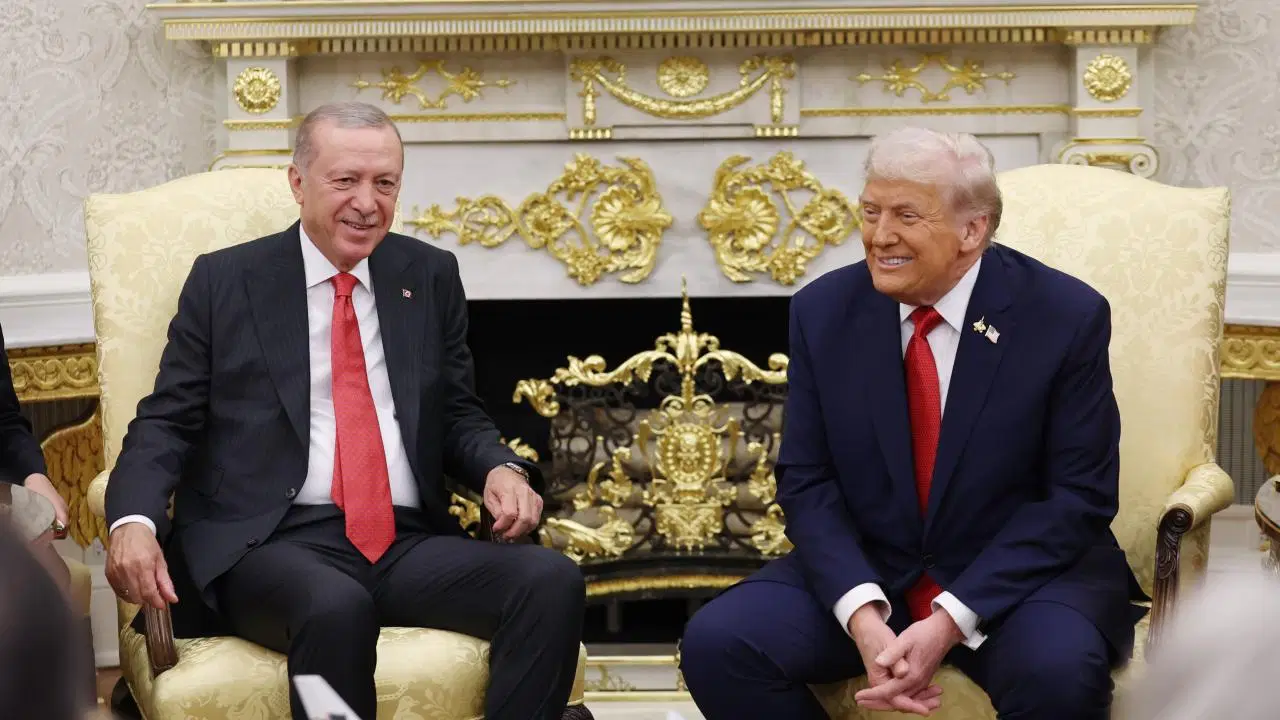

Trump's approval rating drops to lowest presidential level amid Iran conflict concerns
Translated from Turkish, summarized and contextualized by DistantNews.
At a glance
News
From a news agency
Context piece
- A Reuters/Ipsos poll shows U.S. President Donald Trump's approval rating has fallen to its lowest point during his presidency.
- A significant majority of Americans are concerned the conflict with Iran will be prolonged, impacting oil trade and gas prices.
- Trump's justification for the war, citing Iran's nuclear ambitions, is met with skepticism, with only a fifth of Americans believing the conflict was worthwhile.
U.S. President Donald Trump's approval rating has hit a new low for his presidency, with a substantial majority of Americans expressing concern that the conflict with Iran will be protracted, according to a Reuters-Ipsos poll. The survey, completed Monday, found only 33% of respondents approved of Trump's performance, while 64% disapproved.
Only 33 percent of respondents in the four-day poll said they approved of Trump's performance in the White House, while 64 percent disapproved.
This approval rating, down from 35% earlier in the month, matches the lowest point recorded during his previous term in December 2017. Trump's popularity has waned since returning to the White House in 2025, particularly after ordering strikes on Iran alongside Israel. The ensuing conflict has disrupted a fifth of global oil trade, causing a surge in gasoline prices that burdens American households and potentially jeopardizes Republican allies defending their congressional majorities in the upcoming November elections.
Trump's approval rating, which fell from 35 percent in a poll completed earlier this month and is lower than at any point in his current term, is now tied with the lowest level of his previous term, recorded in December 2017.
Trump, who campaigned on promises of controlling inflation and avoiding prolonged wars, initially suggested the conflict with Iran would last only weeks. However, Iran's resilience and continued disruption of oil trade through the Strait of Hormuz, even as the conflict subsided, have led to widespread concern. The poll revealed that approximately 80% of Americans, including 87% of Democrats and 71% of Republicans, believe U.S. involvement in Iran will "last a long time." Only 16% anticipate the conflict ending within weeks.
About 80 percent of Americans – including 87 percent of Democrats and 71 percent of Republicans – believe U.S. involvement in Iran will 'last a long time,' the Reuters and Ipsos poll showed.
Despite the public's apprehension, Trump defended higher gas prices on Friday, stating it is a "tiny bit more" to pay to prevent a "very evil country" from acquiring nuclear weapons. During the conflict, the president has oscillated between threatening escalation and claiming a peace deal was imminent. However, the poll indicates that only one in five Americans, and just half of Republicans, believe the war was worth the cost. Concerns over the war and gas prices are causing unease among Republicans regarding their chances in the upcoming elections, while Democrats see potential gains in both the House and Senate.
Trump said on Friday that it is worth paying 'a tiny bit more for gasoline' to prevent a 'very evil country' from obtaining nuclear weapons, one of the reasons he cited for the war.
DistantNews Editorial
Originally published by Cumhuriyet in Turkish. Translated, summarized, and contextualized by our editorial team with added local perspective. Read our editorial standards.
More Stories
From Our Blog

What Gets Lost (and Found) When News Is Translated

The Critical Role of Diaspora Media in Global News

What Travellers Should Know About Countries with Restricted Press

A Digital Nomad's Guide to Following Local News

How the Same Story Looks Different in Different Countries
