

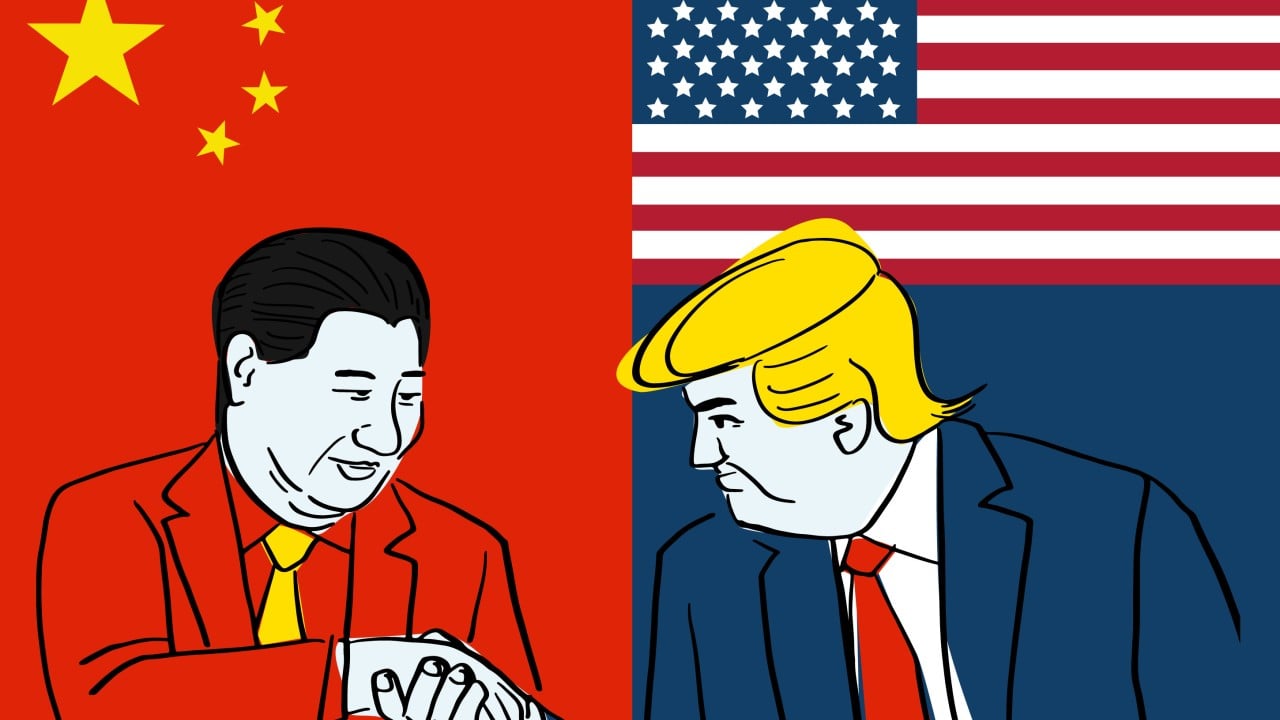
Trump's China thaw faces resistance from Congress and his own administration
Translated from English, summarized and contextualized by DistantNews.
At a glance
News
Named sources
Context piece
- President Donald Trump's recent rhetoric on China has clashed with his administration's hardline policies and congressional concerns.
- Trump expressed support for Chinese students, farmland acquisitions, and downplayed espionage, diverging from his government's approach.
- Experts question the durability of any US-China truce, citing institutionalized consensus on China risk in Washington.
President Donald Trump's recent state visit to China saw him adopt a surprisingly conciliatory tone, a move that has generated friction both within his own administration and among lawmakers. During the visit, Trump publicly endorsed Chinese students studying in the U.S., supported Chinese acquisitions of American farmland, and characterized state espionage concerns as a standard, reciprocal issue.
This softer stance on China is not new and has repeatedly contrasted with the more hawkish approach favored by many within his administration and across the political spectrum. Even before the summit, Trump had floated the idea of allowing Chinese car manufacturers into the U.S. market, a policy considered a non-starter by both the executive branch and members of Congress.
While Trump's warmer rhetoric may have been welcomed in Beijing, his government continues to implement the restrictive policies that define Washington's broader strategy toward China. This divergence raises questions about the long-term stability of the current, albeit fragile, truce between the two nations.
Converting Trump’s positivity into actual policy changes is a very different thing that will run up against a deeply institutionalised Washington consensus on China risk.
Some analysts suggest Trump's comments reflect a purely transactional relationship with China, where positive verbal exchanges rarely translate into significant policy shifts. Others, however, believe his tone signals a growing desire for a less confrontational relationship, potentially creating an opening to stabilize bilateral ties. David Meale, China practice head at the Eurasia Group, noted that "Converting Trump’s positivity into actual policy changes is a very different thing that will run up against a deeply institutionalised Washington consensus on China risk."
Prior to the president's trip, Republican Congressman John Moolenaar, chairman of the House Select Committee on China, urged Trump to "recognize [that] we don’t want to sell them our best technologies that could be used by their military against our men and women in the armed forces."
recognize [that] we don’t want to sell them our best technologies that could be used by their military against our men and women in the armed forces
DistantNews Editorial
Originally published by South China Morning Post in English. Translated, summarized, and contextualized by our editorial team with added local perspective. Read our editorial standards.
More Stories


From Our Blog

Countries Without a Free Press: What You Need to Know

What Press Freedom Means for the News You Read

What Gets Lost (and Found) When News Is Translated

The Critical Role of Diaspora Media in Global News

What Travellers Should Know About Countries with Restricted Press
