


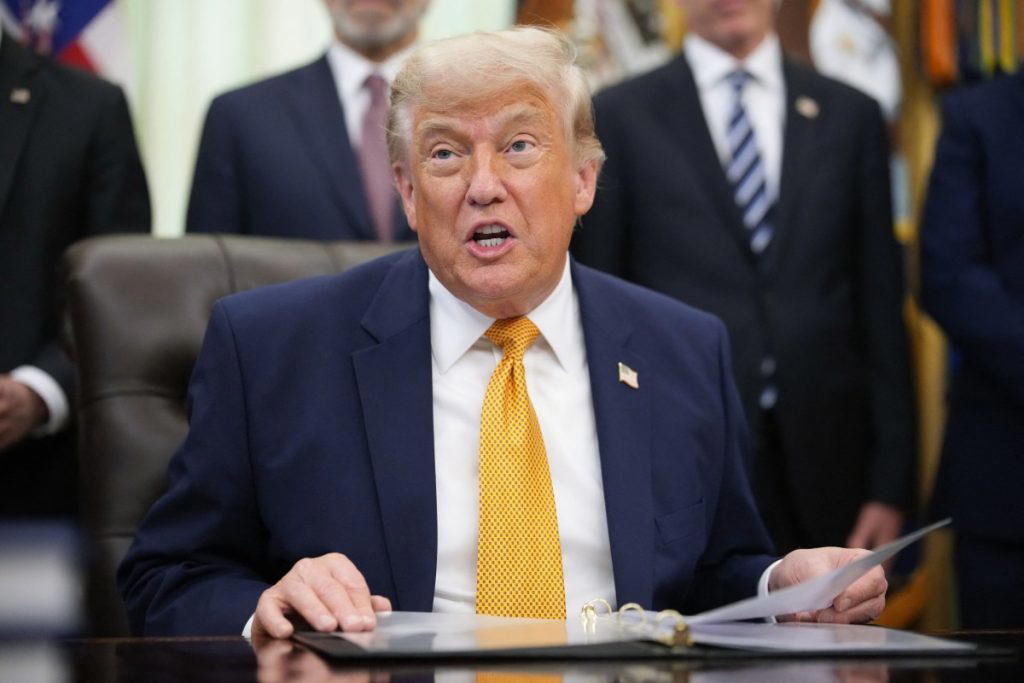
Trump scraps Hormuz ship toll plan, seeks trade deals instead
Translated from English, summarized and contextualized by DistantNews.
At a glance
News
Named sources
New plan
- U.S. President Donald Trump reversed his plan to impose a 20% levy on ships transiting the Strait of Hormuz.
- Trump cited "highly productive conversations" with Middle Eastern leaders who proposed trade and investment deals instead.
- The U.S. will continue a "FULL Blockade" on ships to and from Iranian ports, set to restart Tuesday evening.
U.S. President Donald Trump abruptly abandoned his plan to impose a 20% fee on ships passing through the Strait of Hormuz, just a day after announcing it. The reversal came amid ongoing tensions with Iran and follows discussions with leaders from several Middle Eastern nations.
Based on highly productive conversations with Middle East leadership, I have decided to replace the 20% United States Reimbursement Fee with Trade and Investment Deals that the various Gulf States will be making into the United States.
Trump stated on his Truth Social network that "highly productive conversations" with Middle Eastern leadership led to the decision to replace the proposed "United States Reimbursement Fee" with trade and investment deals from Gulf states. He indicated that these nations would be making significant investments in the United States.
Despite scrapping the toll, Trump confirmed that a "FULL Blockade" on ships traveling to and from Iranian ports would proceed as planned. This blockade, set to resume at 2000 GMT on Tuesday, will target vessels destined for or departing from Iranian ports, as well as those carrying Iranian cargo.
I put it out yesterday, I thought it was good. I was called by different people, different countries, kings, emirs, and all of the people that we all know and we all love.
The initial announcement of the levy had caused oil prices to spike and raised concerns among allies, particularly given the U.S.'s previous criticism of Iran's own plans to charge fees for the strait. Trump mentioned speaking with Saudi Arabia, the United Arab Emirates, Qatar, Bahrain, and Kuwait, who suggested alternative investment-based solutions.
They said we’d love to do it a different way. We’d love to invest in the United States, with billions and billions of dollars…. And I like that, actually, because I don’t think anybody should be able to charge a fee for the Strait.
DistantNews Editorial
Originally published by Vanguard in English. Translated, summarized, and contextualized by our editorial team with added local perspective. Read our editorial standards.
More Stories


From Our Blog

How the Same Story Looks Different in Different Countries

What Gets Lost (and Found) When News Is Translated

The Critical Role of Diaspora Media in Global News

What Travellers Should Know About Countries with Restricted Press

A Digital Nomad's Guide to Following Local News
