

Trump Serves 'Project 2025' Agenda, Ukraine Policy Benefits U.S., Expert Says
Translated from Polish, summarized and contextualized by DistantNews.
At a glance
Analysis
Named sources
Context piece
- Geopolitical expert Eugeniusz Smolar argues Donald Trump acts as a tool for the "Project 2025" agenda, not an independent strategist.
- Smolar suggests Trump's approach to Ukraine is intended to benefit the U.S. by clearing a "local, potentially dangerous conflict" at Ukraine's expense.
- He believes Ukraine's resistance has weakened Russia internationally, but warns that Putin's internal vulnerability could lead him to open new fronts.
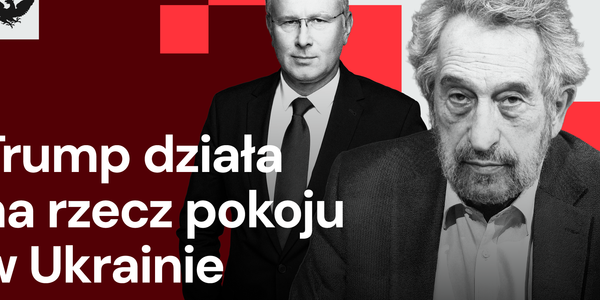
Donald Trump is not an impulsive demagogue but rather a "blunt tool" serving a larger political project, according to journalist and geopolitical expert Eugeniusz Smolar. In a podcast interview, Smolar asserted that Trump's actions are guided by the logic of the Heritage Foundation's "Project 2025" document. He noted that many proposals from this project have been implemented during Trump's first year in office, suggesting Trump is largely a "realizer" of this agenda, even if he publicly distances himself from it during campaigns.
Donald Trump to „często tępe narzędzie" cudzego projektu politycznego, a nie autor własnej strategii
Smolar also offered a less conventional interpretation of Trump's stance on Ukraine. He posits that Trump's policies are not aimed at benefiting Russia but at serving U.S. interests by "clearing the field" of a "local, potentially dangerous conflict." This strategy, Smolar explained, comes at Ukraine's expense. He recalled a U.S. intelligence identification of a specific date in late October 2022 when Putin reportedly ordered preparations for tactical nuclear weapon use in Ukraine. Putin reportedly desisted due to a strong reaction from the U.S. and China. Smolar suggested that a nuclear detonation would have caused such psychological shock in the West that governments would face immense pressure to reach any agreement with Russia, potentially sacrificing Ukraine.
On to czyni dla Stanów Zjednoczonych, po to, żeby wyczyścić przedpole – wyczyścić lokalny, potencjalnie groźny konflikt – Kosztem Ukrainy.
Paradoxically, Smolar observed, Ukraine's fight has significantly weakened Russia's international standing. Russia is rapidly losing influence in its near abroad, with the U.S., China, and the European Union expanding their presence in regions like the Caucasus and Central Asia. However, Smolar cautioned against complacency, warning that as Ukraine performs better on the front lines, Vladimir Putin's internal position becomes more precarious. This vulnerability, he fears, could compel Putin to open new fronts, possibly in Estonia.
Reakcja psychologiczna na Zachodzie byłaby tak dramatyczna, że ludzie by się przestraszyli i zaczęliby wywierać naciski na rządy, żeby jak najszybciej zawrzeć jakiekolwiek porozumienie z Rosją kosztem Ukrainy.
When asked directly about the possibility of war, Smolar responded that while not necessarily probable, it is "possible." He concluded by appealing for preparedness.
Im lepiej wiedzie się Ukrainie na froncie, tym bardziej zagrożona jest wewnętrzna pozycja Putina – a to może skłonić go do otwarcia kolejnego frontu, np. w Estonii.
DistantNews Editorial
Originally published by Rzeczpospolita in Polish. Translated, summarized, and contextualized by our editorial team with added local perspective. Read our editorial standards.
More Stories

From Our Blog

What Gets Lost (and Found) When News Is Translated

The Critical Role of Diaspora Media in Global News

What Travellers Should Know About Countries with Restricted Press

A Digital Nomad's Guide to Following Local News

How the Same Story Looks Different in Different Countries
