

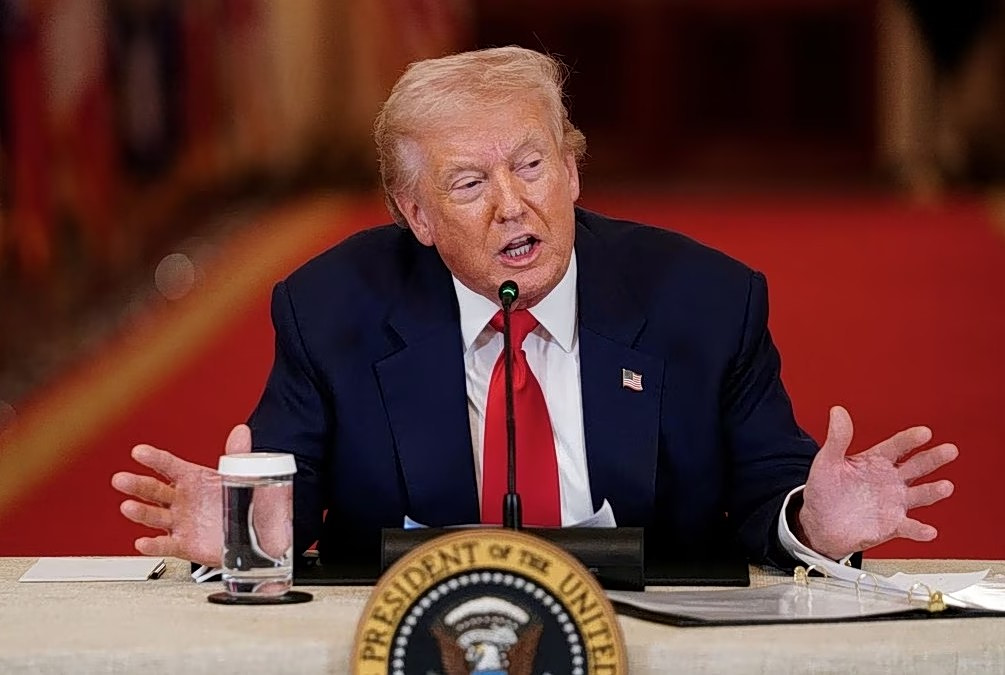
Trump to Iran: If They Want Talks, They Can Call Us
Translated from Greek, summarized and contextualized by DistantNews.
TLDR
- U.S. President Donald Trump announced he canceled his envoys' trip to Islamabad, Pakistan, to meet with Iranian representatives.
- Trump cited "too much time wasted" and confusion within Iran's leadership as reasons for the cancellation, stating that communication could happen over the phone.
- Iranian Foreign Minister Abbas Araghchi responded that Iran had shared a framework for ending the war and that they were yet to see if the U.S. was serious about diplomacy.
From the perspective of Ta Nea, this development underscores the erratic and transactional nature of U.S. foreign policy under the Trump administration, particularly concerning Iran. Trump's abrupt cancellation of the planned meeting in Pakistan, announced via social media, reflects a pattern of impulsive decision-making that leaves allies and adversaries alike guessing his intentions. His reasoning—that too much time would be wasted on travel and that communication could suffice over the phone—dismisses the traditional diplomatic significance of face-to-face negotiations.
Too much time wasted on travel, and too much work!
The Iranian response, articulated by Foreign Minister Araghchi, highlights a stark contrast in diplomatic approaches. While Iran presented a "workable framework" for peace, suggesting a genuine effort to de-escalate, the U.S. appears to be prioritizing a show of strength and leverage, as Trump's statement "We have all the cards, they have none!" implies. Araghchi's cautious observation that "Have yet to see if the U.S. is truly serious about diplomacy" captures the skepticism felt by many nations regarding the sincerity of U.S. engagement under the current leadership.
I do not see the point of making them take an 18-hour flight under the current circumstances (of negotiations). It is too far. We can do just as well over the phone.
This situation is particularly noteworthy from a regional perspective. Pakistan, as the intended host, finds itself in an awkward position, having invested diplomatic capital in facilitating these potential talks. The cancellation not only disrupts regional peace efforts but also raises questions about the reliability of the U.S. as a diplomatic partner. For Iran, the U.S. administration's approach seems designed to exert maximum pressure, potentially hindering rather than advancing genuine dialogue. The emphasis on phone calls over substantive diplomatic engagement suggests a preference for brinkmanship over patient negotiation, a strategy that carries significant risks for regional stability.
There is intense internal infighting and confusion within their “leadership.” Nobody knows who is in charge, not even themselves.
DistantNews Editorial
Originally published by Ta Nea in Greek. Translated, summarized, and contextualized by our editorial team with added local perspective. Read our editorial standards.
More Stories

From Our Blog

What Gets Lost (and Found) When News Is Translated

The Critical Role of Diaspora Media in Global News

What Travellers Should Know About Countries with Restricted Press

A Digital Nomad's Guide to Following Local News

How the Same Story Looks Different in Different Countries
