

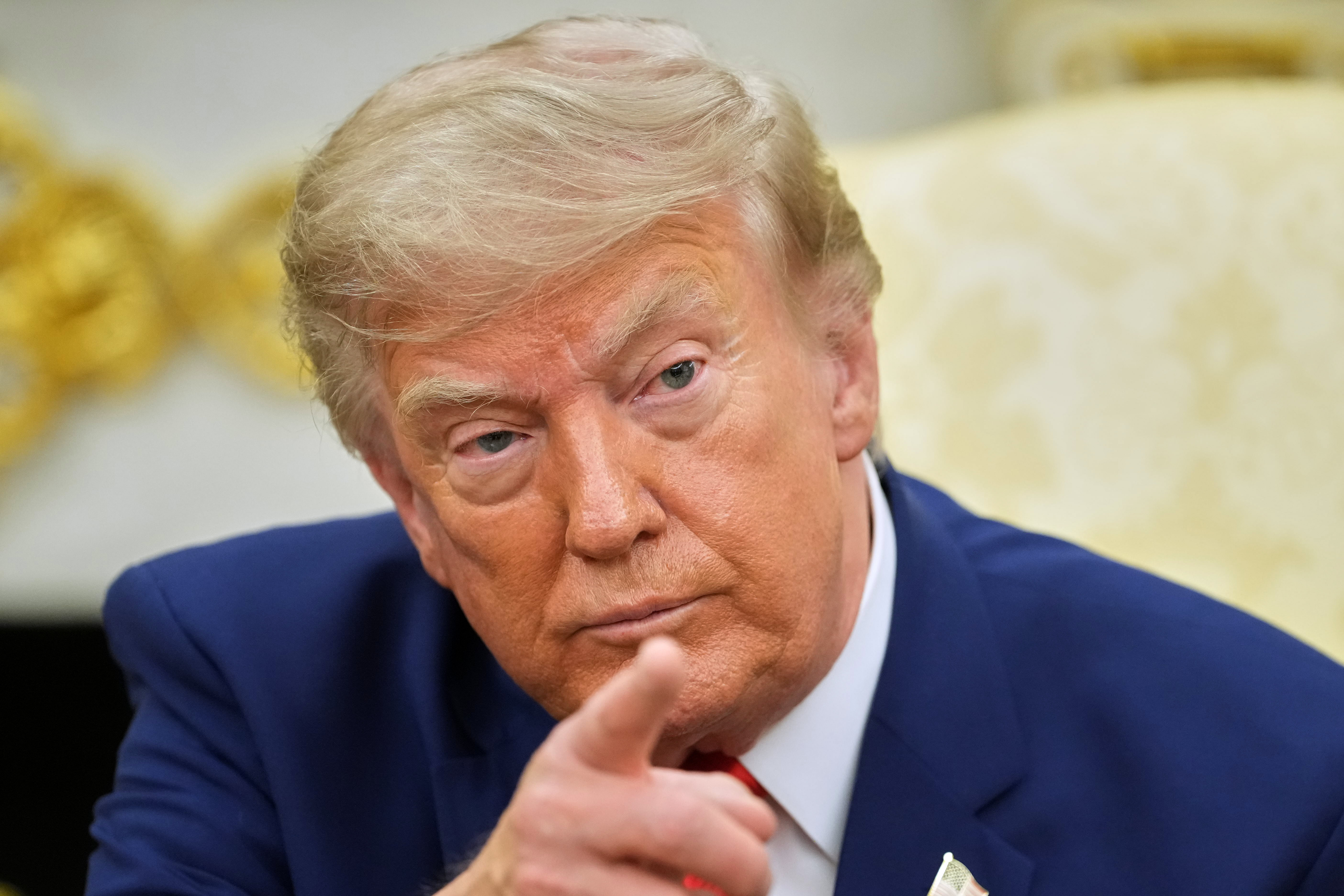

Trump warns of strong response to Houthi Red Sea blockade, hints at Iran strike
Translated from Korean, summarized and contextualized by DistantNews.
At a glance
News
Sources not specified
Context piece
- Former U.S. President Donald Trump warned of strong retaliation if Yemen's Houthi rebels blockade the Red Sea.
- Trump also indicated a potential strike on Iran's "Pickaxe Mountain" nuclear facility.
- The comments come amid rising tensions in the Middle East and concerns over Iran's nuclear program.
Former U.S. President Donald Trump issued a stark warning against Yemen's Houthi rebels, vowing strong retaliation if they proceed with a Red Sea blockade. "We will deal with it," Trump stated at the White House, responding to questions about the Houthi threat to ships using Saudi ports. He recalled a previous instance where the U.S. took strong action against the Houthis for about 45 days, leading to a prolonged period of calm.
The Houthis had previously sent emails to shipping companies indicating that vessels loading or unloading at Saudi ports could become targets. Following this warning, two oil tankers carrying Saudi crude oil en route to China and India altered their course away from the Bab el-Mandeb Strait towards the Suez Canal. However, the U.S. Navy-led joint maritime information center reported no confirmed attacks on Red Sea shipping in the preceding 48 hours.
Let's see what happens. If that happens, we will deal with it.
In a separate development, Trump also signaled an impending strike on Iran's "Pickaxe Mountain," an underground facility near the Natanz uranium enrichment site. "We will probably be striking that area very powerfully soon," he declared, emphasizing that any location associated with Iran's nuclear activities would be targeted. This statement follows reports from The Wall Street Journal and CNN citing Israeli intelligence assessments that Iran may have relocated thousands of uranium enrichment centrifuges to this underground facility.
We will probably be striking that area very powerfully soon.
Trump, however, expressed uncertainty about the centrifuge relocation, stating, "It could be, but there is no confirmed record." The "Pickaxe Mountain" facility, known as Kolang Mountain in Iran, began construction to replace the Natanz centrifuge assembly plant damaged in a 2020 explosion. Experts estimate the underground facility is located about 90 to 140 meters deep within solid rock. Iran has not granted the International Atomic Energy Agency (IAEA) access to this site.
U.S. Secretary of Defense Pete Hegseth addressed the capability to strike such deep underground facilities, stating, "A significant portion of our capabilities is classified," but asserted, "If anyone in the world can reach any target, it's the U.S. military." Some analysts suggest the U.S. military might focus on collapsing tunnel entrances rather than destroying the facility itself. Trump also commented on Iran's desire for negotiations, stating the U.S. is not interested until Iran is ready to meet meaningfully. He further claimed that even if the U.S. withdrew, it would take Iran 20-25 years to recover from damage inflicted by U.S. attacks.
If anyone in the world can reach any target, it's the U.S. military.
DistantNews Editorial
Originally published by Hankyoreh in Korean. Translated, summarized, and contextualized by our editorial team with added local perspective. Read our editorial standards.
More Stories

From Our Blog

What Gets Lost (and Found) When News Is Translated

The Critical Role of Diaspora Media in Global News

What Travellers Should Know About Countries with Restricted Press

A Digital Nomad's Guide to Following Local News

How the Same Story Looks Different in Different Countries
