

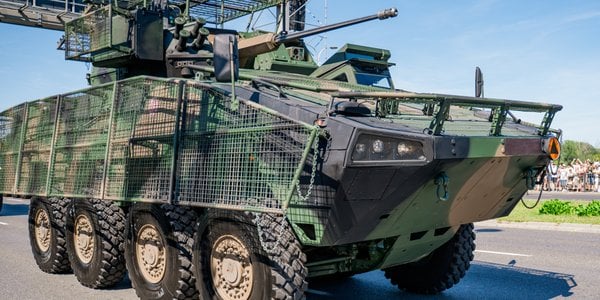

Trump withdraws troops from Europe: A lesson in realism for Poland
Translated from Polish and summarized by DistantNews. Read the original for the full story.
At a glance
News
Named sources
Context piece
- The US has reduced its combat brigades in Europe from four to three, with Poland learning of the decision through media reports.
- This move, seen as a potential signal of diminished US strategic interest in Central and Eastern Europe, has raised concerns about Poland's security.
- Analysts suggest that while the US officially calls the troop reduction a
The United States' decision to reduce its military presence in Europe, specifically by withdrawing one of its four combat brigades, has sent shockwaves through Poland. The fact that Poland, a key NATO ally, learned of this significant strategic shift through media reports, rather than official channels, is particularly galling. This lack of direct communication from Washington is interpreted by many here as a clear signal that Poland, despite its substantial defense spending and crucial role in supporting Ukraine, is not considered a sufficiently strategic partner to warrant consistent US military commitment.
Vladimir Putin will undoubtedly be pleased with this situation.
This development plays directly into Vladimir Putin's long-standing demands for NATO to roll back its military infrastructure to pre-1997 borders. The withdrawal can be seen as a tacit acknowledgment of these demands, potentially emboldening Russia and diminishing the perceived importance of Central and Eastern Europe in US foreign policy calculations. The article highlights the critical reliance of European defense on US technological superiority, satellite intelligence, and, crucially, its nuclear umbrella. Without a robust US presence, Europe's ability to deter Russian aggression is significantly weakened.
The US has sent Poland a signal: You are not our strategic ally, so we can suffer from their decisions.
The Polish government and presidential palace appear to have been caught off guard, underscoring a potential disconnect between Warsaw's expectations of its alliance with the US and Washington's actual strategic priorities. The lack of a unified political front in Poland, with calls for a joint press conference between the president and prime minister to present a united stance to the US, further complicates matters. From a Polish perspective, this situation underscores the perennial challenge of balancing national security interests with the often unpredictable nature of geopolitical alliances. The article, published in Rzeczpospolita, reflects a sober assessment of Poland's security landscape, emphasizing the need for realism and self-reliance in the face of shifting international dynamics.
Europe will never provide itself with the kind of nuclear umbrella that the United States provides.
About this summary
Originally published by Rzeczpospolita in Polish. Translated, summarized, and contextualized automatically by DistantNews, with a note on how the source frames the story. Not individually reviewed before publishing. How this works.
More Stories


From Our Blog

News in Translation: What Gets Lost, and How We Keep the Framing

Diaspora Media: How Communities Abroad Follow Home

Traveling Where the Press Is Not Free: How to Read the News There

The Digital Nomad's Guide to Local News

The Same Story, Different Countries: How Coverage Changes at the Border
