

TTC’s first subway barrier installation renews criticism of safety plan
Translated from English and summarized by DistantNews. Read the original for the full story.
At a glance
News
Named sources
Ongoing story
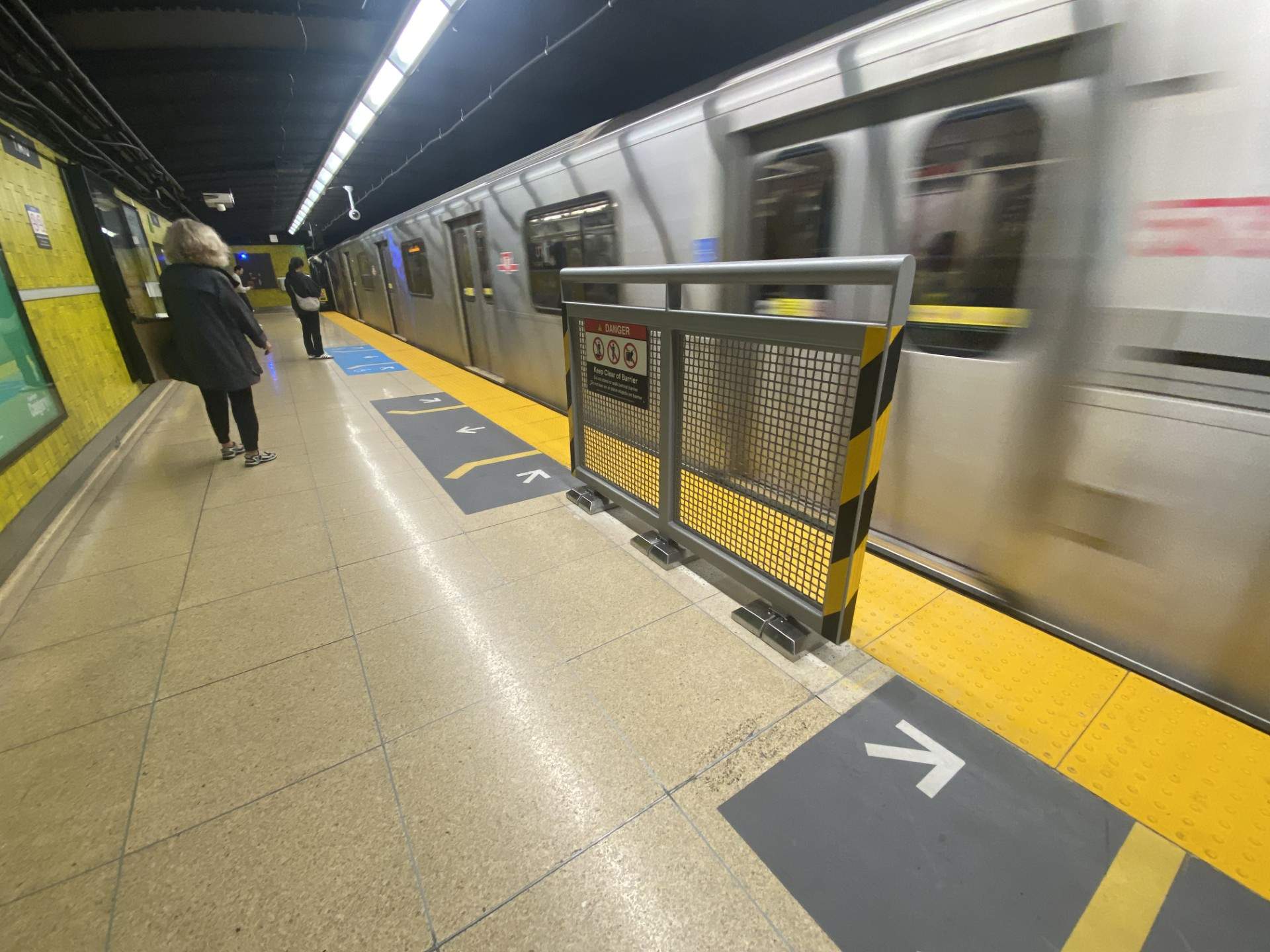
- The TTC has installed the first steel barrier in a pilot project at Toronto Metropolitan University station, formerly Dundas station.
- Critics say the barriers may do little to prevent trespassing or falls onto the tracks, while full-height platform doors would cost far more.
- Mayor Olivia Chow and other officials say the pilot reflects the lower cost of steel barriers, with broader funding still needed for platform doors.
Toronto’s first subway platform barrier has gone in at Toronto Metropolitan University station, but the pilot has intensified criticism rather than settled it. The installation forms part of a program that could cost up to $2 million.
Mayor Olivia Chow and TTC leadership announced the safety measures alongside plans for more staffing, security and outreach workers focused on homelessness and mental health. But the barriers proved disappointing to critics because they consist of steel fences with openings for doors, rather than the floor-to-ceiling platform doors used at newer systems.
Chow and TTC CEO Mandeep Lali have defended the design by pointing to similar barriers in New York City and their lower cost. Critics, including Coun. Josh Matlow, argue that the money should instead fund full platform edge doors at stations where they are most needed. “They are performative, but they aren’t a good performance,” Matlow said.
The dispute has also entered Toronto’s municipal election campaign. Mayoral candidate Brad Bradford has posted videos attacking the decision, while his campaign says floor-to-ceiling doors should be the only option and could pay for themselves by preventing deaths, injuries and delays.
Installing full platform doors across the subway system would cost an estimated $4.1 billion, or about $55 million per station, according to figures cited by Chow’s campaign. Chow has said she prefers that option but needs funding from the provincial or federal governments. Transit advocate Andrew Pulsifer of TTC Riders also supports it, saying the plan will require Ottawa or Queen’s Park to contribute.
They are performative, but they aren’t a good performance.
About this summary
Originally published by Global News in English. Translated, summarized, and contextualized automatically by DistantNews, with a note on how the source frames the story. Not individually reviewed before publishing. How this works.
More Stories

From Our Blog

What Gets Lost (and Found) When News Is Translated

The Critical Role of Diaspora Media in Global News

What Travellers Should Know About Countries with Restricted Press

A Digital Nomad's Guide to Following Local News

How the Same Story Looks Different in Different Countries
