


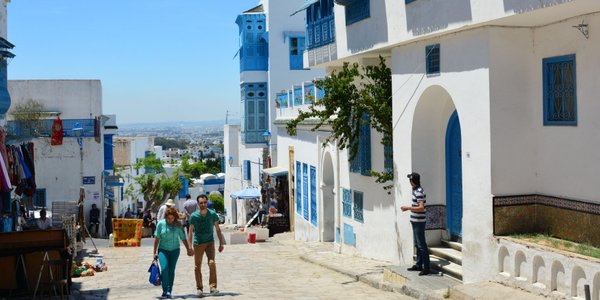
Tunisian town Sidi Bou Said added to UNESCO World Heritage list
Translated from Polish, summarized and contextualized by DistantNews.
At a glance
News
Official statement
Outcome reported
- Sidi Bou Said, a picturesque white-and-blue town in Tunisia, has been added to the UNESCO World Heritage list.
- The town is recognized for its traditional Arab-Andalusian architecture and its historical role as a hub for artists and intellectuals.
- This inscription marks Sidi Bou Said's independent status, separate from the archaeological site of Carthage, further solidifying Tunisia's representation on the UNESCO list.
The charming Tunisian town of Sidi Bou Said, instantly recognizable by its striking white-and-blue architecture, has officially joined the UNESCO World Heritage list. The decision was made by the World Heritage Committee during its session in Busan, South Korea, on July 26 and 27.
Known as a Mediterranean center for cultural and spiritual inspiration, Sidi Bou Said sits atop a hill overlooking the Gulf of Tunis. Its traditional Arab-Andalusian style, winding streets, and long-standing reputation as a haven for artists and intellectuals worldwide have long drawn visitors. The town's spiritual dimension is rooted in its development around the 12th-13th century tomb of Sufi master Abou Saïd Khalef Ibn Yahya El-Tamimi El-Béji, after whom it is named.
This inscription grants Sidi Bou Said a distinct and independent status on the UNESCO register, previously considered part of the archaeological site of Carthage, which was inscribed in 1979. The application process, initiated in February 2024 and finalized with official documentation in February 2025, was overseen by Tunisian authorities, including the Ministry of Culture and the National Institute of Heritage, with support from the African World Heritage Fund.
Sidi Bou Said now becomes the tenth Tunisian site to be recognized by UNESCO, reinforcing the country's significant presence among World Heritage sites in Africa and the Arab world. Other Tunisian sites on the list include the Medina of Tunis, the archaeological site of Carthage, the El Jem Amphitheatre, Ichkeul National Park, the Punic city of Kerkouane, the Great Mosque of Kairouan, the Medina of Sousse, the archaeological site of Thugga, and the island of Djerba.
DistantNews Editorial
Originally published by Rzeczpospolita in Polish. Translated, summarized, and contextualized by our editorial team with added local perspective. Read our editorial standards.
More Stories

From Our Blog

What Gets Lost (and Found) When News Is Translated

The Critical Role of Diaspora Media in Global News

What Travellers Should Know About Countries with Restricted Press

A Digital Nomad's Guide to Following Local News

How the Same Story Looks Different in Different Countries
