

Turkey's parliament rejects motion to investigate press freedom violations
Translated from Turkish, summarized and contextualized by DistantNews.
At a glance
News
Sources not specified
Outcome reported
- A parliamentary motion by the YENİ Party to investigate press and expression freedom violations in Turkey was rejected by the AKP and MHP parties.
- YENİ Party Deputy Chairman Utku Çakırözer cited statistics on journalist detentions, arrests, and trials, stating Turkey ranks 163rd out of 180 countries in press freedom.
- Çakırözer argued that restricting journalists hinders the reporting of significant historical and social processes in the country.
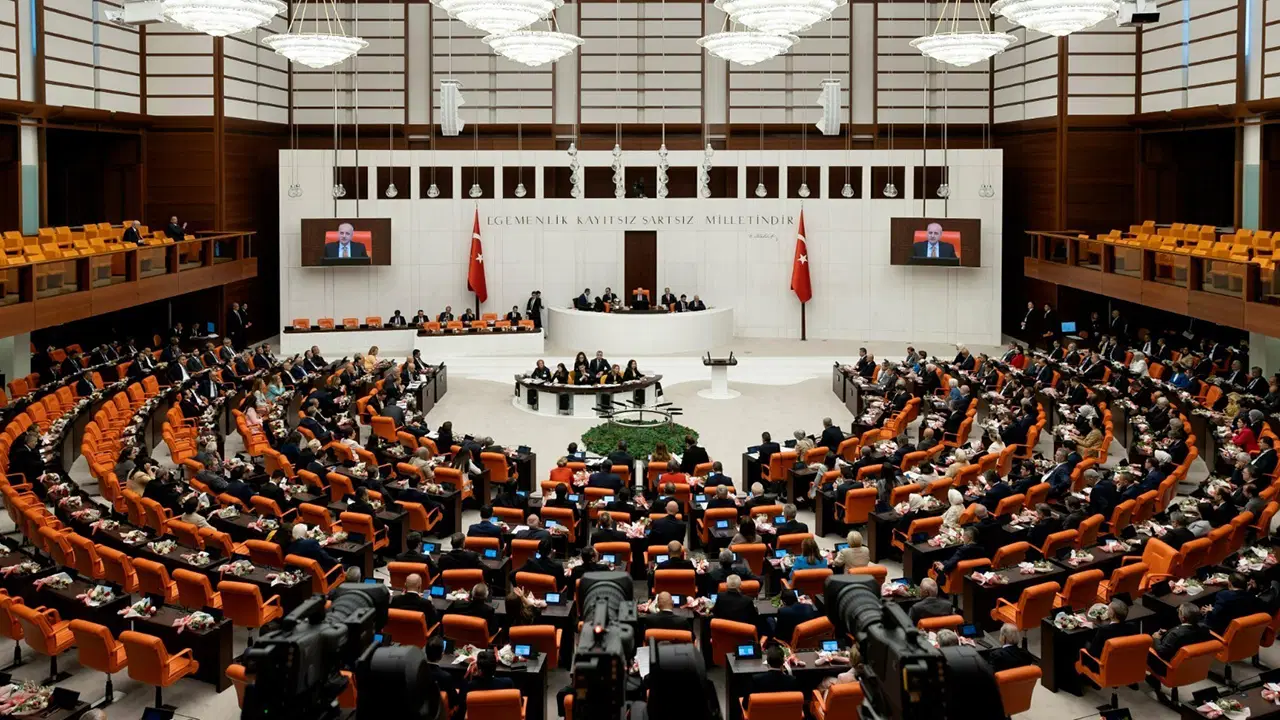
Turkey's parliament has rejected a motion proposed by the YENİ Party aimed at investigating alleged violations of freedom of expression and the press. The motion, discussed in the Grand National Assembly under the chairmanship of Deputy Speaker Tekin Bingöl, was ultimately voted down by the ruling AKP and its ally MHP.
During the debate, YENİ Party Deputy Chairman Utku Çakırözer presented a critical view of the current government's policies. He asserted that the AKP administration's efforts to suppress, censor, and obstruct press freedom have intensified. Çakırözer highlighted that journalists in Turkey frequently face investigations, detentions, and arrests due to their reporting, writing, and social media activities. He pointed to judicial data, stating that in July alone, despite it being a judicial recess, journalists appeared in court at least 40 times, with 8 detained and 2 arrested. Since the beginning of the year, journalists have faced court proceedings 350 times to defend their work, with at least 50 journalists detained and 15, including prominent names, held in custody for months.
The AKP's efforts to blockade freedom of expression and the press through pressure, censorship, and obstruction unfortunately continue to increase. Turkey has fallen to 163rd place out of 180 countries in the world press freedom rankings as of 2026 because journalists face investigation, detention, and arrest due to their news, writing, and sharing.
Çakırözer emphasized the critical role of a free press in documenting the nation's history and social progress. He questioned how significant events, such as efforts to end terrorism and achieve social peace, could be accurately reported if journalists are imprisoned and their work censored. He noted that journalists are often prevented from covering protests and demonstrations, and even barred from attending court proceedings related to their colleagues. "How will you write, how will you tell this historical process? By putting journalists in prison, censoring their news, shutting down websites?" he asked, criticizing the restrictions placed on domestic journalists while foreign reporters are allowed to cover events like summits.
The rejection of the motion underscores the ongoing tension surrounding press freedom in Turkey. Critics argue that such limitations stifle public discourse and prevent a full accounting of the country's challenges and developments. The YENİ Party's initiative aimed to bring these issues to the forefront, but the parliamentary vote indicates a lack of consensus on the severity of the problem or the need for a dedicated investigation.
Dear colleagues, our Parliament is witnessing historic days. On one hand, we say we will end terrorism and achieve social peace; but who will write, who will tell this historical process? Will you do it by putting journalists in prison, censoring their news, shutting down websites?
DistantNews Editorial
Originally published by Cumhuriyet in Turkish. Translated, summarized, and contextualized by our editorial team with added local perspective. Read our editorial standards.
More Stories



From Our Blog

What Gets Lost (and Found) When News Is Translated

The Critical Role of Diaspora Media in Global News

What Travellers Should Know About Countries with Restricted Press

A Digital Nomad's Guide to Following Local News

How the Same Story Looks Different in Different Countries
