


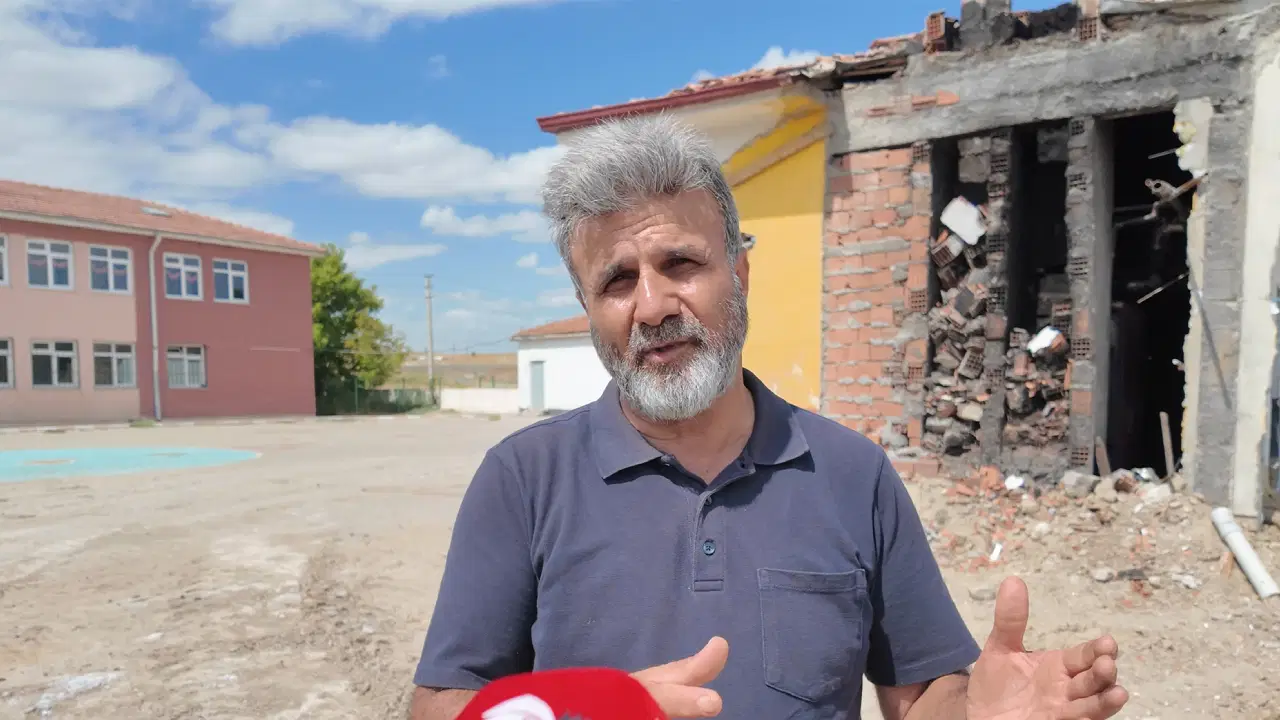
Turkish villagers protest planned 4-classroom school, demand 8
Translated from Turkish, summarized and contextualized by DistantNews.
At a glance
News
Sources not specified
New plan
- A school in Sekili, Turkey, built in 1992 and previously reinforced, was demolished due to structural risks and is being rebuilt with a 4-classroom design.
- Villagers and former officials are protesting the 4-classroom plan, arguing it is insufficient for the 24-25 surrounding villages that use it as a central hub.
- They are advocating for an 8-classroom school with a canteen and library, citing the large number of students and the lack of other schools in the region, though a businessman has agreed to fund the 4-classroom version.
A school in Sekili, Turkey, serving 24 to 25 surrounding villages, is slated for demolition and reconstruction, but a dispute has arisen over its size. The Şehit Osman Pekşen First and Middle School, originally opened in 1992, was recently demolished after being declared structurally unsound and a seismic risk. A protocol was signed between the Yozgat Governorship and businessman Yaşar İşler for the construction of a new school with a steel frame.
We wanted a complete 8-classroom school with a canteen and library to be built here, but due to the thrift directive and the belief that a 4-classroom school is sufficient for Sekili, they reduced it to 4 classrooms.
However, the local community is expressing strong opposition to the planned 4-classroom structure, arguing it will be inadequate. Former Sekili Mayor Halil Bacanak stated that the school serves as a central hub for numerous villages, including 20 from Kırşehir, and that its commercial activity is significant. He emphasized the need for an 8-classroom school with a canteen and library, noting that many other village schools have closed, leaving this one as the sole educational facility for the area.
Bacanak explained that their request for an 8-classroom school was reduced to 4 due to a "thrift directive" and the assertion that a 4-classroom school would suffice for Sekili. Businessman Yaşar İşler agreed to fund the 4-classroom project. "We visited our Provincial Directorate of National Education and governorship. We wanted a complete 8-classroom school with a canteen and library to be built here, but due to the thrift directive and the belief that a 4-classroom school is sufficient for Sekili, they reduced it to 4 classrooms," Bacanak said.
We wish we had an 8-classroom school with a canteen and library, it would have been more beautiful. But this was what we could do. We are still happy that our school is being built. I think it's better than not having one.
Sekili Village Headman Sinan Keloğlu acknowledged the desire for a larger school but expressed gratitude for the new construction. "We wish we had an 8-classroom school with a canteen and library, it would have been more beautiful. But this was what we could do. We are still happy that our school is being built. I think it's better than not having one," he stated.
The strengthening was not done from the columns, but from the walls. But the columns had cracked, so they demolished it.
Cengiz Kılıç, a resident and veteran, recounted his 13 years as head of the school's parent-teacher association. He mentioned that a reinforcement effort two years prior, which he claimed was done without community knowledge and without state funding but rather through citizen contributions, proved insufficient. "The strengthening was not done from the columns, but from the walls. But the columns had cracked, so they demolished it," Kılıç said. He added that they had explained the situation to the governor, who promised an 8-classroom school, but he fears the 4-classroom design will be insufficient given the student population from the surrounding villages.
4 classrooms will be insufficient. As the mayor said, 26-28 villages come here. This is a central place. Not 8 classrooms, even 10 classrooms would not be enough for us.
DistantNews Editorial
Originally published by Cumhuriyet in Turkish. Translated, summarized, and contextualized by our editorial team with added local perspective. Read our editorial standards.
More Stories



From Our Blog

What Gets Lost (and Found) When News Is Translated

The Critical Role of Diaspora Media in Global News

What Travellers Should Know About Countries with Restricted Press

A Digital Nomad's Guide to Following Local News

How the Same Story Looks Different in Different Countries
