

Türkiye, Qatar Aim to Lift Trade Volume to $5 Billion
Translated from English, summarized and contextualized by DistantNews.
At a glance
News
Named sources
New plan
- Türkiye and Qatar aim to increase their bilateral trade volume to $5 billion, according to Turkish Trade Minister Ömer Bolat.
- The two nations have seen significant trade growth over the past 21 years, reaching $1.3 billion last year.
- The Trade and Economic Partnership Agreement (TEPA) and alternative trade routes amid regional disruptions are expected to boost this target.
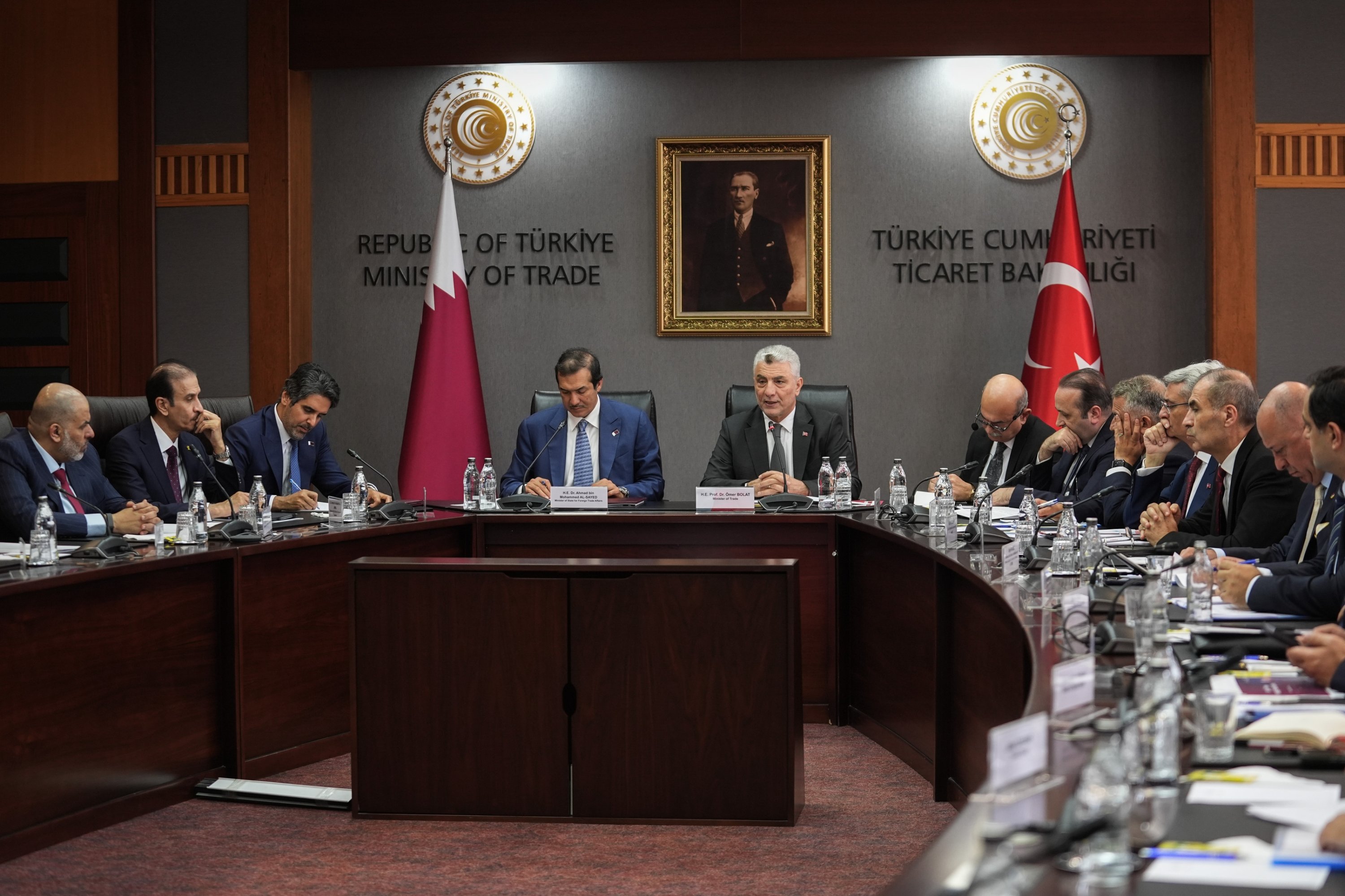
Turkish Trade Minister Ömer Bolat announced that Türkiye and Qatar are targeting a bilateral trade volume of $5 billion. Hosting Qatar's Minister of State for Foreign Trade, Ahmed bin Mohammed Al-Sayed, in Ankara, Bolat highlighted the substantial progress in bilateral relations.
"Our total annual foreign trade increased 53-fold over the past 21 years, reaching $1.3 billion last year," Bolat stated. He noted that trade peaked at $2.5 billion during preparations for the 2022 FIFA World Cup in Qatar, primarily driven by construction projects.
The Trade and Economic Partnership Agreement (TEPA), which came into effect last year, is expected to play a crucial role in achieving the $5 billion target. Turkish contractors have completed 206 projects worth $21 billion in Qatar, while approximately 250 Qatari companies have invested $7.8 billion in Türkiye across various sectors like finance, energy, and agriculture.
Türkiye-Qatar relations have truly made tremendous progress. Our total annual foreign trade increased 53-fold over the past 21 years, reaching $1.3 billion last year.
Bolat also addressed the logistical challenges posed by the closure of the Strait of Hormuz due to regional conflict. He emphasized the need for alternative trade routes to avoid over-reliance on maritime transport. Türkiye is actively working to supply consumer goods to Qatar and other Gulf countries through transit agreements with Saudi Arabia, utilizing routes via Syria, Jordan, and Iraq.
Qatar's Investment Authority has expressed interest in expanding its investments in Türkiye, with initiatives currently underway to facilitate this. Both nations are committed to strengthening transit and trade corridors for greater stability.
The current circumstances have shown that alternative routes are greatly needed to avoid dependence solely on maritime transport and the Strait of Hormuz.
DistantNews Editorial
Originally published by Daily Sabah in English. Translated, summarized, and contextualized by our editorial team with added local perspective. Read our editorial standards.
More Stories


From Our Blog

What Gets Lost (and Found) When News Is Translated

The Critical Role of Diaspora Media in Global News

What Travellers Should Know About Countries with Restricted Press

A Digital Nomad's Guide to Following Local News

How the Same Story Looks Different in Different Countries
