


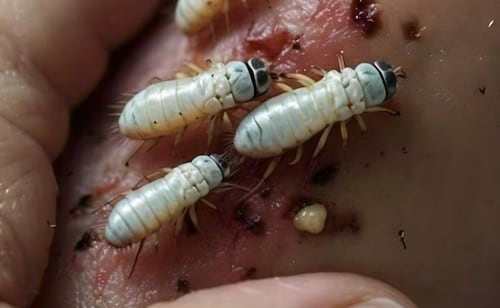
Two human screwworm cases confirmed in Guanajuato; both are elderly adults
Translated from Spanish, summarized and contextualized by DistantNews.
At a glance
News
Named sources
Context piece
- Guanajuato, Mexico, has confirmed two cases of human myiasis caused by the screwworm fly in elderly individuals.
- The state reports a low incidence of human cases, representing 0.8% of the national total.
- Health authorities are maintaining surveillance and advising the public on wound care and insect protection.
The Secretariat of Health of Guanajuato (SSG) has confirmed two cases of myiasis caused by the screwworm fly (Cochliomyia hominivorax) in elderly residents of Celaya and Tierra Blanca municipalities. Both patients, aged 75, received timely medical attention, specific treatment, and specialized follow-up.
The screwworm is an infestation caused by fly larvae that deposit their eggs mainly in open wounds.
These individuals have successfully completed their epidemiological surveillance period. Their ongoing medical follow-up is related to pre-existing chronic health conditions unrelated to the myiasis infestation. As of May 18, 2026, the state had detected 221 cases of screwworm infestation in animals across 18 municipalities.
Guanajuato ranks 13th nationally in human myiasis cases, with its two confirmed human infections accounting for only 0.8% of the 254 national cases. The SSG stated that the state has one of the lowest incidences of human screwworm cases in the country.
This is a preventable and treatable condition when identified early and treated promptly by health personnel.
Health authorities are maintaining active epidemiological surveillance in all medical units and coordinating with federal, sanitary, and agricultural bodies to strengthen early detection, prevention, and timely care. The SSG emphasized that screwworm infestation is preventable and treatable if identified and treated early. The condition does not transmit from person to person, and there is no generalized risk to the population of Guanajuato.
This condition is not transmitted from person to person, and, at the moment, there is no generalized risk situation for the Guanajuato population.
DistantNews Editorial
Originally published by El Universal in Spanish. Translated, summarized, and contextualized by our editorial team with added local perspective. Read our editorial standards.
More Stories


From Our Blog

What Press Freedom Means for the News You Read

What Gets Lost (and Found) When News Is Translated

The Critical Role of Diaspora Media in Global News

What Travellers Should Know About Countries with Restricted Press

A Digital Nomad's Guide to Following Local News
