


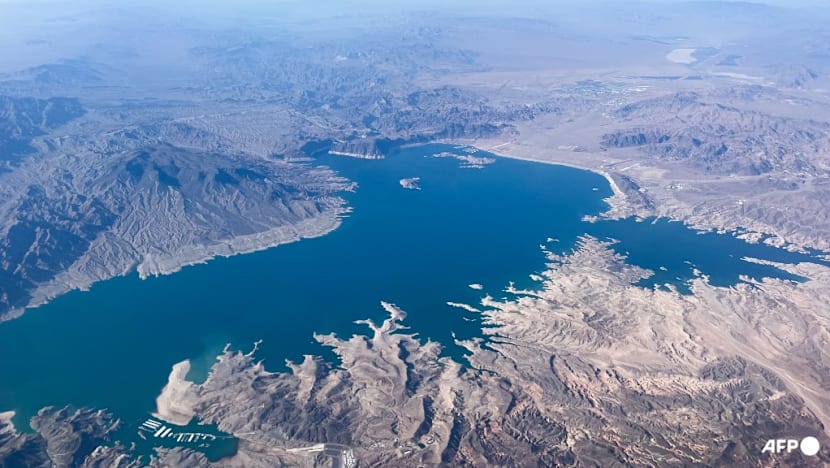
Two largest US reservoirs hit record lows amid western drought
Summarized and contextualized by DistantNews.
At a glance
News
Sources not specified
Ongoing story
- The two largest U.S. reservoirs, Lake Mead and Lake Powell, have reached their lowest levels on record due to a prolonged drought in the western United States.
- These declining water levels threaten water supplies for millions of people and impact hydropower generation in the region.
- Federal officials are considering emergency measures to manage the crisis, including potential water cuts to states relying on the Colorado River.
The western United States is grappling with a severe drought, pushing its two largest reservoirs, Lake Mead and Lake Powell, to historic lows. These critical water sources, fed by the Colorado River, are now at levels not seen since they were initially filled.
The implications are far-reaching, jeopardizing water supplies for an estimated 40 million people across Arizona, Nevada, California, and other states. Hydropower generation at the Hoover Dam and Glen Canyon Dam is also significantly impacted, raising concerns about energy reliability in the region.
Federal officials are actively monitoring the situation and exploring emergency measures. These could include implementing further water cuts to states that depend on the Colorado River, a move that would intensify existing tensions over water allocation. The prolonged dry spell highlights the growing challenges of water management in an era of climate change.
DistantNews Editorial
Originally published by CNA. Summarized and contextualized by our editorial team with added local perspective. Read our editorial standards.
More Stories



From Our Blog

What Gets Lost (and Found) When News Is Translated

The Critical Role of Diaspora Media in Global News

What Travellers Should Know About Countries with Restricted Press

A Digital Nomad's Guide to Following Local News

How the Same Story Looks Different in Different Countries
