

Two meteor showers peak, offering sky spectacle despite full moon interference
Translated from Romanian, summarized and contextualized by DistantNews.
At a glance
News
Sources not specified
Context piece
- Two meteor showers, the Alpha Capricornids and Southern Delta Aquarids, will reach their peak activity on the night of July 30-31.
- Observers may face challenges due to the full moon, whose bright light could obscure fainter meteors.
- Despite potential visibility issues, tips are provided for maximizing viewing opportunities, including seeking dark locations and orienting towards the north.
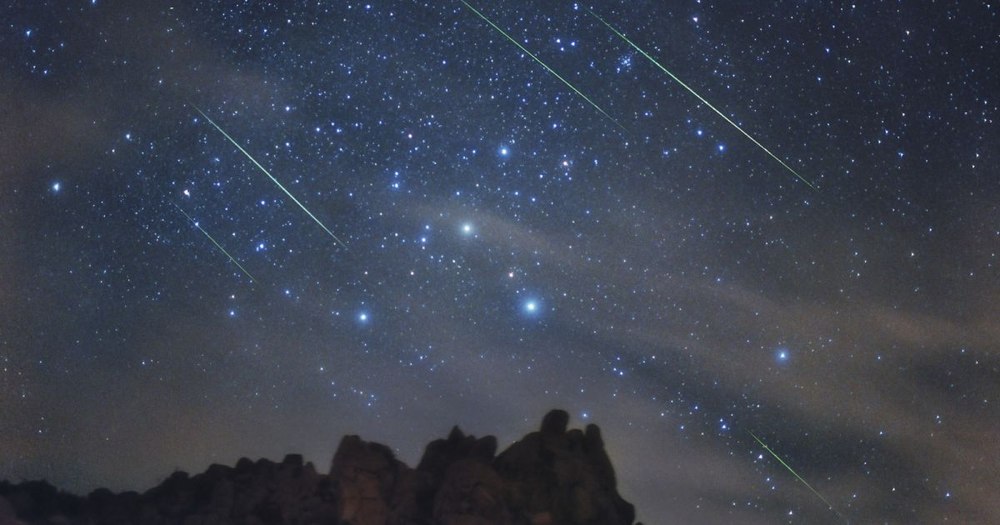
Stargazers have a double celestial treat this week as two meteor showers, the Alpha Capricornids and Southern Delta Aquarids, reach their peak activity on the night of Thursday into Friday, July 30-31.
While the annual showers offer a chance for a spectacular display, the full moon in July may hinder observations. The moon's bright light can wash out fainter meteors, making them difficult to see. "Meteors will simply be very hard to see," said Bill Cooke, head of NASA's Meteoroid Environment Office.
Bob Lunsford, a reporting coordinator for the American Meteor Society, noted that a full moon typically reduces the visibility of meteor shower peaks about once every three years. However, he advised those still hoping to catch the show to find a dark location, preferably at a higher altitude away from city lights. To mitigate the moon's glare, experts suggest facing north with the moon behind you, allowing your eyes to adjust to the darkness.
Those in the Southern Hemisphere might have a slight advantage, as the radiant point for the Southern Delta Aquarids appears higher above the horizon. This shower is known for its faster meteors. While an estimated two meteors per hour might be visible in the Northern Hemisphere, the Southern Hemisphere could see around three.
Meteors will simply be very hard to see.
DistantNews Editorial
Originally published by Adevărul in Romanian. Translated, summarized, and contextualized by our editorial team with added local perspective. Read our editorial standards.
More Stories


From Our Blog

What Gets Lost (and Found) When News Is Translated

The Critical Role of Diaspora Media in Global News

What Travellers Should Know About Countries with Restricted Press

A Digital Nomad's Guide to Following Local News

How the Same Story Looks Different in Different Countries
