


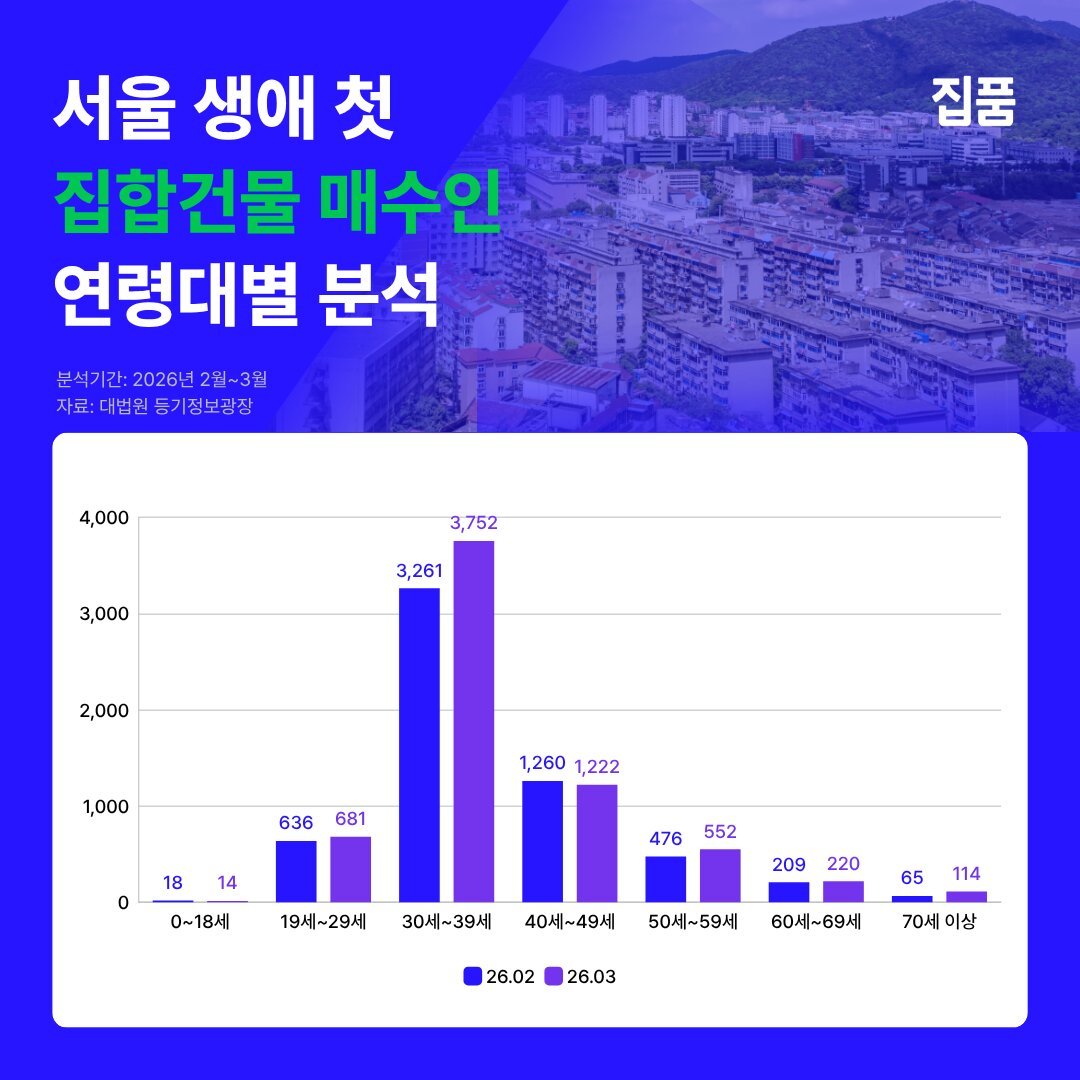
Two out of three first-time homebuyers in Seoul are in their 20s and 30s; concentrated in Gangseo and Gangbuk
Translated from Korean, summarized and contextualized by DistantNews.
TLDR
- In March, 6,555 individuals in Seoul purchased their first apartment, a 10.6% increase from the previous month, with 67.8% being under 39 years old.
- The majority of first-time homebuyers are in their 30s, accounting for 57.2% of the total and driving 78% of the overall increase in new buyers.
- Demand is concentrated in outer Seoul districts like Gangseo-gu, Nowon-gu, and Gangbuk-gu, which offer a balance of commuting convenience and affordability, while areas like Gangnam have seen a decrease in first-time buyers.
Seoul's housing market continues to be a focal point for young Koreans, with recent data revealing a surge in first-time homebuyers, predominantly in their 20s and 30s. This trend, as reported by Dong-A Ilbo, highlights the persistent challenges and aspirations of younger generations seeking to establish themselves in the capital.
The concentration of these young buyers in districts like Gangseo-gu and Gangbuk-gu is particularly noteworthy. These areas, often considered more affordable and accessible for commuting, suggest a pragmatic approach by young Koreans prioritizing practical considerations like price and location over the prestige of more central, expensive neighborhoods. The significant increase in buyers in Gangbuk-gu, more than tripling in a month, points to a dynamic shift in demand.
Conversely, the decline in first-time buyers in affluent areas like Gangnam and Songpa indicates a widening gap. As property values in these prime locations remain high, they become increasingly out of reach for those just starting their homeownership journey. This bifurcation of the market could exacerbate existing inequalities and create distinct housing experiences within the city.
From a South Korean perspective, this data is crucial for understanding demographic shifts and the evolving needs of the populace. It informs policy discussions on housing affordability, urban planning, and support for young families. The data underscores the ongoing efforts by many young Koreans to navigate a challenging housing market, seeking stability and investment in their future, even if it means looking beyond the most coveted addresses.
DistantNews Editorial
Originally published by Dong-A Ilbo in Korean. Translated, summarized, and contextualized by our editorial team with added local perspective. Read our editorial standards.
More Stories



From Our Blog

What Gets Lost (and Found) When News Is Translated

The Critical Role of Diaspora Media in Global News

What Travellers Should Know About Countries with Restricted Press

A Digital Nomad's Guide to Following Local News

How the Same Story Looks Different in Different Countries
