

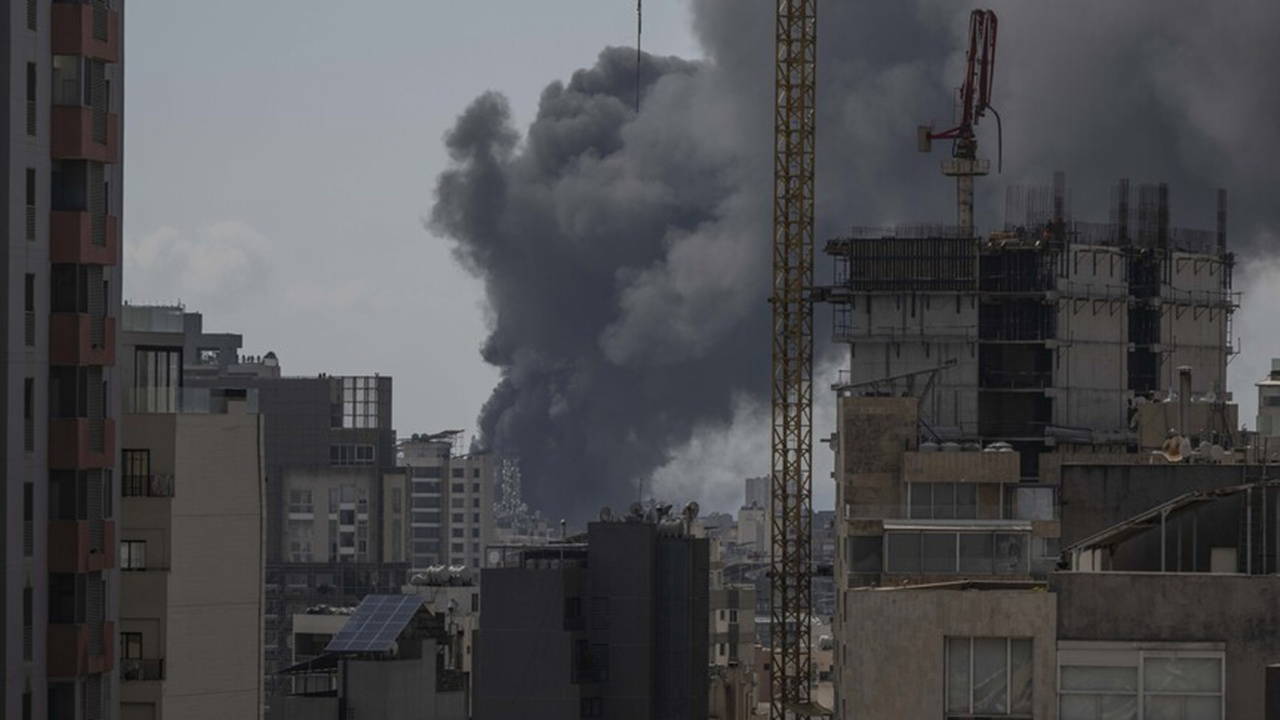
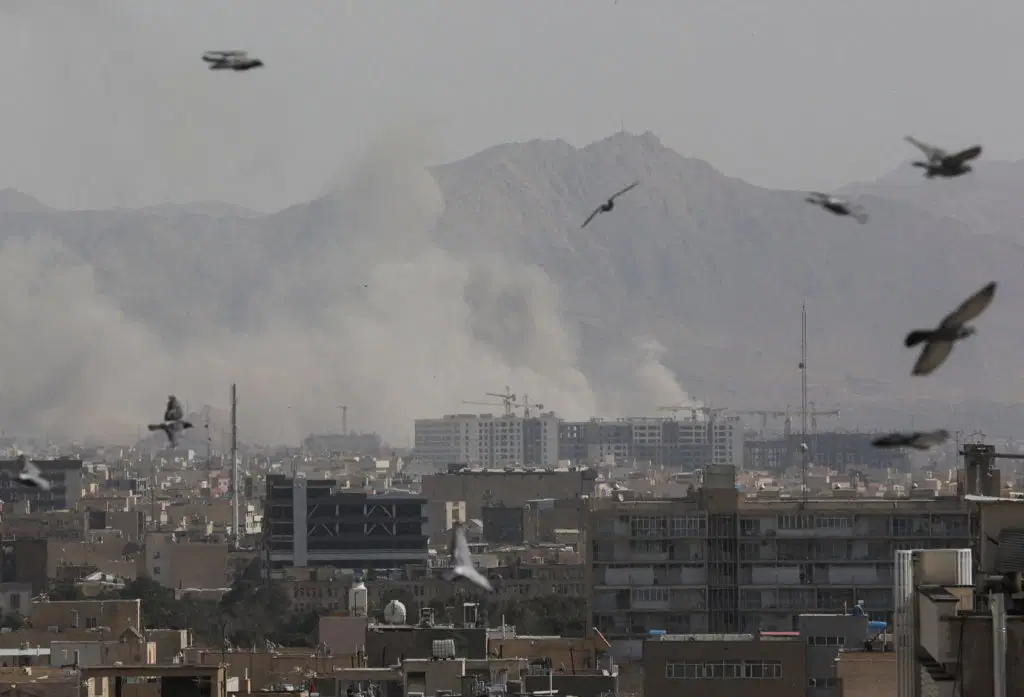
Two senior Iranian military officials killed in Israeli attacks; Iran warns of response
Translated from Turkish, summarized and contextualized by DistantNews.
At a glance
News
Official statement
New plan
- Two high-ranking Iranian military officials were killed in recent Israeli attacks, according to Iranian state television.
- The officials, Seyyed Behmen Hosseini and Ali Reza Abiri, were part of the air defense forces.
- Iran's IRGC Quds Force commander warned that the "resistance front" would jointly respond to attacks by the US and Israel, threatening strategic waterways.
Iran's state television announced that two senior military officials, Seyyed Behmen Hosseini and Ali Reza Abiri, from the air defense forces, were killed in recent Israeli attacks targeting Iran. A funeral ceremony for the fallen soldiers is scheduled to take place in the capital, Tehran, today.
If we can be sure that they are willing to negotiate and will abide by the rules of negotiation, Iran will have no problem advancing negotiations as it has a logic of negotiation and dialogue.
Meanwhile, Ibrahim Azizi, chairman of the Iranian Parliament's National Security and Foreign Policy Committee, spoke with CNN, addressing ongoing obstacles in frozen assets and nuclear matters despite U.S. President Donald Trump's recent statements about an impending agreement. Azizi stated that a potential deal hinges on a change in U.S. behavior amidst deep mistrust. "If we can be sure that they are willing to negotiate and will abide by the rules of negotiation, Iran will have no problem advancing negotiations as it has a logic of negotiation and dialogue," he said.
Azizi expressed his belief that President Trump has not acted "honestly" during negotiations aimed at transforming a temporary ceasefire into a lasting agreement to end the war. "Despite this, we have repeatedly said that we consider negotiations as a continuation of the battlefield. We see negotiations as part of the war," he stated. Regarding uncertainties in the negotiation process, Azizi noted that "we have not seen a serious desire from the U.S. to reach an agreement that can truly implement such a framework."
Despite this, we have repeatedly said that we consider negotiations as a continuation of the battlefield. We see negotiations as part of the war.
He also mentioned that while the U.S. had agreed to release Iran's frozen assets before negotiations, there has been no indication of Washington's willingness to do so. Azizi clarified that current negotiations do not involve issues related to Iran's nuclear program at this stage. When asked about the possibility of a final peace agreement between Iran and the U.S., Azizi indicated it would depend on "the behavior they observe from the other side." "If these behaviors continue, then no. We have no trust in them whatsoever," he concluded.
we have not seen a serious desire from the U.S. to reach an agreement that can truly implement such a framework.
Separately, Brigadier General Ismail Qaani, commander of the IRGC Quds Force, stated on social media that the "resistance front" would jointly respond to attacks by the U.S. and Israel in the region. Highlighting the timing of the Houthi's recent attacks on Israel, Qaani declared, "The line extending from the Strait of Hormuz to Bab el-Mandeb, from the Persian Gulf to the Red Sea, will be the new security belt of resistance." He warned that if the U.S. and Israel continue their attacks, these strategic waterways would be closed by "resistance forces."
If these behaviors continue, then no. We have no trust in them whatsoever.
DistantNews Editorial
Originally published by Cumhuriyet in Turkish. Translated, summarized, and contextualized by our editorial team with added local perspective. Read our editorial standards.
More Stories


From Our Blog

What Gets Lost (and Found) When News Is Translated

The Critical Role of Diaspora Media in Global News

What Travellers Should Know About Countries with Restricted Press

A Digital Nomad's Guide to Following Local News

How the Same Story Looks Different in Different Countries
