


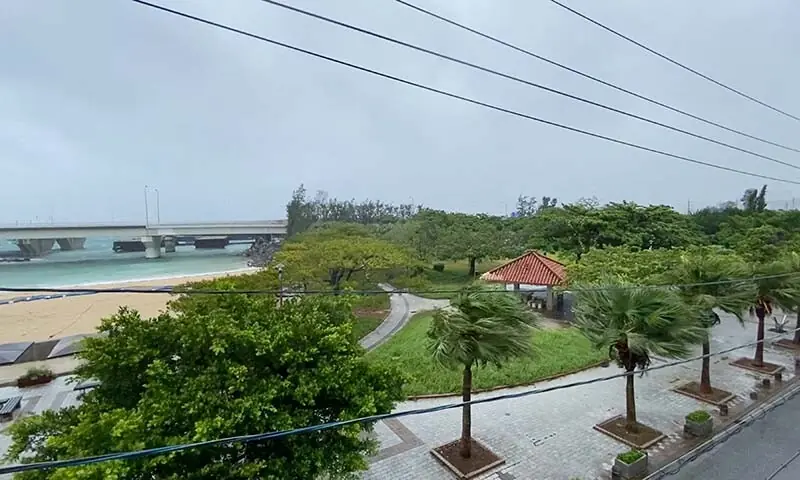
Typhoon Dolphin hits Japan's Okinawa, China shuts ports ahead of landfall
Summarized and contextualized by DistantNews.
At a glance
News
Sources not specified
Ongoing story
- Typhoon Dolphin has struck Japan's southern Okinawa prefecture, causing injuries and widespread power outages.
- China has shut ports and halted ferries as the typhoon is expected to make landfall on its east coast.
- The storm brought maximum sustained winds of 162 kph with gusts up to 216 kph, affecting power to tens of thousands of buildings in Japan.
Typhoon Dolphin made landfall in Japan's southern Okinawa prefecture on Saturday, leaving six people injured and cutting power to over 50,000 buildings. The storm's powerful winds caused non-life-threatening injuries to five elderly individuals in Okinawa, three of whom fell due to the strong gusts. Another person was injured in Kagoshima prefecture.
In Japan, nearly 39,000 buildings lost power in Kagoshima, while Okinawa experienced outages in just over 12,000 homes and businesses. Domestic airlines ANA and Japan Airlines canceled flights to and from Okinawa in response to the typhoon. Dolphin carried maximum sustained winds of 162 kilometers per hour, with gusts reaching up to 216 kph, impacting Okinawa and Amami Island in Kagoshima prefecture the most within Japan.
Meanwhile, China has taken significant precautions ahead of the typhoon's expected landfall on its east coast between late Sunday and early Monday. Authorities have classified Dolphin as an orange-category typhoon, the second-highest alert level. The emergency response level for the storm was raised to Level III, the second-lowest tier, due to concerns about potential flooding and landslides.
The National Meteorological Centre of China forecasts the typhoon will likely make landfall between Zhoushan city in Zhejiang province and Fuding city in Fujian province, with winds near its center estimated at 38-45 meters per second. China's National Marine Forecasting Centre issued a red-level warning for waves, predicting 5-to-8-meter waves in coastal waters off Zhejiang. Orange alerts were also issued for heavy rain and geological disaster risks, alongside a red alert for mountain torrents.
DistantNews Editorial
Originally published by Dawn. Summarized and contextualized by our editorial team with added local perspective. Read our editorial standards.
More Stories



From Our Blog

What Gets Lost (and Found) When News Is Translated

The Critical Role of Diaspora Media in Global News

What Travellers Should Know About Countries with Restricted Press

A Digital Nomad's Guide to Following Local News

How the Same Story Looks Different in Different Countries
