


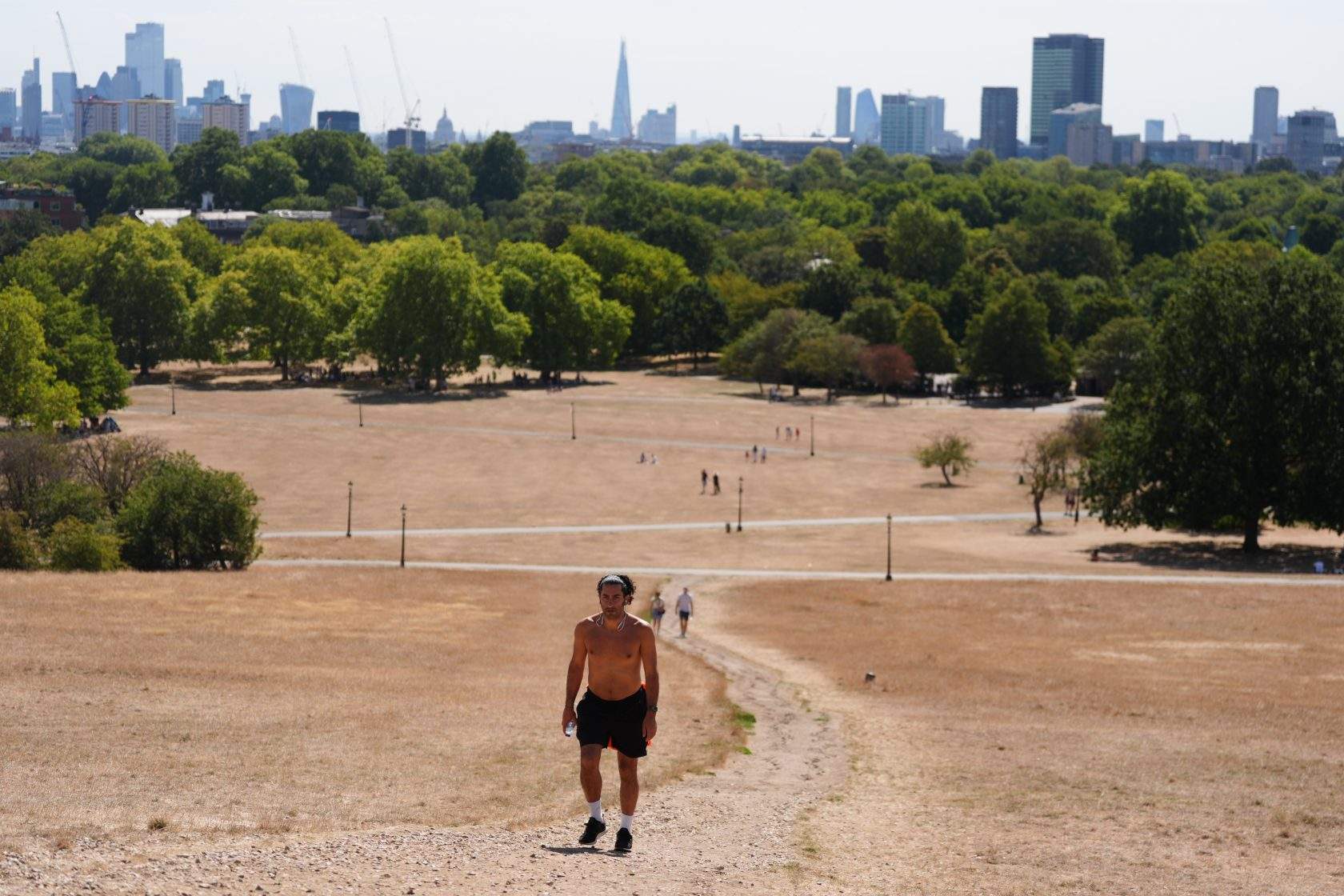
U.K. records hottest day of 2026 as western Europe heats up again
Summarized and contextualized by DistantNews.
At a glance
News
Sources not specified
Ongoing story
- The United Kingdom recorded its hottest day of 2026 on Thursday, with temperatures reaching 38.1 degrees Celsius (100.6 F) in west London.
- This heatwave is part of a broader pattern affecting western Europe, with France experiencing even higher temperatures approaching 41 C.
- The extreme heat has led to multiple grass fires, strained water resources, and highlighted the lack of adequate cooling infrastructure in public buildings like hospitals.
The United Kingdom experienced its hottest day of 2026 on Thursday, as a severe heatwave continued to grip Europe. West London recorded a temperature of 38.1 degrees Celsius (100.6 F), a slight increase from the previous record set in late June, though still below the all-time August record of 38.5 C from 2003. This marks the fourth day in 2026 that temperatures have reached or exceeded 36 C, and the second day to reach 38 C, matching the record set in 2022.
Across western Europe, the heat is even more intense. France has seen temperatures approach 41 C in several regions, from Aquitaine to the Rhone River valley. The U.K. and France are currently enduring their fifth heatwave of the year, with the first recorded in May. The most intense heat is forecast to shift eastward on Friday and recede over the weekend.
The extreme weather has triggered multiple grass fires, including significant incidents in Stourbridge, West Midlands, where homes were burning near a golf course. Beyond the immediate fire risks, the prolonged heat has exacerbated widespread drought conditions across Britain and France. Crops have withered, rivers have shrunk, and water resources are under immense pressure for households, agriculture, and the environment.
This summer's heatwaves have exposed the U.K.'s and France's unpreparedness for such extreme temperatures. Air conditioning is uncommon outside of commercial spaces, and the consequences are being felt acutely in healthcare. Nurses have reportedly collapsed from heat exhaustion while working in hospitals, many of which are housed in older buildings lacking adequate cooling. Nicola Ranger, chief executive of the Royal College of Nursing, stated, "When nursing staff are collapsing, feeling dizzy, sick or even being admitted to the very hospitals they work in because their workplaces cannot handle the heat, it shows just how badly they are being failed."
In response to the drought, Britain's Southern Water has applied for a rare drought order that would restrict nonessential water use by businesses, such as cleaning cars and filling swimming pools. Environment Secretary Angela Eagle will decide on the application, which could be the first such ban since May 2006. The ongoing situation highlights the urgent need for both short- and long-term measures to mitigate the effects of human-caused climate change.
When nursing staff are collapsing, feeling dizzy, sick or even being admitted to the very hospitals they work in because their workplaces cannot handle the heat, it shows just how badly they are being failed.
DistantNews Editorial
Originally published by Global News. Summarized and contextualized by our editorial team with added local perspective. Read our editorial standards.
More Stories



From Our Blog

What Gets Lost (and Found) When News Is Translated

The Critical Role of Diaspora Media in Global News

What Travellers Should Know About Countries with Restricted Press

A Digital Nomad's Guide to Following Local News

How the Same Story Looks Different in Different Countries
