

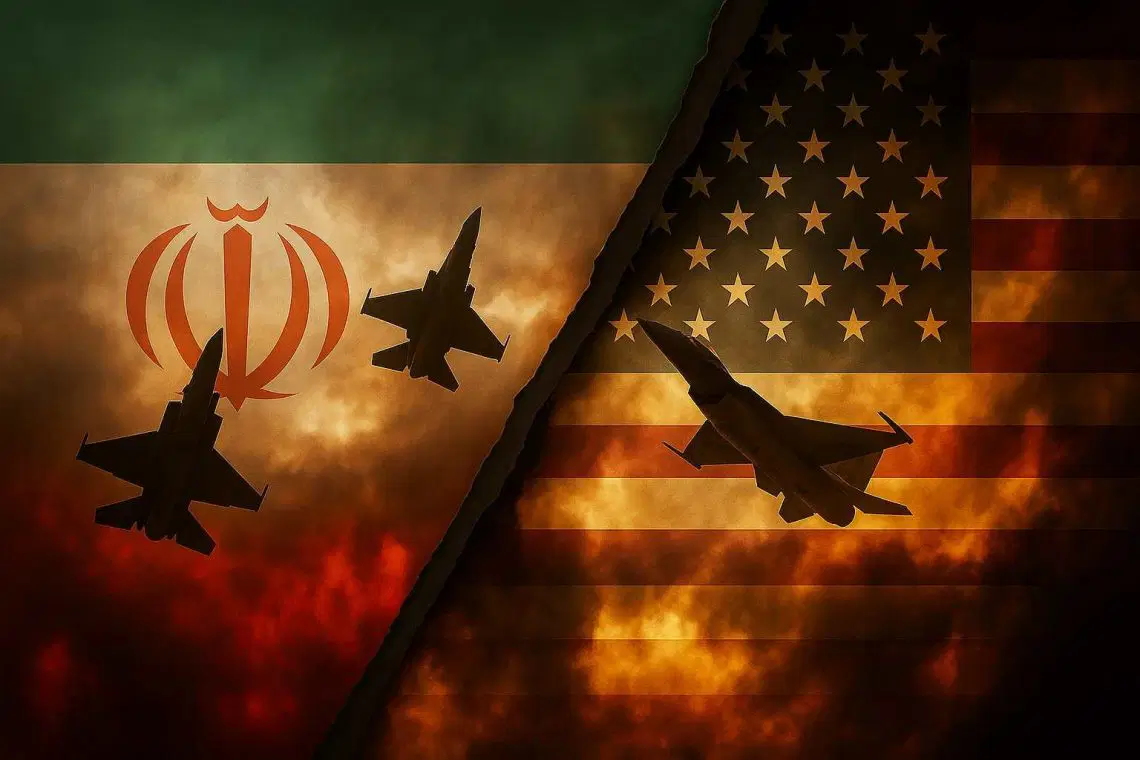
U.S. and Iran exchange strikes; sirens heard in Bahrain and Kuwait
Translated from Turkish, summarized and contextualized by DistantNews.
At a glance
News
Official statement
Ongoing story
- U.S. Central Command (CENTCOM) stated it struck Iranian coastal radar sites after Iran launched ballistic missiles and drones toward the Strait of Hormuz and Gulf countries.
- CENTCOM reported intercepting multiple Iranian ballistic missiles and drones, noting four drones posed an immediate threat to maritime traffic.
- Iran's Revolutionary Guard Corps (IRGC) claimed to have targeted U.S. bases in response to the strikes, alleging U.S. forces attacked two Iranian communication towers.
- Sirens were heard in Bahrain and Kuwait following the exchange.
The U.S. Central Command (CENTCOM) announced it struck Iranian coastal surveillance radar points in the Sirik region and on Qeshm Island. These actions followed Iran's launch of multiple ballistic missiles and unmanned aerial vehicles (UAVs) targeting the Strait of Hormuz and Gulf nations.
Iran's launch of multiple ballistic missiles and unmanned aerial vehicles (UAVs) toward the Strait of Hormuz and Gulf countries.
CENTCOM reported intercepting numerous Iranian ballistic missiles and UAVs. It specifically noted that four UAVs launched toward the Strait of Hormuz posed a direct and immediate threat to maritime traffic in the region. The command also stated that seven ballistic missiles were fired by Iran toward Kuwait and Bahrain. To prevent further maritime attacks, U.S. forces targeted coastal surveillance radar sites in Sirik and on Qeshm Island.
the four UAVs launched toward the Strait of Hormuz posed a direct and immediate threat to maritime traffic in the region.
Initial assessments indicated that six of the seven missiles fired by Iran were intercepted, with one failing to reach its target. CENTCOM confirmed no U.S. personnel were killed or injured. The command refuted Iranian claims of damage to the U.S. Fifth Fleet Headquarters in Bahrain, emphasizing that CENTCOM forces would continue to take necessary measures in self-defense against Iranian aggression.
the enemy's bases in the region were hit with missiles from the Air and Space Force.
In response, Iran's Revolutionary Guard Corps (IRGC) announced that U.S. bases in the region were targeted with missiles following the U.S. strikes. Iranian state television reported that the IRGC issued a statement saying, "After the attack by the child-killing and terrorist U.S. Army on Sirik and Qeshm Island, the enemy's bases in the region were hit with missiles from the Air and Space Force." The IRGC further detailed that after four oil tankers attempted to pass through the Strait of Hormuz without authorization, one tanker was targeted. Subsequently, the U.S. allegedly launched missile attacks on two communication towers on Sirik and Qeshm Island. In retaliation, the IRGC claimed to have targeted the U.S. Ali al-Salem Air Base in Kuwait and the Fifth Fleet Headquarters in Bahrain. Sirens were reportedly heard in Bahrain and Kuwait.
American forces are on alert in self-defense against unjust Iranian aggression.
DistantNews Editorial
Originally published by Cumhuriyet in Turkish. Translated, summarized, and contextualized by our editorial team with added local perspective. Read our editorial standards.
More Stories


From Our Blog

What Gets Lost (and Found) When News Is Translated

The Critical Role of Diaspora Media in Global News

What Travellers Should Know About Countries with Restricted Press

A Digital Nomad's Guide to Following Local News

How the Same Story Looks Different in Different Countries
