


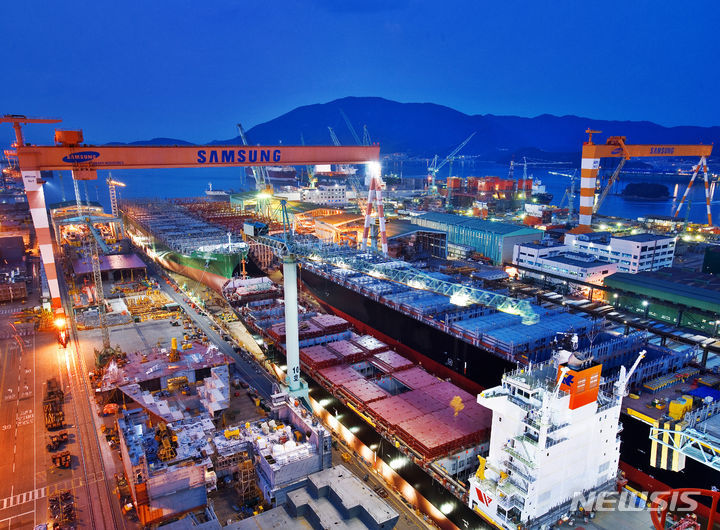
U.S. Considers $2.8 Trillion Budget for South Korean, Japanese Warships; Congressional Opposition Looms
Translated from Korean, summarized and contextualized by DistantNews.
At a glance
News
Named sources
New plan
- The U.S. Department of Defense is considering using $2.8 trillion in its budget to procure warships built in South Korea and Japan.
- A White House official stated the funds are intended for actual asset procurement, not just research.
- However, the plan faces potential opposition in the U.S. Congress due to concerns about protecting the domestic shipbuilding industry and job creation.
The U.S. Department of Defense is exploring the possibility of procuring warships constructed in South Korea and Japan, allocating approximately $2.8 trillion (1.85 billion USD) from its upcoming fiscal year budget for this purpose. This initiative, detailed by a White House official, aims to leverage the shipbuilding capabilities of these Asian allies.
The funds requested by the Office of Management and Budget (OMB) are earmarked for the actual acquisition of naval assets, rather than solely for research and development. The official emphasized that the significant budget is intended for tangible procurement, suggesting a strategic move to bolster naval capacity through international partnerships.
Under consideration is a plan to have up to two warships, complete with hull, machinery, and electrical structures, built in either South Korea or Japan. U.S. defense contractors would then be responsible for integrating the combat systems onto these vessels. This approach highlights a potential shift in U.S. defense manufacturing strategy, seeking efficiency and capacity from established international shipbuilders.
Despite the Pentagon's proposal, the plan is not without potential hurdles. Significant opposition is anticipated within the U.S. Congress. Lawmakers are expected to raise concerns regarding the impact on the domestic shipbuilding industry, potential job losses for American workers, and the broader implications for U.S. industrial capacity. The debate is likely to center on balancing defense needs with national economic interests.
DistantNews Editorial
Originally published by Dong-A Ilbo in Korean. Translated, summarized, and contextualized by our editorial team with added local perspective. Read our editorial standards.
More Stories



From Our Blog

What Gets Lost (and Found) When News Is Translated

The Critical Role of Diaspora Media in Global News

What Travellers Should Know About Countries with Restricted Press

A Digital Nomad's Guide to Following Local News

How the Same Story Looks Different in Different Countries
