


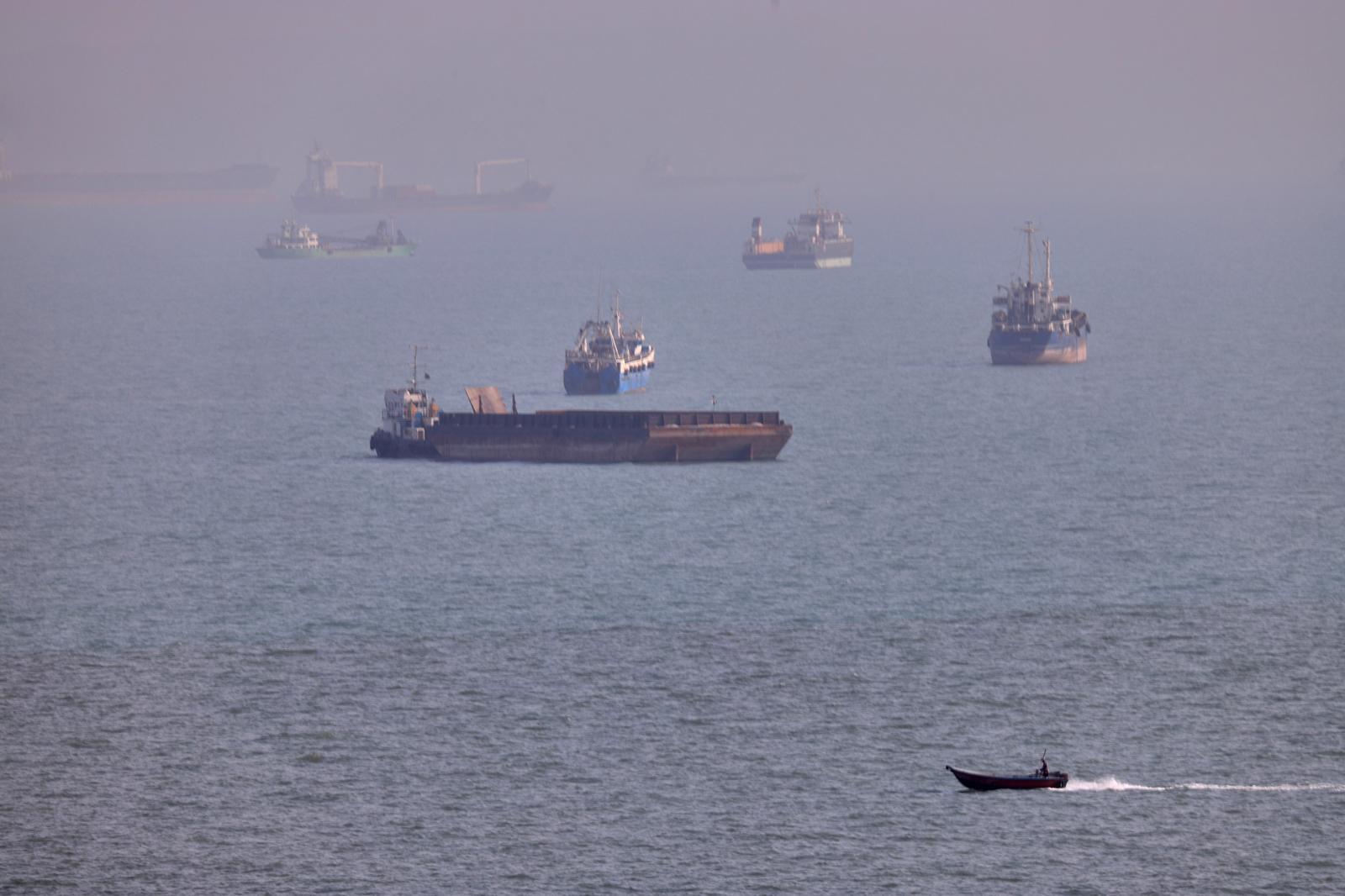

U.S.-Iran Retaliatory Fighting Escalates Around Hormuz as South Korea Considers Deployment
Translated from Korean and summarized by DistantNews. Read the original for the full story.
At a glance
News
Official statement
Ongoing story
- The United States said it struck three Iranian oil tankers after Iran launched ballistic missiles at a U.S. aircraft carrier and guided-missile destroyer.
- Iran claimed it attacked three tankers using unauthorized routes in the Strait of Hormuz and three U.S.-linked vessels, although the U.S. military did not immediately confirm the claims.
- The escalation increases pressure on South Korea as it considers sending noncombat forces, including logistics or mine-detection units, to the region.
The United States and Iran are trading attacks on warships and oil tankers around the Strait of Hormuz, just as South Korea considers whether to make a military contribution to keeping the waterway safe.
The U.S. Central Command said it struck three Iranian oil tankers in retaliation for ballistic missiles fired by Iran’s Islamic Revolutionary Guard Corps at a U.S. Navy aircraft carrier and guided-missile destroyer. It said the Dawni was disabled near Iran’s main oil-export hub on Kharg Island, while the Stark 1 was put out of operation near Jask. In the Gulf of Oman, the Kylo was destroyed after its crew received orders to abandon ship.
Iran’s IRGC navy said it had attacked three tankers traveling through what it called unauthorized routes in the Strait of Hormuz, as well as three U.S.-linked vessels in other waters. It described the attacks as retaliation for the U.S. strikes and warned other ships not to use routes Iran had not approved. The U.S. military did not immediately confirm the alleged attacks.
Iran’s Khatam al-Anbiya Central Headquarters warned that retaliation against U.S. warships would be stronger if American attacks continued. U.S. Central Commander Brad Cooper said Washington was sending the IRGC a clear message that attacks on two American ships would bring the destruction of three opposing vessels, and warned that more Iranian oil tankers could be targeted if necessary.
The exchanges have intensified since the U.S. military struck an Iranian rocket launcher used to deploy mines in the Strait of Hormuz on August 30. Iran later attacked U.S. bases in Jordan and Kuwait, while the United States hit IRGC-linked military facilities and tankers. The pattern is raising concern in Seoul, since even forces assigned to logistics or mine detection could operate in or near waters where U.S. and Iranian forces are fighting. The Trump administration has described the clashes as limited, with President Donald Trump calling them “small potatoes” and Vice President JD Vance saying he would not call them a war. But direct attacks on warships and tankers are making that description increasingly difficult to sustain.
I would not call this a war.
About this summary
Originally published by Hankyoreh in Korean. Translated, summarized, and contextualized automatically by DistantNews, with a note on how the source frames the story. Not individually reviewed before publishing. How this works.
More Stories


From Our Blog

News in Translation: What Gets Lost, and How We Keep the Framing

Diaspora Media: How Communities Follow News From Home

Traveling Where the Press Is Not Free: How to Read the News There

The Digital Nomad's Guide to Local News

The Same Story, Different Countries: How Coverage Changes at the Border
