


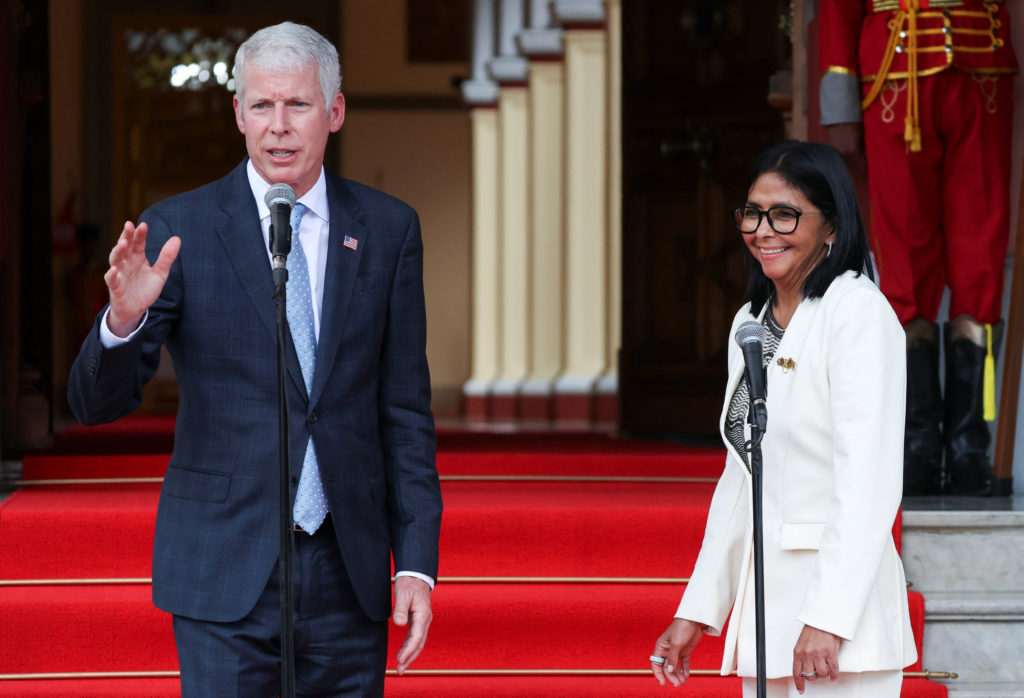

U.S.-Venezuela oil deal won't reduce domestic gasoline prices anytime soon, experts say
Summarized by DistantNews. Read the original for the full story.
At a glance
Analysis
Named sources
New plan
- Oil experts told PolitiFact that a U.S.-Venezuela oil agreement would not lower gasoline prices for American consumers anytime soon and could take years to produce benefits.
- The agreement would give a U.S. government entity a 35% stake in a company with rights to 17 Venezuelan oil fields, but it could face congressional and future-administration scrutiny.
- Experts said Venezuela could eventually return to producing 3 million to 4 million barrels per day, but output would rise gradually and have a muted near-term effect on global markets.
President Donald Trump acknowledged that a new U.S. role in Venezuela’s oil industry would not immediately lower gasoline prices, despite an agreement designed to secure billions of barrels at favorable prices. At an Aug. 31 Oval Office event, Trump said, "Ultimately, prices are going to come down. Now, will it happen before the election? I can't tell you that."
Ultimately, prices are going to come down. Now, will it happen before the election? I can't tell you that.
Oil experts told PolitiFact that consumers should not expect relief anytime soon. Any gains would likely take years, well beyond November’s midterm elections, and would depend on the agreement surviving congressional scrutiny and the next presidential administration.
The White House said the United States would establish a joint partnership with North American Blue Energy Partners, led by Venezuelan businessman Alejandro Betancourt. The entity would hold 100-year rights to 17 Venezuelan oil fields containing 65 billion barrels of proven reserves. A Pentagon office would receive a 35% ownership stake, while the U.S. government would have a guaranteed right to buy 20% of the oil produced without a price markup.
While it is certainly possible that Venezuela could get back to producing 3 million to 4 million barrels per day, that will happen over years.
Betancourt’s company said it would provide $100 billion for infrastructure investment. But Severin Borenstein, a University of California-Berkeley professor, said Venezuela could return to producing 3 million to 4 million barrels per day only over several years. It has been about a decade since the country produced at that level, he said, meaning the effect on world markets would be far more limited than an immediate increase.
The impact of such a quantity on the world market would be huge if it were delivered today, but it will be far more muted, coming online over many years.
Senate Armed Services Committee ranking Democrat Jack Reed criticized the Pentagon’s role, calling Trump’s effort to make the military an investor in Venezuelan oil "a blatant abuse of power and taxpayer dollars." GasBuddy analyst Patrick De Haan said the Pentagon’s involvement could address concerns among oil companies about investing, including fears that a future Venezuelan leader could reverse cooperation with the United States.
President Trump's effort to turn the U.S. military into an investor in Venezuelan oil is a blatant abuse of power and taxpayer dollars.
About this summary
Originally published by PBS NewsHour. Summarized and contextualized automatically by DistantNews, with a note on how the source frames the story. Not individually reviewed before publishing. How this works.
More Stories


From Our Blog

The Same Story, Different Countries: How Coverage Changes at the Border

News in Translation: What Gets Lost, and How We Keep the Framing

Diaspora Media: How Communities Follow News From Home

Traveling Where the Press Is Not Free: How to Read the News There

The Digital Nomad's Guide to Local News
