


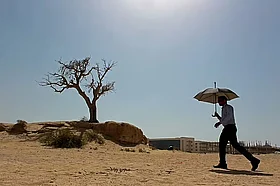
UAE temperatures soar past 50°C, defying traditional cooling expectations after Suhail star's rise
Translated from English and summarized by DistantNews. Read the original for the full story.
At a glance
News
Sources not specified
Outcome reported
- The UAE recorded a high of 50°C on August 29 in the Al Dhafra region, nearing the year's highest temperature.
- The appearance of the Suhail star, traditionally associated with cooling weather, has not yet led to a significant drop in temperatures.
- Experts advise residents to take precautions against the heat, including staying hydrated and limiting sun exposure.
The United Arab Emirates experienced scorching temperatures on August 29, with the mercury hitting 50°C in Bada Dafas, Al Dhafra region, according to the National Centre of Meteorology. This reading was just shy of the highest temperature recorded earlier in the year.
The timing of this heatwave is notable, occurring just days after the rise of the Suhail star on August 24. Traditionally, the appearance of Suhail signals a transition towards cooler weather in the region. However, experts are warning that any relief will be gradual.
While temperatures are expected to gradually decline, higher humidity levels could make conditions feel uncomfortable.
Ibrahim Al Jarwan, chairman of the Emirates Astronomy Society, noted that while temperatures are expected to decline slowly, higher humidity levels could make the conditions feel more uncomfortable. Residents are advised to stay hydrated, avoid direct sunlight during peak hours, wear light clothing, and reduce physical activity in the heat.
This is not the first time this year that the UAE has seen temperatures exceed 50°C. Earlier in August, on the 14th, the same region recorded 50.4°C, and on August 5, a high of 51.2°C was registered. The first instance of temperatures crossing 50°C this year was on August 1 in Abu Dhabi.
Residents may still experience a strong sensation of heat, even when thermometer readings are lower than they were during the height of summer.
About this summary
Originally published by Khaleej Times in English. Translated, summarized, and contextualized automatically by DistantNews, with a note on how the source frames the story. Not individually reviewed before publishing. How this works.
More Stories


From Our Blog

What Gets Lost (and Found) When News Is Translated

The Critical Role of Diaspora Media in Global News

What Travellers Should Know About Countries with Restricted Press

A Digital Nomad's Guide to Following Local News

How the Same Story Looks Different in Different Countries
