


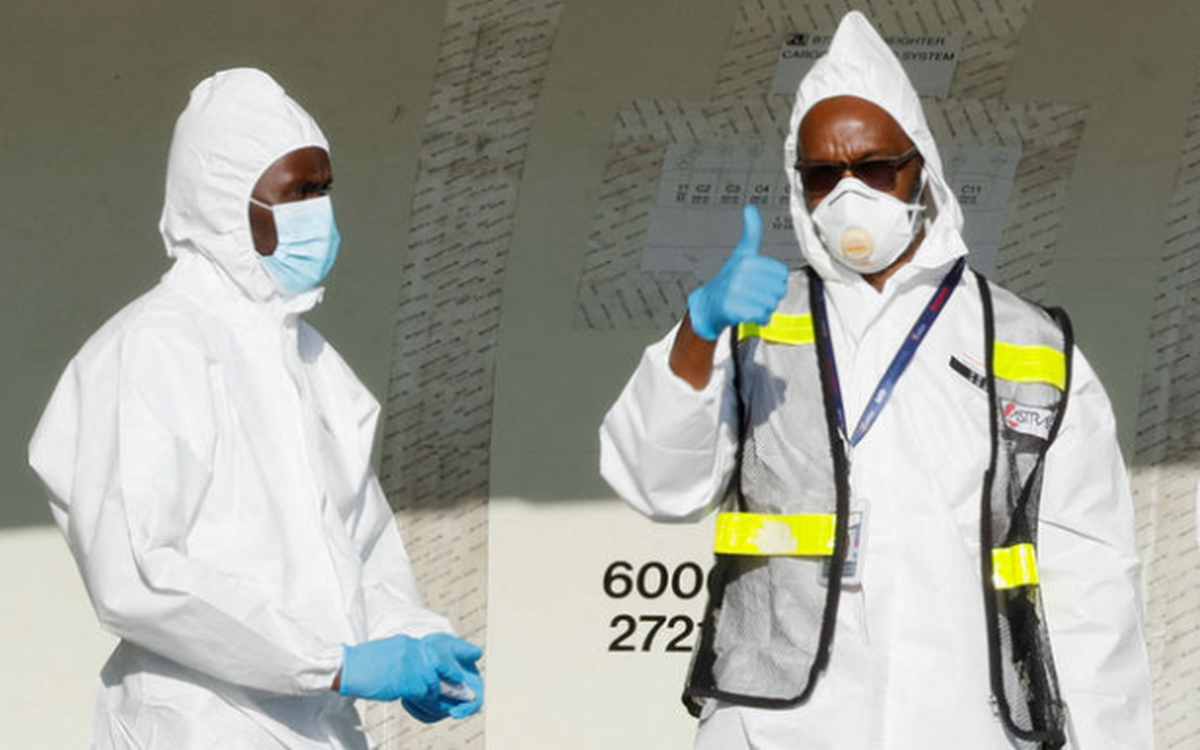
Uganda opens front against fake news amid new Ebola outbreak
Translated from Vietnamese, summarized and contextualized by DistantNews.
At a glance
News
Sources not specified
Ongoing story
- Uganda is combating Ebola by strengthening its capacity to test and communicate accurate information to the public.
- International health organizations warn that misinformation can erode trust in health systems and hinder response efforts.
- The Democratic Republic of Congo has reported 452 cases and 82 deaths, while Uganda has recorded 19 cases and 2 deaths, including health workers.
- The African CDC and WHO are launching a $518 million plan to support Ebola preparedness and response across Africa.
Uganda is actively fighting the latest Ebola outbreak not only through traditional epidemiological measures like surveillance and contact tracing but also by bolstering its capacity to combat misinformation. International health bodies recognize that false narratives during Ebola outbreaks can severely undermine public trust in healthcare systems, leading to delayed reporting of cases, avoidance of quarantine, and general non-cooperation with health authorities.
Past Ebola outbreaks in Uganda have highlighted how misinformation, inconsistent messaging, and a lack of transparency act as significant barriers to community engagement in disease prevention. Ugandan officials now view the current challenge as a critical public information management issue, requiring constant dissemination of accurate, understandable, and reliable data from relevant agencies.
The Democratic Republic of Congo has reported a total of 452 cases of the rare Bundibugyo strain of Ebola since the outbreak began on May 15, resulting in 82 deaths. Uganda has confirmed 19 cases, with two fatalities. Notably, 34 health workers have contracted the virus, seven of whom have died, while six have recovered.
Compounding the challenges, the Africa CDC and the World Health Organization (WHO) have identified several obstacles hindering response efforts. These include the lack of specific treatments for the Bundibugyo strain, weak health systems, limited resources, population movement, infections among healthcare workers, and the pervasive issues of misinformation and community distrust. In response, the two organizations have initiated an Ebola preparedness and response plan for the entire continent, seeking $518 million to aid countries in prevention, early detection, and response from June to November.
DistantNews Editorial
Originally published by Tuổi Trẻ in Vietnamese. Translated, summarized, and contextualized by our editorial team with added local perspective. Read our editorial standards.
More Stories



From Our Blog

What Gets Lost (and Found) When News Is Translated

The Critical Role of Diaspora Media in Global News

What Travellers Should Know About Countries with Restricted Press

A Digital Nomad's Guide to Following Local News

How the Same Story Looks Different in Different Countries
