


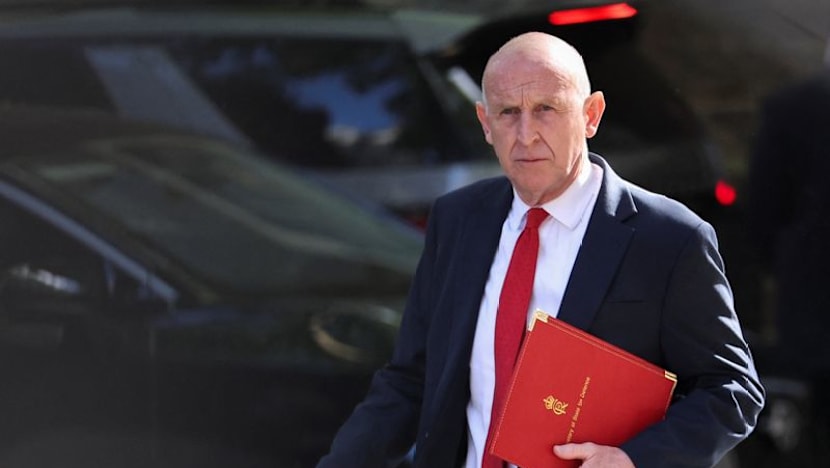
UK Defence Secretary Quits, Citing Starmer's Failure on Funding
Translated from English, summarized and contextualized by DistantNews.
At a glance
News
Named sources
Context piece
- British Defence Secretary John Healey resigned, criticizing Prime Minister Keir Starmer and the Treasury for insufficient defense funding.
- Healey warned that the delayed Defence Investment Plan risked making Britain less safe and failed to meet the nation's needs amid rising threats.
- His resignation weakens Starmer's authority ahead of a crucial by-election and amid broader international security concerns.
British Defence Secretary John Healey dramatically resigned Thursday, accusing Prime Minister Keir Starmer and the finance ministry of failing to provide adequate resources to defend the United Kingdom.
Healey's stinging rebuke, delivered in a resignation letter posted on X, stated that Starmer and the Treasury had been "unable, and the Treasury has been unwilling," to commit the necessary funds. He warned that the long-awaited Defence Investment Plan (DIP), which Starmer has yet to publish, risked making Britain "less safe."
You have been unable, and the Treasury has been unwilling, to commit the resources that the nation needs to defend the country at this time of rising threats.
The shock departure further weakens Starmer's authority as he faces a critical by-election and potential leadership challenges. Healey's letter indicated he could not accept a DIP settlement that did not sufficiently resource the armed forces, leaving him with "no other option than to submit my resignation."
After explaining to you that I would not be able to accept a DIP settlement that does not give our Forces the resources they need, I am now left with no other option than to submit my resignation.
Months of delays have plagued the defense plan, which Starmer intends to publish before a NATO summit in Türkiye on July 7. The government, elected in July 2024, has pledged to increase defense spending, particularly to meet NATO commitments, amidst rising threats from Russia and calls from U.S. President Donald Trump for allies to increase their own security contributions.
Media reports have highlighted internal government battles over the DIP. Healey's letter revealed that the plan, which he first saw on Monday, would only increase defense spending to 2.68 percent of GDP by 2030. A source close to Healey told AFP that the Treasury's offer did not specify a date for reaching the promised three percent of GDP. Healey asserted the plan "falls well short of what is required for defence and the country at this dangerous time," potentially forcing decisions that would reduce force readiness and increase personnel risk.
falls well short of what is required for defence and the country at this dangerous time
DistantNews Editorial
Originally published by CNA in English. Translated, summarized, and contextualized by our editorial team with added local perspective. Read our editorial standards.
More Stories

From Our Blog

What Gets Lost (and Found) When News Is Translated

The Critical Role of Diaspora Media in Global News

What Travellers Should Know About Countries with Restricted Press

A Digital Nomad's Guide to Following Local News

How the Same Story Looks Different in Different Countries
