


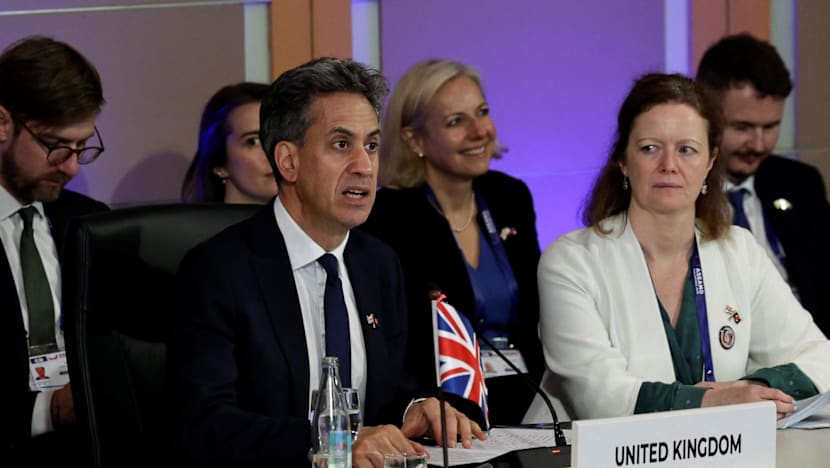
UK's new government signals Asia pivot with Southeast Asia trip
Translated from English, summarized and contextualized by DistantNews.
At a glance
News
Sources not specified
New plan
- The UK's new Labour government, led by Prime Minister Andy Burnham, is prioritizing engagement with Southeast Asia, with Foreign Secretary Ed Miliband making it his first overseas trip.
- During the ASEAN Foreign Ministers' Meeting, the UK and ASEAN agreed on a new five-year plan to boost cooperation in areas like trade, green energy, and maritime security.
- The trip also involved discussions with China's Foreign Minister Wang Yi, amidst a dispute over the nationalization of British Steel, which was previously owned by a Chinese company.
Britain's new Labour government is signaling a renewed focus on Asia, particularly Southeast Asia, just days after Andy Burnham took office as prime minister. Foreign Secretary Ed Miliband made the Association of Southeast Asian Nations (ASEAN) region the destination for his first overseas trip, attending the ASEAN Foreign Ministers' Meeting in the Philippines.
I felt it was very, very important to come straight to the ASEAN Foreign Ministers’ Meeting as a sign of our solidarity with ASEAN countries and of the importance we attach to this partnership.
During the meeting, Miliband reaffirmed the UK's commitment to the bloc, emphasizing the importance of multilateral cooperation in an increasingly unstable world. He highlighted shared interests in maritime security, energy security, economic resilience, and emerging technologies. The UK and ASEAN adopted a new five-year action plan to deepen collaboration across these areas.
Whether on maritime security, energy security, economic resilience or emerging technologies, our future will increasingly be shaped by how we work together multilaterally.
The trip also provided an early test for the new administration's approach to China. Miliband met with Chinese Foreign Minister Wang Yi, who called for a fair business environment for Chinese companies in the UK. This discussion occurred against the backdrop of the UK government's recent nationalization of British Steel, previously owned by China's Jingye Group. The UK government defended the intervention as necessary to protect domestic steel production, while Jingye seeks compensation. Analysts suggest this dispute is unlikely to derail the broader UK strategy toward China, which may involve a managed interdependence aimed at re-industrializing the UK.
I believe (Burnham) will follow a managed interdependent strategy, because he wants to re-industrialise the UK and he sees some opportunities to engage with China from this perspective.
DistantNews Editorial
Originally published by CNA in English. Translated, summarized, and contextualized by our editorial team with added local perspective. Read our editorial standards.
More Stories


From Our Blog

What Gets Lost (and Found) When News Is Translated

The Critical Role of Diaspora Media in Global News

What Travellers Should Know About Countries with Restricted Press

A Digital Nomad's Guide to Following Local News

How the Same Story Looks Different in Different Countries
