


Ukraine's Drone Defense Lessons for NATO
Translated from Romanian, summarized and contextualized by DistantNews.
At a glance
News
Sources not specified
Context piece
- Ukraine employs inexpensive sensor networks, including acoustic systems, to detect approaching drones, complementing more advanced military equipment.
- Western armies face challenges in defending against low-cost drones, prompting a reevaluation of NATO's air defense architecture.
- Experts emphasize the need for massive, urgent investments in diverse, low-cost sensors to counter the evolving drone threat.
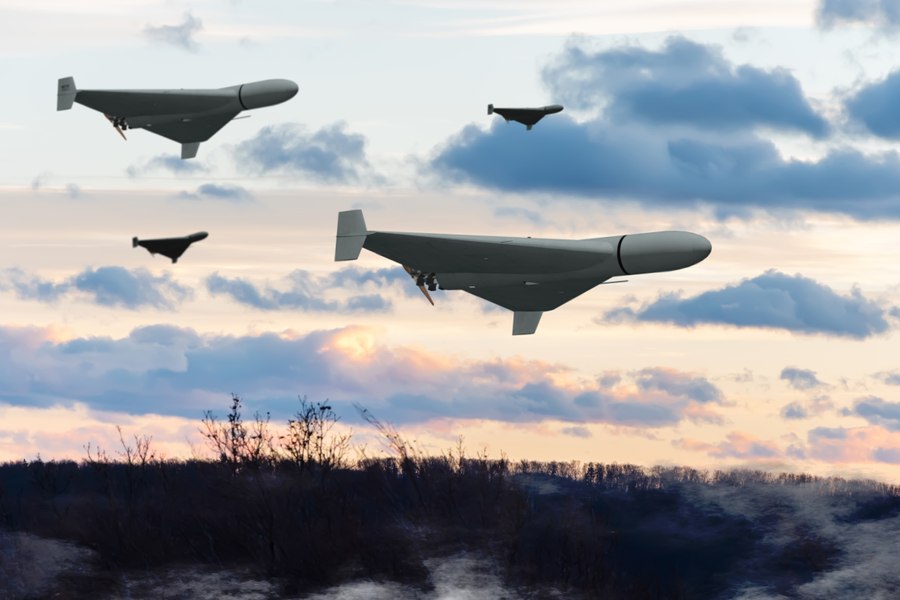
Ukraine's innovative use of inexpensive sensor networks, such as acoustic systems that detect the sound of approaching drones, offers a crucial lesson for NATO's air defense.
These systems, costing significantly less than traditional military radars, work in tandem with more expensive equipment. They enable faster detection of low-cost drones, giving Ukrainian forces vital time to react. The ongoing conflict has fundamentally reshaped global military doctrines, highlighting drones as a persistent, asymmetric threat.
Western armies are confronting an uncomfortable reality: despite possessing sophisticated systems for detecting ballistic missiles and fighter jets, their air defense architectures have significant vulnerabilities against new, low-cost drone technologies. This strategic imperative is driving a complete reconfiguration of the North Atlantic Alliance's surveillance systems, with officials in Brussels and Washington intensely analyzing battlefield innovations.
Sir John Stringer, former Deputy Supreme Allied Commander Europe, warns that strengthening Western air defenses requires massive and urgent investments in novel sensor types. "Some of these technologies are completely new to Western nations," he stated. "The West needs solutions like very cheap acoustic sensors – microphone-based systems capable of monitoring drones. We have seen how Ukraine successfully uses these networks, integrating them alongside much more advanced systems."
Major Modris Kairiss, head of the Center of Excellence for Autonomous Systems in Latvia, concurs, noting that traditional air defense systems were designed for high-altitude, high-speed targets like aircraft and cruise missiles. Conventional radars often fail to detect low-flying drones. Effective detection, he argues, requires a high density and, crucially, a diversification of sensor types – optical, thermal, and acoustic – as no single technology is infallible. The core technology exists, but the major challenge lies in overcoming bureaucracy and accelerating procurement and large-scale implementation.
Some of these technologies are completely new to Western nations. The West needs solutions like very cheap acoustic sensors – microphone-based systems capable of monitoring drones. We have seen how Ukraine successfully uses these networks, integrating them alongside much more advanced systems.
DistantNews Editorial
Originally published by Adevărul in Romanian. Translated, summarized, and contextualized by our editorial team with added local perspective. Read our editorial standards.
More Stories


From Our Blog

What Gets Lost (and Found) When News Is Translated

The Critical Role of Diaspora Media in Global News

What Travellers Should Know About Countries with Restricted Press

A Digital Nomad's Guide to Following Local News

How the Same Story Looks Different in Different Countries
