


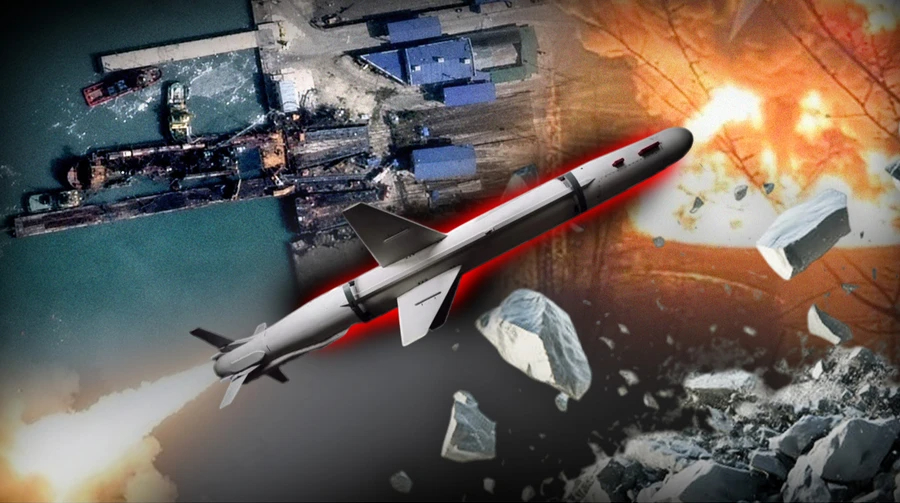
Ukraine's Neptune missiles: striking oil facilities, ports, and arms factories
Translated from Ukrainian, summarized and contextualized by DistantNews.
At a glance
News
Named sources
Context piece
- Ukraine's Neptune cruise missile has proven effective, notably sinking Russia's flagship Moskva.
- Ukraine adapted the anti-ship missile for land-attack purposes, with the Luch Design Office rapidly developing and mass-producing it.
- Ukrainska Pravda has documented 26 Russian targets hit by Neptune missiles, including air defense systems and military assets.
Ukraine's Neptune cruise missile stands as a significant achievement of its defense industry, demonstrating remarkable combat effectiveness from the outset of the full-scale invasion. Its most notable success was the sinking of the Moskva, the flagship of Russia's Black Sea Fleet.
Facing a lack of long-range strike capabilities, Ukraine ingeniously re-engineered the anti-ship Neptune missile for land-attack missions. The Luch Design Office, responsible for its development, not only withstood Russian missile attacks but also rapidly advanced the missile's development and initiated mass production.
Ukrainska Pravda has compiled a detailed record of Neptune missile strikes, identifying 26 Russian targets that have been hit by the weapon. The first documented use of the land-attack Neptune occurred on August 23, 2023, when it struck a launcher for a Russian S-400 Triumf air defense system in Crimea. This marked the beginning of regular use against Russian military assets.
The land-attack Neptune reportedly comes in at least two variants: the R-360M (mid-range) with an estimated 500 km range and a 350kg warhead, and the R-360L (long-range) with a lighter, 260kg warhead. Data for this analysis was compiled and verified using official reports from the Ukrainian Navy and General Staff, cross-checked with open-source intelligence and reports from the Russian Ministry of Defense.
DistantNews Editorial
Originally published by Ukrainska Pravda in Ukrainian. Translated, summarized, and contextualized by our editorial team with added local perspective. Read our editorial standards.
More Stories


From Our Blog

What Gets Lost (and Found) When News Is Translated

The Critical Role of Diaspora Media in Global News

What Travellers Should Know About Countries with Restricted Press

A Digital Nomad's Guide to Following Local News

How the Same Story Looks Different in Different Countries
