


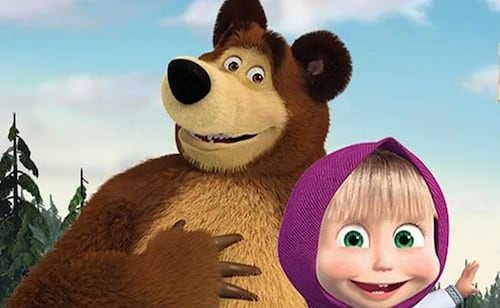
Ukraine sanctions 'Masha and the Bear' cartoon, calling it Russian propaganda
Translated from Spanish, summarized and contextualized by DistantNews.
At a glance
News
Named sources
New plan
- Ukraine has sanctioned the Russian animated series "Masha and the Bear," deeming it a tool of Russian propaganda.
- The Ministry of Culture stated the sanctions aim to block the content and urge international platforms to restrict its distribution and monetization.
- Russia has responded by calling Ukraine's actions a "war on cartoons," while Ukraine continues efforts to limit Russian cultural influence.
Ukraine has officially sanctioned the popular Russian children's animated series "Masha and the Bear," citing its use as a vehicle for Russian propaganda. The Ministry of Culture announced the sanctions, which target producers and distributors of the show, aiming to legally block its dissemination within Ukraine. "Russian propaganda has no place on children's screens, neither in Ukraine nor anywhere else in the world," stated Tetiana Berezhna, Ukraine's Minister of Culture. These measures are intended to create a legal framework for restricting the cartoon's availability and to pressure international platforms to limit its monetization and spread.
Ukraine imposed sanctions against the producers and distributors of the Russian animated series Masha and the Bear
The Ukrainian government views the series as a form of cultural power wielded by Moscow, effectively promoting a positive image of Russia through its depiction of a girl and a bear, with the latter often symbolizing the nation. The decree, published by the Ukrainian presidency, asserts that the series "transmits pro-Russian narratives disguised as children's content" and generates tax revenue for Russia. This move follows Ukraine's earlier protest in late June regarding Netflix's acquisition of rights for new seasons and an extended license for the animation.
Russian propaganda has no place on children's screens, neither in Ukraine nor anywhere else in the world.
Launched in 2009 by the Russian studio Animaccord, "Masha and the Bear" has achieved global popularity, airing on television networks worldwide and maintaining a significant presence on YouTube. In response to the sanctions, Kremlin spokesman Dmitri Peskov characterized Ukraine's actions as a "war on cartoons." He defended the series, stating, "Masha and the Bear have conquered the entire world" and only promote "the best human qualities."
The propaganda transmits pro-Russian narratives disguised as children's content and generates tax revenue for the neighboring country.
Ukraine, engaged in a full-scale invasion by Russia since 2022, has been actively working to curtail Russian cultural influence. This includes seeking the exclusion of Russian content from spheres such as sports, cinema, and art. Consequently, Ukrainians have been distancing themselves from Russian films, series, books, and music, which previously held considerable sway in the country.
Ukraine declared war on cartoons
DistantNews Editorial
Originally published by El Universal in Spanish. Translated, summarized, and contextualized by our editorial team with added local perspective. Read our editorial standards.
More Stories

From Our Blog

What Press Freedom Means for the News You Read

What Gets Lost (and Found) When News Is Translated

The Critical Role of Diaspora Media in Global News

What Travellers Should Know About Countries with Restricted Press

A Digital Nomad's Guide to Following Local News
