


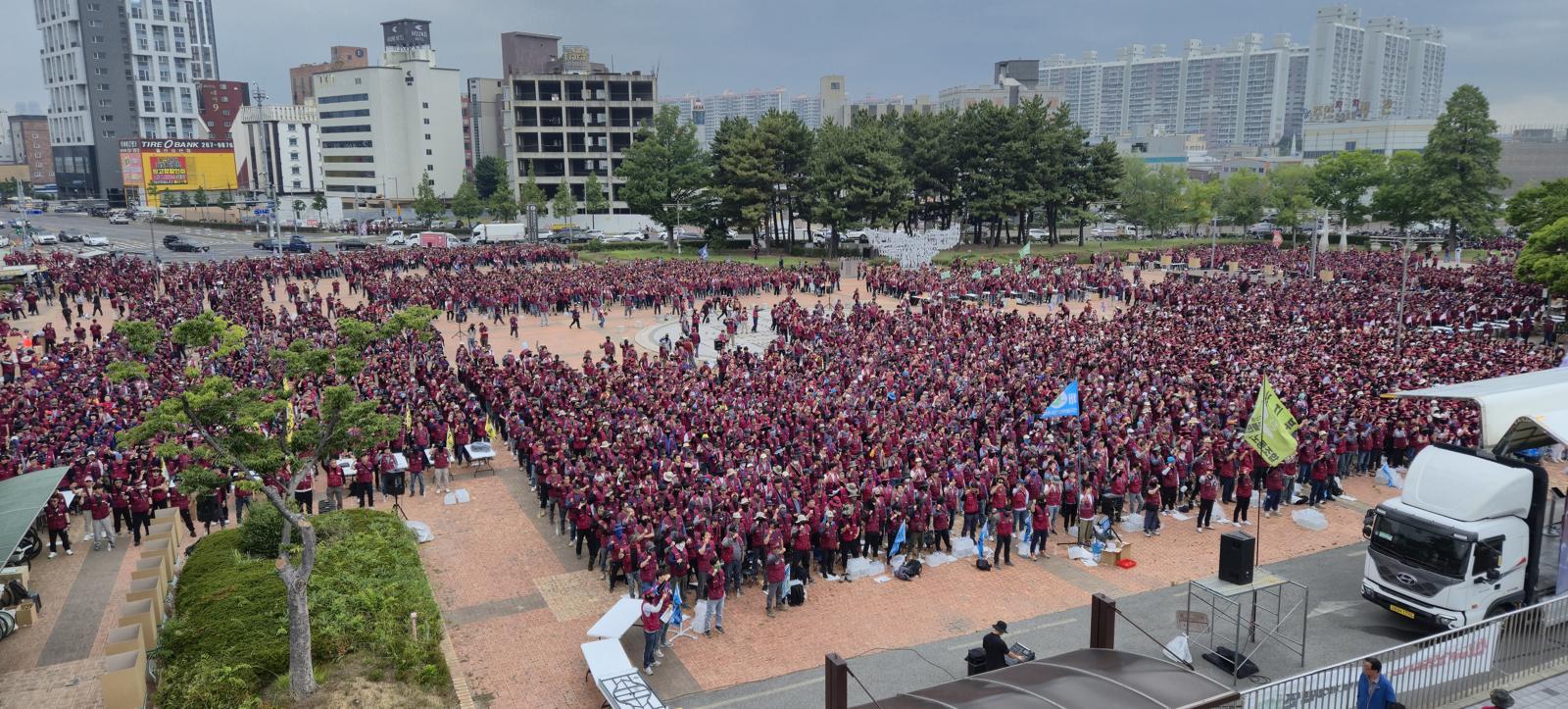
Ulsan Plant Union Threatens Strike Over Wages, Contractor Talks
Translated from Korean, summarized and contextualized by DistantNews.
At a glance
News
Named sources
Ongoing story
- The Ulsan Plant Construction Union plans to strike on June 23, citing failed wage negotiations.
- The union, part of the Korean Confederation of Trade Unions (KCTU), is also pushing for direct negotiations with main contractors.
- The potential strike could disrupt the "Shaheen Project," a major petrochemical complex nearing completion.
The Ulsan branch of the Korean Confederation of Trade Unions (KCTU) National Plant Construction Union has announced a strike scheduled for June 23. While the union cites a breakdown in wage negotiations as the official reason, the move is widely seen as an effort to pressure main contractors into direct negotiations, a significant shift in labor relations within the sector.
Union members voted overwhelmingly in favor of the strike, with 82.3% of the 11,527 participants approving the action. The union's demands include a daily wage increase of 13,000 won, which was rejected by the employers' association, the Ulsan Plant Industry Council. The council offered only a 3,000 won daily increase, leading to the collapse of talks. Mediation efforts by the Ulsan Regional Labor Relations Commission were suspended on June 18, paving the way for the strike vote.
If the strike proceeds, it could significantly impact the "Shaheen Project," a massive petrochemical complex led by S-Oil, which is nearing its completion at the end of June. The project represents a substantial investment of approximately 9 trillion won. A strike during this critical final phase could cause considerable delays and complications.
The Ulsan Plant Construction Union asserts that not only the Ulsan Plant Industry Council but also S-Oil, as the main contractor, bear responsibility for the failed negotiations. They are advocating for S-Oil to engage in collective bargaining, referencing the "Yellow Envelope Law" (amended Trade Union Act). This push for direct negotiation with primary contractors is a developing trend, with similar votes occurring in plant construction unions across South Korea, including Pohang and Yeosu.
The Yellow Envelope Law requires S-Oil to respond to collective bargaining.
DistantNews Editorial
Originally published by Dong-A Ilbo in Korean. Translated, summarized, and contextualized by our editorial team with added local perspective. Read our editorial standards.
More Stories



From Our Blog

What Gets Lost (and Found) When News Is Translated

The Critical Role of Diaspora Media in Global News

What Travellers Should Know About Countries with Restricted Press

A Digital Nomad's Guide to Following Local News

How the Same Story Looks Different in Different Countries
