


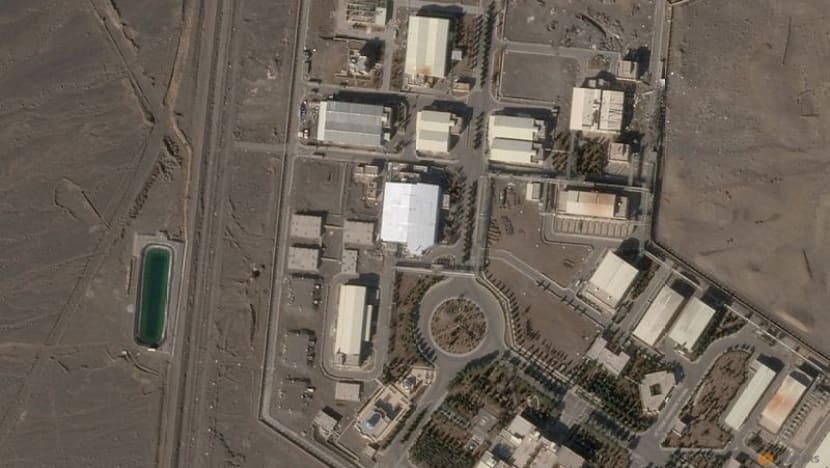
UN nuclear watchdog raises 'proliferation' fears over Iran sites
Summarized and contextualized by DistantNews.
At a glance
News
Named sources
Context piece
- The UN nuclear agency (IAEA) has expressed "proliferation concerns" due to a lack of access to Iran's nuclear material, as detailed in a confidential report.
- Satellite imagery shows no activity at key Iranian nuclear sites since the start of the Middle East war, but the IAEA has been denied access to some facilities.
- Iran has reportedly unblocked many tunnel entrances at underground missile facilities, while the IAEA conducted an inspection at the Bushehr plant but not other sites.
The International Atomic Energy Agency (IAEA) has voiced serious concerns about the potential for nuclear proliferation in Iran, citing a "lack of access" to the country's nuclear material. A confidential report, seen by AFP, calls on Tehran to engage "constructively" to address these issues.
According to a diplomatic source, satellite images indicate no activity at key Iranian nuclear sites since the onset of the Middle East war. However, the IAEA has been unable to access some crucial facilities, particularly those that were targeted in a conflict involving Israel and the United States in June 2025, and more recently in a war that began on February 28. The agency has repeatedly urged for access to conduct necessary verification activities.
Recent reports suggest that Iran has unblocked 50 out of 69 tunnel entrances at 18 underground missile facilities that were previously bombed. Despite this, a diplomatic source noted "no more movement" at key sites like Isfahan and Natanz since the war began. The IAEA confirmed it conducted an inspection this week at the Bushehr nuclear power plant, but inspections at other sites were not carried out.
The agency's lack of access to verify the previously declared highly enriched uranium and low enriched uranium for nearly a year - which is long overdue according to standard safeguard practices - is a matter of proliferation concern.
The IAEA report emphasizes the "utmost urgency" for Iran to cooperate, stating that the agency's inability to verify previously declared highly enriched and low enriched uranium for nearly a year is a "matter of proliferation concern." Prior to the June 2025 strikes, Iran was estimated to possess approximately 440 kilograms of uranium enriched to 60 percent, significantly above the 3.67 percent limit set by a defunct 2015 agreement and close to the 90 percent needed for a bomb.
IAEA head Rafael Grossi has called on Iran to engage constructively to ensure the "full and effective implementation of safeguards." Israel and the United States have long accused Iran of seeking nuclear weapons, with former President Donald Trump citing this threat as a justification for military action. Trump has insisted that any deal to end the war must include Iran's commitment not to possess nuclear weapons and the destruction of its uranium stockpile. Tehran has consistently denied pursuing nuclear weapons.
calls on Iran to engage the agency constructively in order to facilitate the full and effective implementation of safeguards in Iran
DistantNews Editorial
Originally published by CNA. Summarized and contextualized by our editorial team with added local perspective. Read our editorial standards.
More Stories

From Our Blog

What Gets Lost (and Found) When News Is Translated

The Critical Role of Diaspora Media in Global News

What Travellers Should Know About Countries with Restricted Press

A Digital Nomad's Guide to Following Local News

How the Same Story Looks Different in Different Countries
