


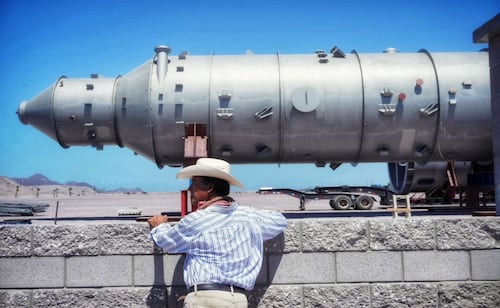
UNAM scientist defends environmental viability of fertilizer plant in Topolobampo; dismisses sea discharge concerns
Translated from Spanish, summarized and contextualized by DistantNews.
At a glance
News
Named sources
Context piece
- A UNAM researcher asserts that the proposed fertilizer plant in Topolobampo, Mexico, is environmentally viable and poses no risk to the bay or marine life.
- Concerns about ammonia discharges are unfounded, as the compound will be used industrially, not released as waste.
- The plant's water usage will be minimal, and cooling systems will limit environmental impact.
Federico Páez Osuna, an emeritus researcher at the National Autonomous University of Mexico (UNAM), has declared the planned fertilizer plant in Topolobampo, Mexico, to be environmentally sound. He specifically refuted claims that the facility, operated by Gas y Petroquímica de Occidente (GPO), would pose a contamination risk to the local bay or its marine ecosystems.
A primary concern raised against the project involved potential ammonia discharges into the sea. However, Páez Osuna explained that the plant will utilize ammonia as a key component in its industrial processes rather than releasing it as waste. "The plant is not going to be dumping ammonia there. There will be no discharge to the sea. The plant will produce it, pack it and it will be commercialized. So, is there such a discharge to the sea? Not at all," he stated.
The plant is not going to be dumping ammonia there. There will be no discharge to the sea. The plant will produce it, pack it and it will be commercialized. So, is there such a discharge to the sea? Not at all.
He further clarified that the only water returned to the environment will come from the plant's cooling system. The impact of this discharge on temperature and salinity is expected to be confined to a small area of two to three hectares. The project also includes cooling towers and treatment processes designed to minimize any environmental footprint. Páez Osuna noted that the plant's water consumption will be less than that of a conventional thermoelectric plant and comparable to a shrimp farm of 130 to 150 hectares.
Referencing global operations, Páez Osuna pointed out that approximately 320 ammonia plants operate worldwide, with 32 in the United States, none of which have generated social conflicts due to environmental damage. He highlighted Topolobampo's strategic advantages for such an industry, including natural gas availability and port infrastructure. Páez Osuna urged for public debate to be based on scientific evidence and verifiable information, expressing confidence that the plant can coexist with the region's fishing activities, similar to how other industries have operated in the bay for decades.
The plant will not be discharging ammonia into the sea. There will be no waste discharged into the sea. The plant will produce it, pack it, and it will be commercialized. So, is there such a discharge to the sea? Not at all.
DistantNews Editorial
Originally published by El Universal in Spanish. Translated, summarized, and contextualized by our editorial team with added local perspective. Read our editorial standards.
More Stories



From Our Blog

What Press Freedom Means for the News You Read

What Gets Lost (and Found) When News Is Translated

The Critical Role of Diaspora Media in Global News

What Travellers Should Know About Countries with Restricted Press

A Digital Nomad's Guide to Following Local News
