


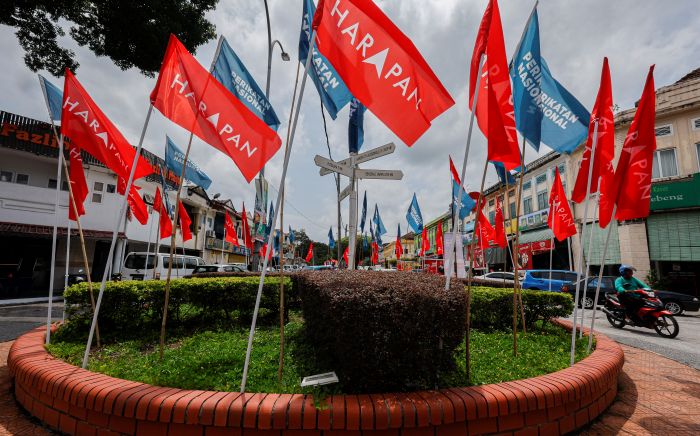
Unfair fund allocation a 'boomerang' for Malaysian government ahead of next election
Translated from Malay, summarized and contextualized by DistantNews.
At a glance
Opinion
Named sources
Context piece
- Malaysia's political landscape faces potential instability ahead of the next general election due to perceived unfair allocation of funds to opposition-led states.
- The article argues that neglecting equitable fund distribution creates psychological impacts and deepens resentment, potentially backfiring on the ruling coalition.
- It suggests that demonstrating absolute fairness in resource allocation is crucial for maintaining power and building national stability.
Malaysia's political future, particularly leading up to the 16th General Election (PRU16), is shadowed by concerns over the equitable distribution of funds to states. The aftermath of the 15th General Election, which resulted in a hung parliament for the first time in 64 years, has reshaped the political dynamics, leading to the formation of significant opposition blocs and state coalitions.
The article posits that while fair power management fosters stability, inequity erodes loyalty. In the current democratic era, the practice of "government taking care of government" through the neglect of fund allocation to opposition states is seen as a narrow-minded doctrine that contaminates the political landscape. From the perspective of citizens in opposition-led states, this marginalization has severe psychological repercussions. The tactic of "punishment" does not weaken public support for their chosen parties; instead, it builds a thick wall of resentment against the central government.
When the ruling party appears biased, citizens lose the motivation to support national policies. This approach fosters an unhealthy mental polarization, leaving citizens conflicted due to the denial of development rights. The article characterizes this not as successful persuasion but as a destructive culture of political intimidation that undermines democracy. From an external ethical analysis, this phenomenon represents a significant strategic oversight with potential consequences for the upcoming PRU16.
While government-controlled areas may receive ample resources, the image of injustice is critically assessed by undecided voters. Historically, complacent governments often attempt to appease the public with last-minute aid, but this seasonal strategy is losing its effectiveness as voters mature and can discern sincerity from political ambition. The article concludes that the best strategy to retain power is to demonstrate absolute justice by granting equal rights to all states, reflecting a magnanimous government. Failure to do so, by continuing the mentality of "golden children and stepchildren," could lead to self-sabotage at the next election.
DistantNews Editorial
Originally published by Utusan Malaysia in Malay. Translated, summarized, and contextualized by our editorial team with added local perspective. Read our editorial standards.
More Stories

From Our Blog

What Gets Lost (and Found) When News Is Translated

The Critical Role of Diaspora Media in Global News

What Travellers Should Know About Countries with Restricted Press

A Digital Nomad's Guide to Following Local News

How the Same Story Looks Different in Different Countries
