


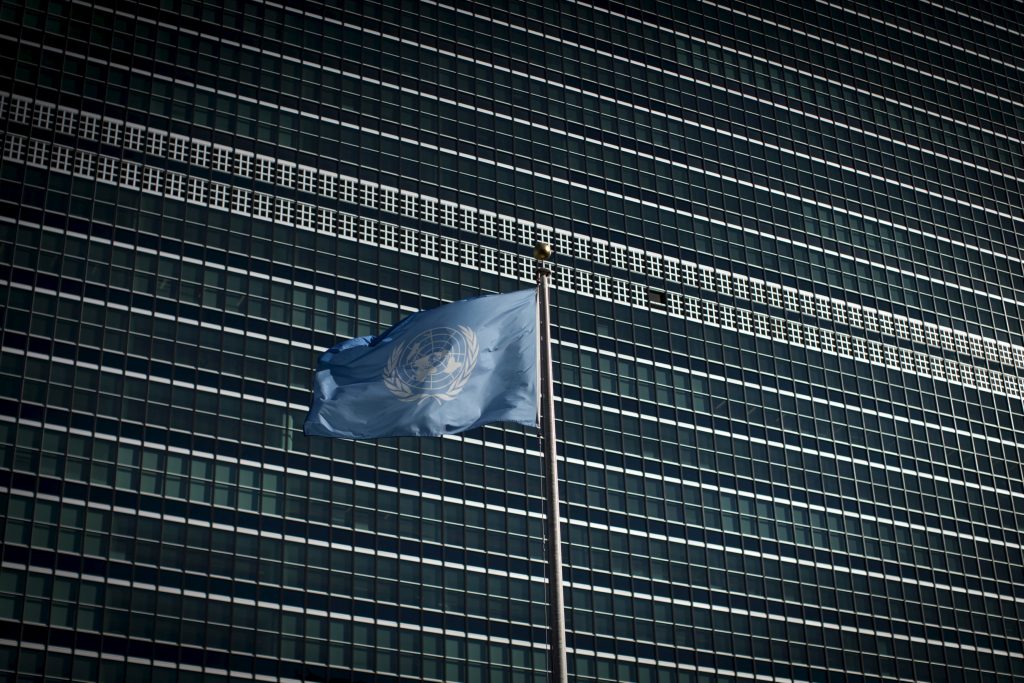
UNGA: US and Greece Stress Importance of Freedom of Navigation for Peace and Security
Translated from Greek, summarized and contextualized by DistantNews.
TLDR
- The UN General Assembly discussed the importance of freedom of navigation for international peace and security.
- Greece, aligning with the EU, emphasized freedom of navigation as a pillar of international law and economic prosperity.
- The resolution, supported by Greece, addresses safe passage through the Strait of Hormuz and condemns attacks on maritime shipping.
At the United Nations General Assembly, Greece, alongside the United States, has underscored the critical importance of freedom of navigation, a principle fundamental to global peace, security, and economic well-being. Speaking at the assembly, Greece's representative highlighted that this tenet is a cornerstone of international law, enshrined in the UN Convention on the Law of the Sea (UNCLOS), which provides the overarching legal framework for all maritime activities.
freedom of navigation is a fundamental pillar of international peace, security and economic prosperity
As a leading maritime nation, Greece reaffirmed its unwavering commitment to upholding maritime safety and the freedom of navigation in strict accordance with international legal norms. This stance was demonstrated through Greece's support for a resolution put forth by several Gulf nations, including Bahrain, Jordan, Kuwait, Qatar, Saudi Arabia, and the United Arab Emirates. The resolution specifically emphasizes the necessity of ensuring the passage of merchant vessels through the Strait of Hormuz, recognizing it as one of the world's most vital waterways for international trade and global economic stability.
one of the oldest and most recognizable principles of international law
The Greek delegation also voiced significant concern regarding the regional crisis and its far-reaching consequences, extending beyond the Gulf to impact all nations. Expressing solidarity with GCC partners, Greece condemned the "illegal and unprovoked attacks" by Iran against countries in the region, including assaults on civilian infrastructure and energy facilities. The delegation warned of imminent and unprecedented repercussions, such as food and medicine shortages, particularly affecting vulnerable populations, due to the ongoing disruptions in global energy and agricultural supplies through this critical maritime corridor.
as a leading maritime nation, remains deeply committed to upholding maritime safety and freedom of navigation in accordance with international law
Furthermore, Greece's statement unequivocally condemned any unjustified attacks against international commercial shipping, stressing that such actions endanger the lives of innocent seafarers and violate international law. The delegation asserted that the lives of mariners and the safety of commercial navigation must be respected under all circumstances. This firm position reflects Greece's deep-seated understanding of the sea's centrality to its economy and national identity, and its role as a responsible global actor advocating for stability in international waters.
underscores the importance of ensuring the passage of merchant vessels through the Strait of Hormuz, in accordance with international law
DistantNews Editorial
Originally published by Ta Nea in Greek. Translated, summarized, and contextualized by our editorial team with added local perspective. Read our editorial standards.
More Stories

From Our Blog

What Gets Lost (and Found) When News Is Translated

The Critical Role of Diaspora Media in Global News

What Travellers Should Know About Countries with Restricted Press

A Digital Nomad's Guide to Following Local News

How the Same Story Looks Different in Different Countries
