

/nginx/o/2026/07/03/17757635t1h4587.jpg)
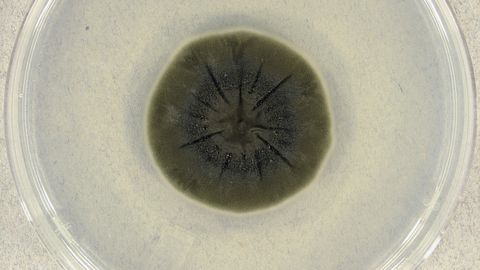
Unique Radiation-Eating Fungus Discovered in Chernobyl Exclusion Zone
Translated from Estonian, summarized and contextualized by DistantNews.
At a glance
News
Sources not specified
Context piece
- A unique species of fungus capable of living and growing in radioactive environments has been discovered in the Chernobyl Exclusion Zone.
- Scientists theorize that the fungus may use radiosynthesis, converting ionizing radiation into energy for survival.
- Further research is needed to confirm this theory and understand the fungus's capabilities.
A remarkable discovery has been made within the Chernobyl Exclusion Zone: a species of fungus that thrives in environments saturated with ionizing radiation. This unique organism demonstrates an ability to live and grow under conditions previously thought to be inhospitable to most life forms.
Scientists studying the fungus have proposed a groundbreaking theory: that it might be capable of radiosynthesis. This hypothetical process suggests the fungus could convert ionizing radiation directly into energy, much like plants use photosynthesis to convert sunlight. If confirmed, this would represent a novel biological mechanism for energy acquisition.
While the Chernobyl Exclusion Zone remains off-limits to humans due to its high radiation levels, it continues to be a site of scientific interest, revealing how other life forms adapt and evolve in extreme conditions. The potential for radiosynthesis in this newly found fungus opens up new avenues for research into extremophiles and the fundamental processes of life.
DistantNews Editorial
Originally published by Postimees in Estonian. Translated, summarized, and contextualized by our editorial team with added local perspective. Read our editorial standards.
More Stories


From Our Blog

What Gets Lost (and Found) When News Is Translated

The Critical Role of Diaspora Media in Global News

What Travellers Should Know About Countries with Restricted Press

A Digital Nomad's Guide to Following Local News

How the Same Story Looks Different in Different Countries
