


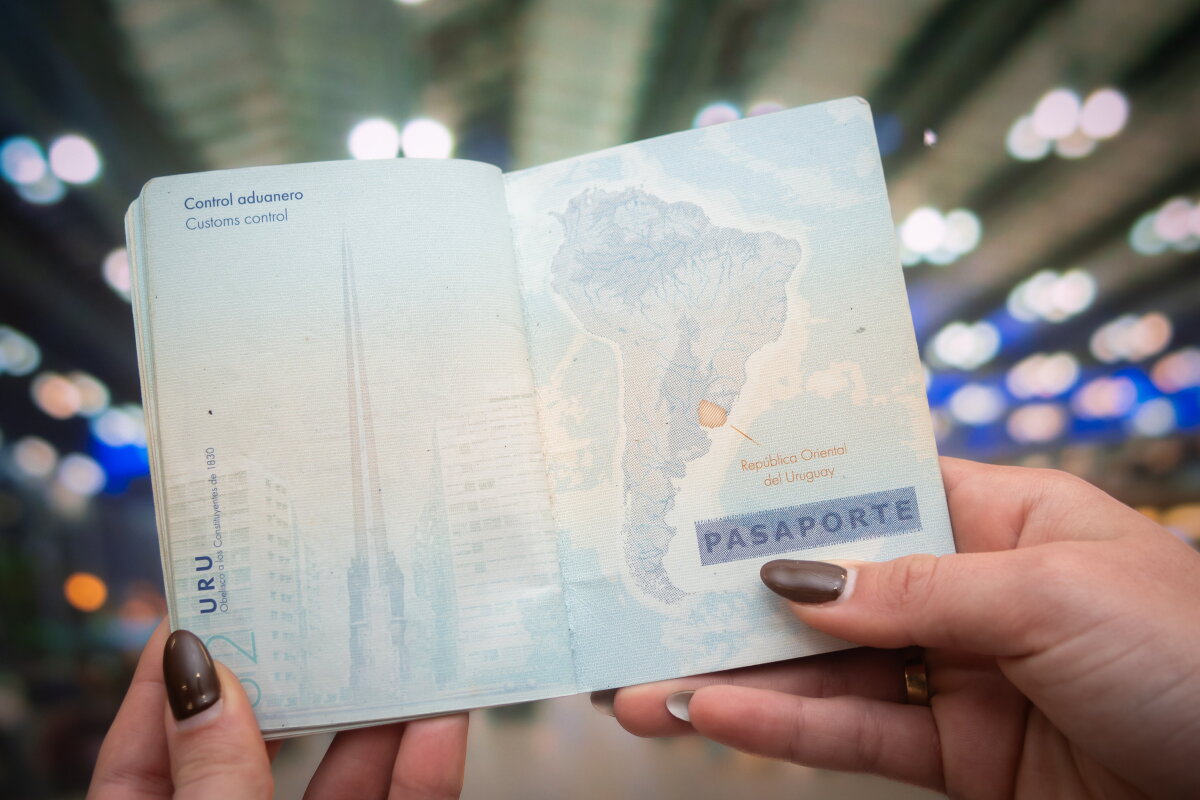
Uruguay Allows Passport Reprints After International Format Controversy
Translated from Spanish, summarized and contextualized by DistantNews.
At a glance
News
Named sources
Outcome reported
- Uruguay's government is allowing citizens to reprint passports issued with a controversial new format, following international objections.
- Approximately 6,000 out of 16,000 affected passport holders have requested reprints due to concerns raised by embassies.
- The new format included changes to the 'Nationality' field and the removal of the 'Place of Birth' field, which caused issues with Germany, Japan, and France.
Uruguay has opened the door for citizens to reprint passports issued under a controversial new format, a move prompted by objections from several European nations. The government is allowing those who obtained the updated passport between April 16 and July 29, 2025, to exchange it for the previous version at no cost. This decision follows a year-long controversy that began with the implementation of a new passport design.
The updated passport introduced two significant changes. First, the title 'Nationality' was altered to 'Nationality/Citizenship,' incorporating the code 'URY' for both natural and legal citizens, a change initiated by the previous administration. However, the current government added a second modification: the removal of the 'Place of Birth' field. This latter change drew immediate criticism from the German, Japanese, and French embassies, who deemed it problematic for their own identification and verification processes.
Of the approximately 16,000 passports issued with the revoked resolution, only about 6,000 have been renewed; and this was not because their holder had problems at any airport, but because, with the communications that occurred, they had a certain fear and therefore went to renew it.
In response to these diplomatic concerns, Uruguay's Ministries of Foreign Affairs and Interior announced on July 29 that more time was needed for Germany and France to definitively comment on the new passport version. The subdirector general of the Ministry of the Interior, Ruben Amato, confirmed that approximately 6,000 out of 16,000 passports issued with the now-revoked resolution have been reprinted. He clarified that these reprints were not due to issues encountered at airports, but rather due to the "fear" instilled by the public communications surrounding the controversy.
Amato further stated that France has accepted the passport for natural citizens, and Germany has recognized it, with Japan reportedly in the process of doing so. However, a legislator questioned the cost to the state for these 6,000 reprints, a figure not provided during the session. The situation has led to significant criticism from the opposition, with some even calling for the resignation of the foreign minister.
France accepted the passport for natural citizens; Germany has already recognized it and Japan is still in the process, but, according to what we were informed, it is on the way to recognition.
DistantNews Editorial
Originally published by El País in Spanish. Translated, summarized, and contextualized by our editorial team with added local perspective. Read our editorial standards.
More Stories



From Our Blog

What Gets Lost (and Found) When News Is Translated

The Critical Role of Diaspora Media in Global News

What Travellers Should Know About Countries with Restricted Press

A Digital Nomad's Guide to Following Local News

How the Same Story Looks Different in Different Countries
