


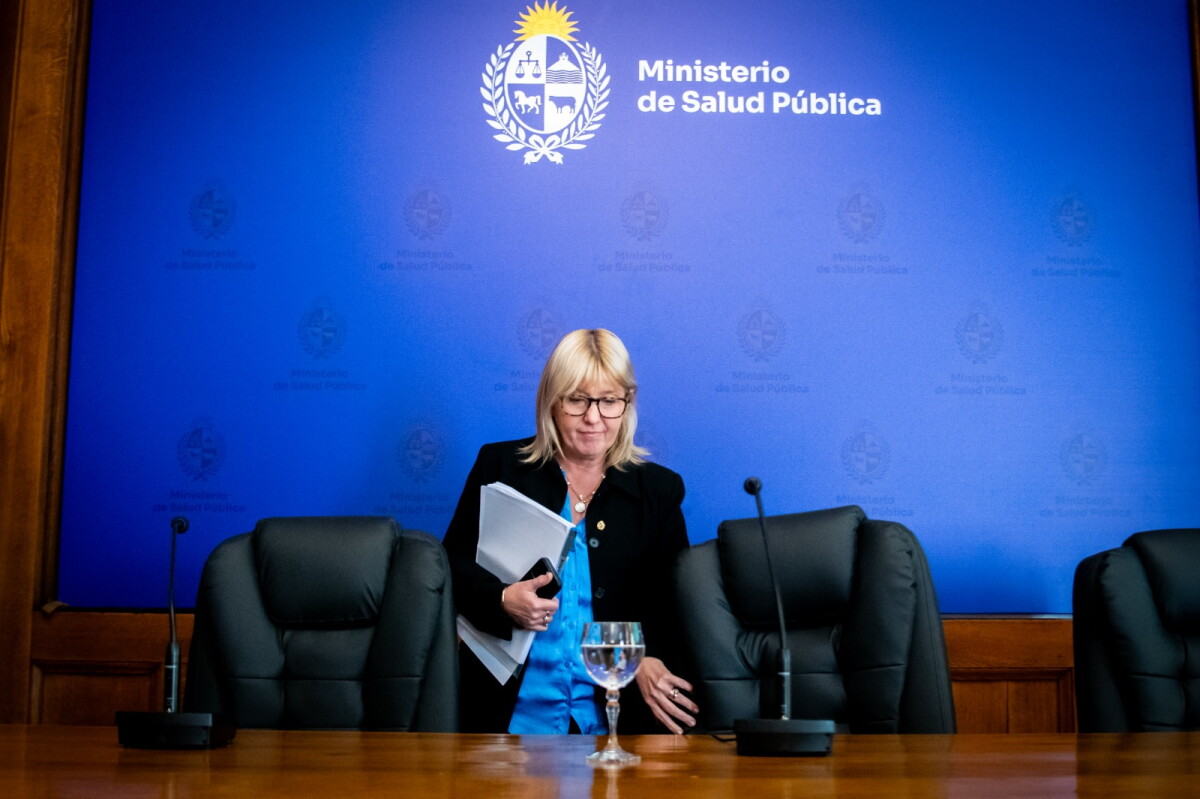

Uruguay expects record number of court actions for high-cost medicines, with more than 2,600 projected in 2026
Translated from Spanish and summarized by DistantNews. Read the original for the full story.
At a glance
News
Documents & data
Ongoing story
- Uruguay’s Health Ministry projects more than 2,600 court actions for access to high-cost medicines in 2026, up from 2,219 in 2025.
- The ministry recorded 1,328 actions through July 1, while the state transferred $142 million to the National Resources Fund in 2025 to cover court-ordered medicines.
- The increase has intensified debate over medicine access, patent tools and the long-term sustainability of the health system.
Uruguay’s Health Ministry expects more than 2,600 court actions for high-cost medicines in 2026, which would set a new record in a dispute over access to treatments and the cost to the state.
If this pace continues in the second half, we will finish 2026 with more than 2,600 injunctions.
Health Minister Cristina Lustemberg told lawmakers that the projection followed the demand recorded through the middle of the year. The ministry reported 1,328 legal actions by July 1. “If this pace continues in the second half, we will finish 2026 with more than 2,600 injunctions,” Lustemberg said.
Patients use the courts to seek expensive treatments that are not included in the standard benefits required from healthcare providers or in the catalogue of Uruguay’s National Resources Fund, known as the FNR. The number of cases has risen every year in the ministry’s series, from 331 in 2018 to 634 in 2019, 751 in 2020, 956 in 2021, 1,445 in 2022, 1,609 in 2023, 2,032 in 2024 and 2,219 in 2025.
This is one of our priorities in government.
The rulings generally order the Public Health Ministry, the FNR or the Bank of Social Security to cover the medicines. Because some treatments continue for life, payments can include judgments from earlier years. In 2025, the ministry transferred $142 million to the FNR for high-cost medicines covered through injunctions.
Lawyers and laboratories are making a fortune at the expense of Uruguay’s health budget.
Lustemberg said the issue is a management priority and that the ministry is working with the FNR and the Economy and Finance Ministry on alternatives. Colorado Senator Pedro Bordaberry proposed activating compulsory licenses under Uruguay’s Patents Law, saying this could reduce medicine prices by 70% to 80%. He criticized the spending balance, contrasting $30 million allocated to child poverty with roughly $150 million directed to these cases. The debate rests in part on Article 44 of Uruguay’s Constitution, which addresses the state’s duty to provide free prevention and care to people without sufficient resources.
On one hand, we are allocating $30 million to child poverty as a major effort, and on the other, around $150 million is being allocated to these matters, which I do not think we should tolerate.
About this summary
Originally published by El País in Spanish. Translated, summarized, and contextualized automatically by DistantNews, with a note on how the source frames the story. Not individually reviewed before publishing. How this works.
More Stories


From Our Blog

News in Translation: What Gets Lost, and How We Keep the Framing

Diaspora Media: How Communities Follow News From Home

Traveling Where the Press Is Not Free: How to Read the News There

The Digital Nomad's Guide to Local News

The Same Story, Different Countries: How Coverage Changes at the Border
