


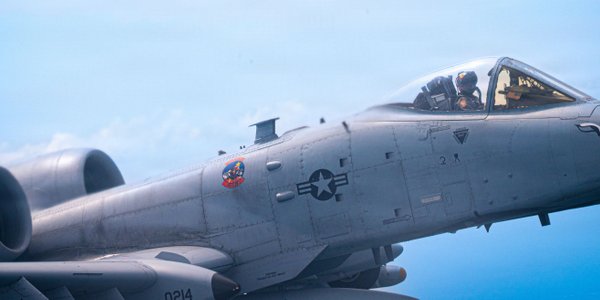
US Air Force's legendary A-10 Warthog faces congressional bid to halt retirement
Translated from Polish, summarized and contextualized by DistantNews.
At a glance
News
Sources not specified
Context piece
- A U.S. House of Representatives bill aims to halt and reverse the planned retirement of the A-10 Thunderbolt II aircraft.
- The A-10, known as the "Warthog," was designed around its powerful 30mm GAU-8/A Avenger Gatling gun for close air support.
- Despite attempts to retire it since 2014, Congress has repeatedly blocked the U.S. Air Force's efforts to phase out the aircraft.
The U.S. Air Force's long-standing plan to retire the legendary A-10 Thunderbolt II "Warthog" aircraft faces a significant challenge from Congress. A bill introduced in the House of Representatives seeks not only to halt but to reverse the planned withdrawal of these iconic ground-attack planes from service.
The A-10 Thunderbolt II, commonly known as the "Warthog" (an unofficial, soldier's nickname for the machine), is the only aircraft in the history of the U.S. Air Force designed from the ground up solely for direct support of ground troops.
The A-10, affectionately nicknamed "Warthog," holds a unique place in aviation history. It is the only U.S. Air Force aircraft designed from the ground up solely for close air support of ground troops, a concept born from Vietnam War experiences. Its design famously centered around the massive seven-barrel GAU-8/A Avenger 30mm Gatling gun, a weapon so powerful it dictates the aircraft's very structure. The plane's "titanium bathtub" cockpit and twin engines, positioned high and wide, were engineered for survivability during close-quarters combat, though they contribute to its lower altitude and slower speed.
The aircraft was designed around the armament and literally so. The genesis of the construction was the seven-barrel GAU-8/A Avenger 30 mm rotary cannon, about the size of a passenger car.
Despite its specialized design, the A-10's combat debut was delayed until the 1991 Gulf War. For over three decades since, A-10 squadrons have excelled in crucial roles: providing close support to troops in contact with the enemy, performing airborne forward air control, and conducting "Sandy" missions to rescue downed pilots behind enemy lines. The aircraft has repeatedly proven its resilience and effectiveness, with many pilots returning to base in heavily damaged A-10s that would have grounded other planes.
Many pilots returned to base with damage that would have meant the end for most other aircraft.
The U.S. Air Force has sought to retire the A-10 since 2014, viewing it as an aging platform. However, each attempt has been thwarted by congressional opposition, highlighting the aircraft's continued perceived value for specific combat roles. The latest legislative effort suggests a strong sentiment in Congress to keep the "Warthog" flying, potentially for years to come.
The U.S. Air Force has been trying to retire this aircraft for over a decade. The first such request appeared in 2014. Each time, Congress stood in the way.
DistantNews Editorial
Originally published by Rzeczpospolita in Polish. Translated, summarized, and contextualized by our editorial team with added local perspective. Read our editorial standards.
More Stories



From Our Blog

What Gets Lost (and Found) When News Is Translated

The Critical Role of Diaspora Media in Global News

What Travellers Should Know About Countries with Restricted Press

A Digital Nomad's Guide to Following Local News

How the Same Story Looks Different in Different Countries
